The cryptocurrency market is showing a rare and concerning warning sign: the supply of stablecoins is beginning to shrink, and this “capital outflow” phenomenon is casting a shadow over Bitcoin’s future trajectory.
According to data from CoinDesk, the combined market capitalization of the two major US dollar stablecoins, USDT and USDC, has shrunk to $257.9 billion, hitting a new low since November 20, 2022. Looking back to mid-December last year, their market caps once approached a peak of $265 billion, but in the past 10 days alone, the market cap has decreased rapidly.

In this wave of capital withdrawal, USDC has borne the brunt, with its market cap evaporating over $4 billion in 10 days; compared to mid-December, it has already shrunk by $6 billion, with a current market cap of $71.65 billion; in contrast, USDT has performed relatively steadily, with only about a $1 billion decline during the same period, and its current market cap is approximately $186.25 billion.
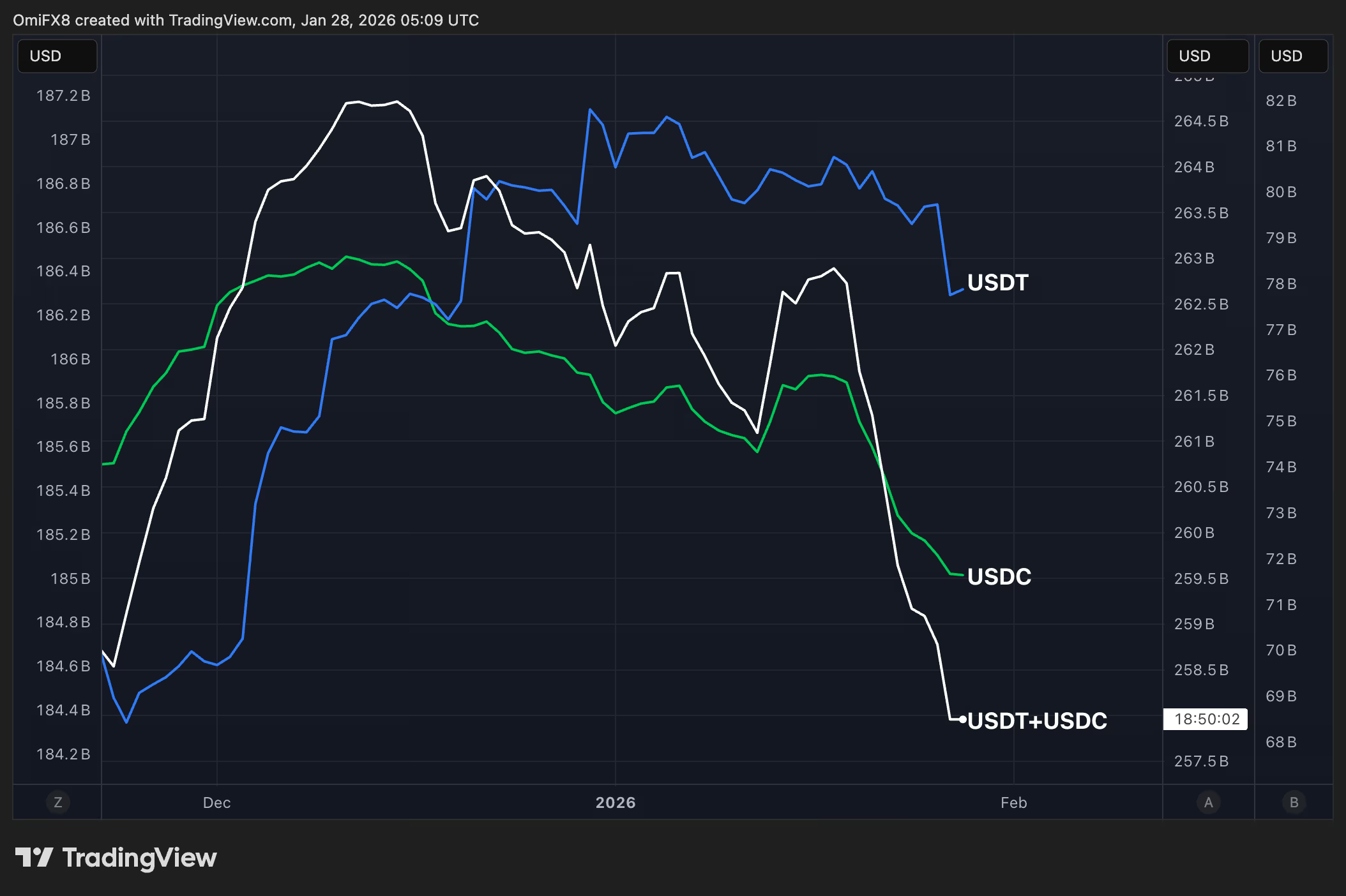 The downward trend in stablecoin market cap reflects traders withdrawing funds from the cryptocurrency market, aligning with the recent trend of institutions pulling tens of billions of dollars out of the US Bitcoin spot ETF.
Stablecoins have always played the role of “capital entry” and “liquidity hub” in the crypto market. Whether it’s buying cryptocurrencies or participating in DeFi to earn yields, stablecoins are an indispensable bridge.
To understand this phenomenon, imagine USDT and USDC as “casino chips.” Most people first exchange cash for chips before entering the game; however, the current situation is that players are cashing out their chips back into USD and “leaving the casino.”
Blockchain analytics firm Santiment pointed out: “Funds are leaving the cryptocurrency market, not just waiting on the sidelines: typically, when traders sell Bitcoin or competing coins, these funds remain in the crypto market in the form of stablecoins. Now, the decline in stablecoin market cap indicates that many investors are choosing to cash out directly into fiat currency rather than preparing to buy the dip.”
Santiment added that stablecoins are the primary liquidity source for purchasing cryptocurrencies. When the ammunition (funds) decreases, there isn’t enough capital to quickly push prices higher, which weakens the market’s rebound strength.
The downward trend in stablecoin market cap reflects traders withdrawing funds from the cryptocurrency market, aligning with the recent trend of institutions pulling tens of billions of dollars out of the US Bitcoin spot ETF.
Stablecoins have always played the role of “capital entry” and “liquidity hub” in the crypto market. Whether it’s buying cryptocurrencies or participating in DeFi to earn yields, stablecoins are an indispensable bridge.
To understand this phenomenon, imagine USDT and USDC as “casino chips.” Most people first exchange cash for chips before entering the game; however, the current situation is that players are cashing out their chips back into USD and “leaving the casino.”
Blockchain analytics firm Santiment pointed out: “Funds are leaving the cryptocurrency market, not just waiting on the sidelines: typically, when traders sell Bitcoin or competing coins, these funds remain in the crypto market in the form of stablecoins. Now, the decline in stablecoin market cap indicates that many investors are choosing to cash out directly into fiat currency rather than preparing to buy the dip.”
Santiment added that stablecoins are the primary liquidity source for purchasing cryptocurrencies. When the ammunition (funds) decreases, there isn’t enough capital to quickly push prices higher, which weakens the market’s rebound strength.
Disclaimer: The information on this page may come from third parties and does not represent the views or opinions of Gate. The content displayed on this page is for reference only and does not constitute any financial, investment, or legal advice. Gate does not guarantee the accuracy or completeness of the information and shall not be liable for any losses arising from the use of this information. Virtual asset investments carry high risks and are subject to significant price volatility. You may lose all of your invested principal. Please fully understand the relevant risks and make prudent decisions based on your own financial situation and risk tolerance. For details, please refer to
Disclaimer.
Related Articles
USDC Treasury mints an additional 250 million USDC on the Solana chain
Gate News Report, March 9 — According to Whale Alert monitoring, the USDC Treasury issued an additional 250 million USDC on the Solana chain on March 9, valued at approximately $250 million.
GateNews6h ago
Aon completes the first stablecoin insurance premium payment pilot, involving Ethereum USDC and Solana PYUSD
Aon completes the first stablecoin insurance premium payment pilot, utilizing stablecoin technology to improve capital flow efficiency. The pilot collaborates with crypto exchanges and stablecoin issuers to demonstrate flexibility across multiple blockchains, aiming to evaluate the application of regulated stablecoins in insurance services.
GateNews7h ago
The G7 considers releasing emergency oil reserves, causing oil prices to fall from $118 to $102.
As tensions in the Middle East escalate, oil prices have surged significantly. The G7 finance ministers are discussing releasing emergency oil reserves to ease market pressure. Oil prices are influenced by multiple factors, and concerns about supply shortages are intensifying. The crypto market's demand for crude oil trading remains strong. If the reserves are released in a timely manner, it could temporarily alleviate supply and demand tensions, but uncertainties in the situation still remain.
GateNews13h ago
Circle uses the USDC platform to settle $68 million internally in just a few minutes
Circle Internet Group announced the completion of $68 million in internal settlements through the stablecoin USDC and its own infrastructure Circle Mint in less than 30 minutes. This demonstrates the high efficiency of stablecoins in corporate financial management, especially in cash flow, auditability, and settlement speed, ushering in a new era of real-time fund management.
GateNews14h ago
Korean regulators take strong action: Companies are banned from using USDT and USDC, and cross-border stablecoin payment plans are hindered
The Korea Financial Services Commission plans to impose stricter restrictions on corporate use of stablecoins, including banning the purchase of stablecoins pegged to the US dollar. This policy will significantly impact corporate crypto investments and cross-border payments, although some companies hope for more relaxed policies to reduce exchange rate risk. Regulators favor handling international settlements through the traditional banking system and are developing new policy frameworks.
GateNews15h ago


