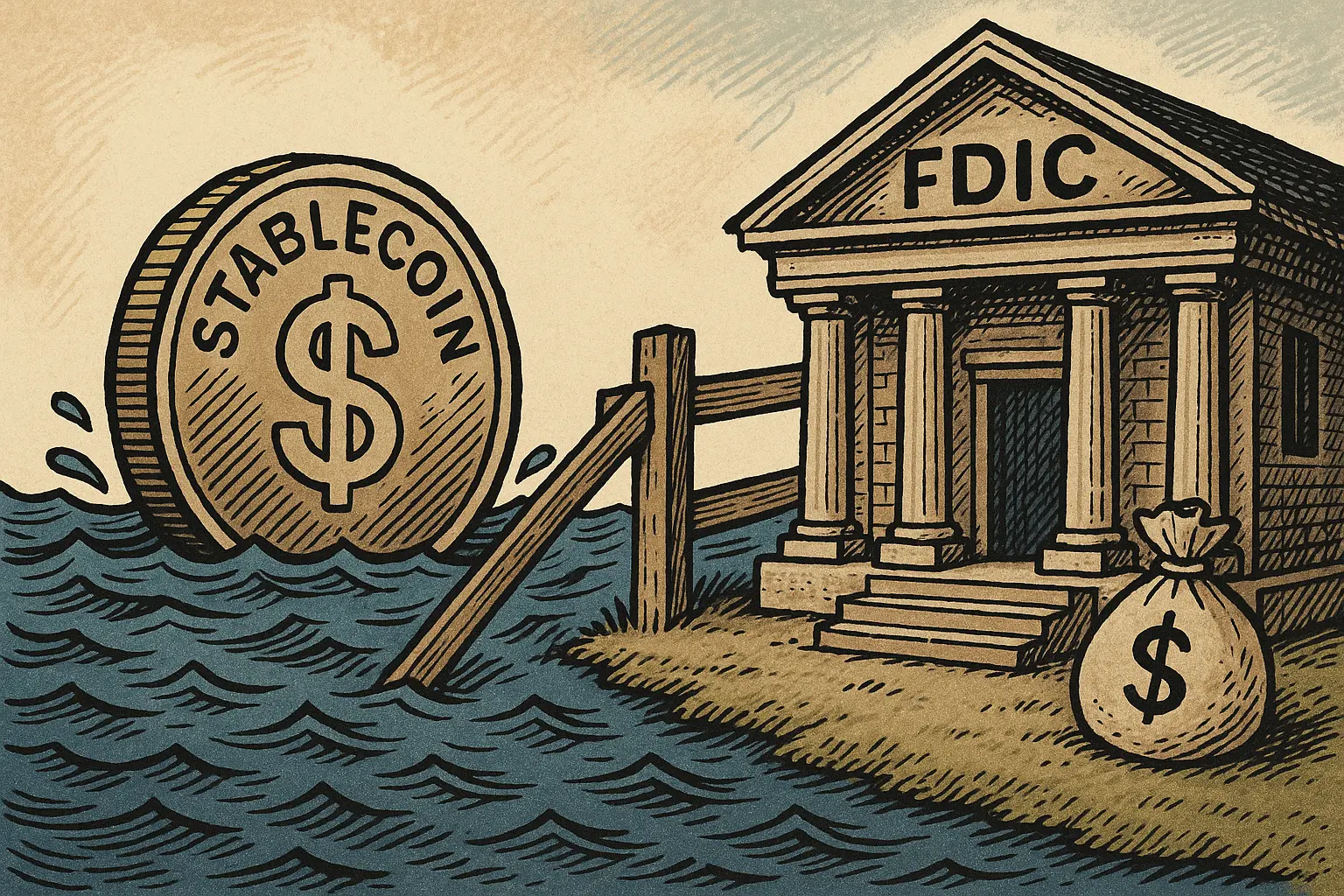
FDIC Chairman Travis Hill explicitly stated on Wednesday at the American Bankers Association Summit in Washington that, under the regulatory framework of the GENIUS Act, stablecoin holders will not be entitled to any form of government deposit insurance. This statement further reinforces the core intent of the GENIUS Act—to classify stablecoins as a separate asset category distinct from bank deposits, rather than as insured deposits covered by federal insurance.
FDIC’s Position Logic: Why Stablecoins Do Not Qualify for Deposit Insurance
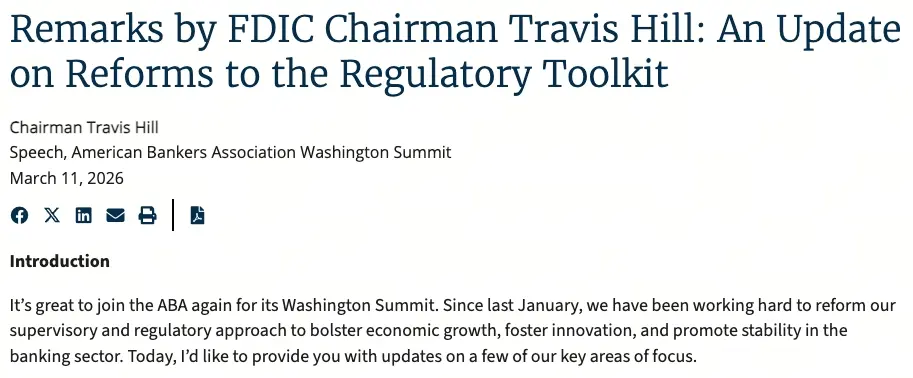
(Source: FDIC)
Traditional bank deposits are protected by FDIC insurance, with each depositor covered up to $250,000. This system has been a cornerstone of trust in the US banking system since 1933. Excluding stablecoins means that holders of USDC or USDT, if the issuer encounters issues, will rely solely on the issuer’s reserves, not on federal backing.
Hill’s argument is that the legislative intent of the GENIUS Act is to clearly distinguish the legal nature of stablecoins from bank deposits. He also notes that even if exploring insurance transferability, current standards pose substantial barriers: “Existing transfer insurance rules require that the identity and interests of the ultimate customer can be verified through routine business processes, which is uncommon in large stablecoin arrangements today.” This implies that, from a technical perspective, stablecoins also struggle to meet the identification requirements necessary for transfer insurance.
Two Asset Types, Two Fates: Stablecoins vs Tokenized Deposits
This FDIC policy clarification reveals a significant regulatory dividing line: although both are digital assets on the blockchain, stablecoins and tokenized deposits face vastly different regulatory treatments.
Stablecoins: Not covered by FDIC insurance, cannot benefit from transfer insurance; rely on the issuer’s reserve mechanism mandated by the GENIUS Act to protect user funds.
Tokenized Deposits: Hill explicitly states that regardless of the technology or record-keeping method, bank deposits recorded as programmable tokens on the blockchain should be considered deposits under law—“Therefore, tokenized deposits should enjoy the same regulatory and deposit insurance treatment as non-tokenized deposits.”
The key difference lies in legal classification, not technological form: tokenized deposits are fundamentally bank liabilities and thus qualify for FDIC protection; stablecoins are tokens issued by the issuer and are not legally considered bank deposits.
Banking Industry Concerns: Will Stablecoins Steal Deposits?
The boundary issue between stablecoins and deposit insurance has become a regulatory hot topic, primarily because it threatens the traditional banking business model. Bankers worry that if stablecoins can offer similar functions to deposits with higher yields, depositors might shift funds from bank accounts to stablecoins, eroding banks’ core funding source for lending.
Jefferies analysts even estimated that if stablecoins rapidly become widespread, US banks could face a 3% to 5% loss in core deposits over the next five years, directly impacting profits. However, Hill offers a more neutral perspective: customers transferring funds from bank accounts to stablecoins “generally do not remove funds from the overall banking system, but this will affect the nature and distribution of deposits within the system.”
Frequently Asked Questions
Q: After FDIC’s clear statement, are stablecoins like USDC and USDT less safe?
FDIC’s statement clarifies the legal status of stablecoins, not adding new risks. The GENIUS Act requires stablecoin issuers to maintain sufficient reserves (such as US Treasuries or equivalent cash assets) to ensure 1:1 redemption. Therefore, the safety of major stablecoins depends on the issuer’s reserve management, not federal deposit insurance. FDIC’s stance on not insuring stablecoins has been expected; this statement is more of an official confirmation than a policy shift.
Q: What is “transfer insurance,” and why is it also excluded?
Transfer insurance (Pass-through Insurance) refers to mechanisms where banks or financial intermediaries apply for deposit insurance coverage on behalf of end customers, common in money market funds and certain deposit custodial services. Hill states that current rules require that the identity of the ultimate beneficiary can be verified in routine business operations, which large stablecoin arrangements typically cannot meet. Coupled with the legislative intent of the GENIUS Act, transfer insurance is also deemed inapplicable to stablecoins.
Q: Why can tokenized deposits be protected by FDIC, but stablecoins cannot?
The core difference is legal nature. Tokenized deposits are digital representations of bank liabilities—funds are held at the bank, and the bank’s obligation is to repay the depositor. Regardless of the recording technology, this liability nature remains unchanged, thus extending FDIC protection. Stablecoins, on the other hand, are tokens issued by non-bank entities, and their legal nature is closer to promissory notes or fund shares, not bank deposits.
Disclaimer: The information on this page may come from third parties and does not represent the views or opinions of Gate. The content displayed on this page is for reference only and does not constitute any financial, investment, or legal advice. Gate does not guarantee the accuracy or completeness of the information and shall not be liable for any losses arising from the use of this information. Virtual asset investments carry high risks and are subject to significant price volatility. You may lose all of your invested principal. Please fully understand the relevant risks and make prudent decisions based on your own financial situation and risk tolerance. For details, please refer to
Disclaimer.


