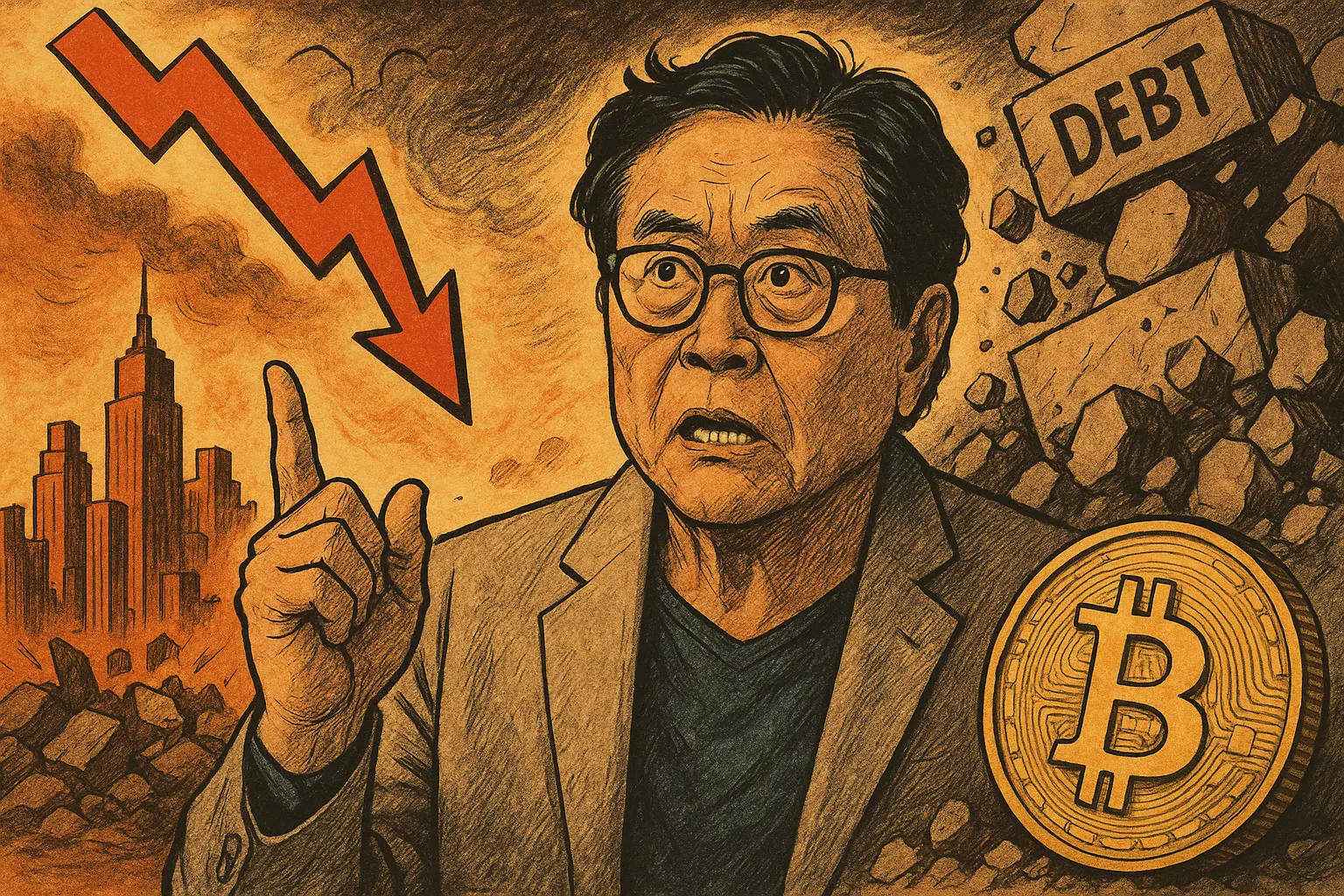
Robert Kiyosaki, author of Rich Dad Poor Dad, recently issued another warning about a financial crisis, stating that the largest stock market crash in history could begin around 2026. He directly links this potential crisis to unresolved structural issues left over from the 2008 financial crisis. He has held this view for years, publicly stating in 2013 that the global financial system might face a major crisis at some point in the future.
Kiyosaki’s Crash Prediction Logic: Structural Problems from 2008 Never Fully Resolved
Kiyosaki’s core argument is that after the 2008 financial crisis, governments and central banks responded with massive stimulus programs and monetary expansion to stabilize the markets. However, these measures only delayed deeper structural problems rather than solving the root causes. He believes the global financial system remains highly fragile under this framework, with rising sovereign debt levels and inherent instability in the financial system potentially triggering a significant market correction.
Kiyosaki specifically points out that U.S. national debt has now exceeded $35 trillion, and mentions the growing role of large asset management firms like BlackRock in global markets. Some analysts think that shifts in institutional investment strategies could amplify market volatility during periods of financial stress.
Kiyosaki’s Recommended Safe-Haven Assets: Physical and Digital Assets
To protect wealth during potential turbulence, Kiyosaki advocates holding what he calls “Real Assets,” including precious metals, commodities, and digital assets:
- Gold: Long-term, Kiyosaki sees gold as a key hedge against currency devaluation and financial instability.
- Silver: Another recommended precious metal, valued for industrial uses and as a store of value.
- Bitcoin: Kiyosaki views Bitcoin as a “hard asset” of the digital age, with potential to preserve value amid inflation and uncertainty.
- Ethereum: He also recommends Ethereum as part of a digital asset portfolio.
- Oil: Seen by Kiyosaki as an important store of value during financial turmoil.
Supporters argue that scarcity assets tend to maintain or increase their relative value during inflation or economic uncertainty.
Criticism and Macro Context: Mixed Record of Predictions
While Kiyosaki’s warnings have garnered widespread attention, critics note that his prediction record is mixed. He warned of major market crashes in 2016 and 2020, but neither occurred as forecasted. Many analysts remain cautious about specific timing predictions, believing that accurately forecasting the exact moment of a macro market collapse is inherently very difficult.
On the other hand, several macro indicators have attracted market attention: the continuous expansion of U.S. debt, rising concentration of assets among global institutional investors, and uncertainties stemming from shifts in monetary policy. These factors have raised concerns among some mainstream economists about medium- to long-term financial stability, overlapping with some of Kiyosaki’s worries.
Frequently Asked Questions
Q: Why does Kiyosaki believe a financial crisis could occur around 2026?
A: Kiyosaki believes that the quantitative easing and stimulus measures implemented after 2008 only delayed the crisis, not solved it. He argues that the rising debt levels and structural fragility of the financial system will eventually trigger a large-scale market correction, with 2026 being a potential timeframe for these risks to manifest.
Q: What assets does Kiyosaki recommend to hedge against a potential market crash?
A: He recommends gold, silver, Bitcoin, Ethereum, and oil. He believes these “hard assets” can provide wealth protection during significant financial market volatility, especially as scarcity assets tend to perform better than fiat currencies in inflationary environments.
Q: How accurate have Kiyosaki’s past market crash predictions been?
A: He has issued multiple warnings about crashes, but not all have come true as predicted. He forecasted major crashes in 2016 and 2020, but neither materialized as expected. Many analysts remain cautious about his specific timing predictions but acknowledge that the macro structural risks he highlights—such as high debt levels—are important issues to monitor.
Disclaimer: The information on this page may come from third parties and does not represent the views or opinions of Gate. The content displayed on this page is for reference only and does not constitute any financial, investment, or legal advice. Gate does not guarantee the accuracy or completeness of the information and shall not be liable for any losses arising from the use of this information. Virtual asset investments carry high risks and are subject to significant price volatility. You may lose all of your invested principal. Please fully understand the relevant risks and make prudent decisions based on your own financial situation and risk tolerance. For details, please refer to
Disclaimer.


