Original: Jinshi Data
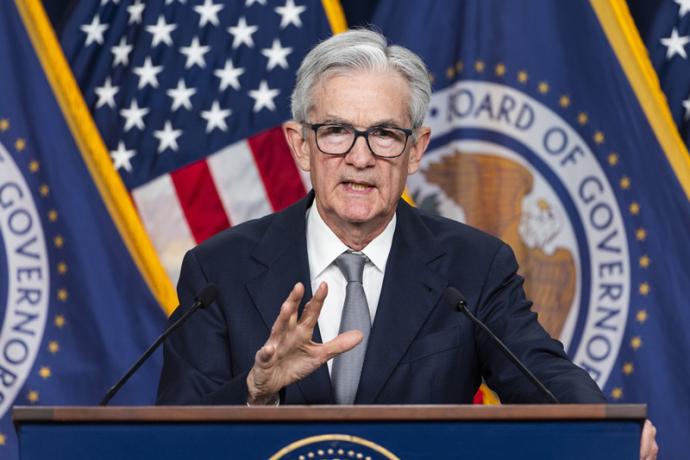
Despite pressure from newly elected President Trump a few days ago to immediately lower interest rates, the Federal Reserve still decided to keep rates unchanged this week. Federal Reserve Chairman Powell made it clear that there is no rush to adjust interest rates.
Just after Powell’s press conference, Trump once again criticized the Fed. He wrote on Truth Social,
“Because Powell and the Fed failed to stop the inflation problem they created, I will do this by unleashing American energy production, cutting regulations, rebalancing international trade, and revitalizing American manufacturing.”
“If the Fed spends less time on DEI (diversity, equity, and inclusion), gender ideology, ‘green’ energy, and false climate change, inflation will never be a problem.”
He did not directly comment on interest rates or Wednesday’s decision. Trump has had a habit of publicly expressing his views on monetary policy since his first term. In order to maintain the independence of the Federal Reserve from political influence, all former US presidents have avoided publicly expressing their views on monetary policy.
In a statement after the meeting, officials reiterated that the inflation rate is still “a bit high”, but removed the reference to progress towards the 2% inflation target. Powell said the change was not intended to send a policy signal. Fed policymakers also updated their description of the labor market, replacing “slowed” with “strong”.
Powell said at a press conference after the statement was released that the recent inflation data looks “good”, but “we won’t overinterpret two good or bad (inflation) data.”
Earlier on Wednesday local time, before Trump’s post, he told reporters that he would not comment on “any presidential comments on interest rates.” “The public should trust that we will continue to do our work as always.”
Powell said he had no direct contact with Trump. “A lot of research shows that (independence) is the best way for central banks to operate,” he added.
The Fed is now in wait-and-see mode, and officials will await more inflation and employment data as well as clarity on the impact of Trump’s policy. **Market expectations for a Fed rate cut in 2025 are slipping. According to CME’s Fed Watch, there is an 82% probability that the Fed will keep interest rates unchanged in March. **
! After being ignored by the Fed, Trump “bombarded” Powell again
Institutional Interpretation
George Cipolloni, Portfolio Manager at Penn Mutual Asset Management:
“The latest policy statement was initially interpreted as more hawkish than expected. They will wait and see what inflation will do, which may not be the worst idea in the world as they don’t want to overreact. I think they cut rates by 100 basis points last year a bit excessively.”
“Therefore, the outlook of the Federal Reserve’s policy is intertwined with the inflation outlook, and now we must combine it with the new government and its new policies, some of which do appear to be somewhat inflationary, or at least potentially so. Therefore, it makes sense for the Federal Reserve to exercise patience in this regard. I don’t think Trump will like the Fed’s response and tone. But currently, it feels like the right approach.”
Orion Chief Investment Strategist Rusty Vanneman:
“The Fed has made the right decision by keeping interest rates stable. Inflation is still a concern, while the economy is staying stable. They are being cautious, and it makes sense. Currently, this provides some stability for investors as we closely monitor any future changes. As always, we are focused on long-term development.”
Chief Investment Officer Michael Rosen of Los Angeles Investment Company:
The bond market was sold off after the FOMC statement was released because it did not mention that inflation was moving toward its 2% target. Surprisingly, investors were surprised by this obvious fact. In the past 18 months, inflation has been sticky, meaning it has not fallen further to 2%. Over the past two years, the market has mistakenly expected the Fed to significantly ease monetary policy. But in fact, investors should continue to short bonds.
F.L.Putnam Investment Management Chief Market Strategist Ellen Hazen:
“The market is completely right. If you look at the federal fund futures, they have hardly changed. So I think the market correctly realizes that the impact of this meeting is neutral. The change in the wording by the Fed is somewhat hawkish - they no longer talk about easing in the labor market, but about maintaining stability. They also no longer talk about slowing inflation, but believe that it remains high. So these two things are slightly hawkish.”
“When the Fed may be at odds with the government, it is very tricky to turn to processes with a lower degree of reliance on data. Now is not the time for a shift. Although I do think they are hinting at this, they cannot say it openly.”
Economic expert Brian Jacobsen of Annex WealthManagement:
“The Federal Reserve seems to believe that the economy is stuck in a dilemma of low unemployment and high inflation. This statement can be interpreted as a moderate hawkish stance, indicating that a slight fluctuation in interest rates could help the economy break free from this equilibrium.”
AllspringGlobalInvestments multi-asset solutions team leader Matthias Scheiber:
We believe that the window for any future rate cuts may not open until May, and we expect the Fed to cut interest rates twice this year.
“As the new government begins to implement its fiscal policy plan, we expect the Fed to remain cautious in monitoring inflation. For 2025, the interest rate market currently expects the Fed to lower rates to around 4% by the end of the year. This largely depends on how US fiscal policy affects inflation.”
“We continue to be optimistic about stocks, especially cheap stocks, and stocks in the international market that benefit from central bank interest rate cuts and currency depreciation. We expect the stock market rally to expand and believe that any further easing of loose monetary policies may support stock prices in the medium term. Despite the narrowing interest rate spread, the outlook for high-yield bonds remains positive as the possibility of a US economic recession seems unlikely.”
Transunion US Research and Consulting Director MicheleRaneri:
“Following a series of better-than-expected economic indicators, the Fed today decided to forgo another rate cut and instead chose to keep it unchanged for the time being. This is the first meeting since July 2024 that the FOMC has not cut interest rates. How many rate cuts there will be in 2025 remains to be seen. Although concerns about inflation have significantly eased, they still exist. Therefore, the extent of rate cuts next year is likely to be less than expected a few months ago. We will continue to monitor how previous rate cuts have played out in the economic ecosystem.”
Pepperstone Senior Research Strategist Michael Brown:
“To be honest, I’m not sure if the Federal Reserve’s omission of ‘progress’ on inflation in the policy statement will change the game, although it may indicate that policymakers want to see further progress in inflation before cutting rates again later this year. However, the direction of future interest rate paths is definitely downward. Given that the Fed’s start this year is almost where they left off in 2024, the timing of rate cuts still depends on future data releases.”
Lindsay Rosner, Managing Director of Multiple Investment Departments at Goldman Sachs Asset Management:
In the ‘new phase’ of the new year, the Federal Reserve has entered a new phase of easing, with strong economic growth and resilient employment data providing space for a more patient approach amid rising data and policy uncertainties. Although we still believe that the Fed’s easing cycle is not over, the FOMC hopes to see further progress in inflation data to achieve the next rate cut, as they have removed the statement that inflation is making progress.
Novapoint Chief Investment Officer Joseph Sroka:
“The Federal Reserve kept interest rates unchanged as scheduled. As early as December, it made it clear that the pace of interest rate cuts in 2025 will slow down. With the new government coming into power and its fiscal and other policies being proposed, the Federal Reserve is now in a favorable position to deal with the complex data changes that may occur in the first three to four months of the new government.”
Richmond consulting firm Harris Financial Group executive partner Jamie Cox:
“The Federal Reserve just told us that there will be no rate cut in March, so everyone’s attention is focused on May. The removal of the wording on inflation progress has led some market participants to conclude that the Fed is shifting its rate preference from lower to higher - I disagree with this view. I believe that the Fed’s removal of this wording is to shift the market’s focus away from the inflation trajectory and onto economic growth and unemployment, both of which are in very favorable positions.”
Janney Montgomery Scott Chief Investment Strategist Mark Luschini:
“The fact that interest rates remain unchanged is not surprising. However, removing the wording on inflation progress implies that the Fed acknowledges that the inflation rate is still above its target and may be stabilizing above the target rate.”
Janney Montgomery Scott Chief Fixed Income Strategist Guy Lebas:
After a cumulative 100 basis point rate cut, the Fed has slowed down the pace of rate cuts. Although the direction is still towards rate cuts, the speed of progress has slowed down. The strong economic growth in the fourth quarter and slightly higher inflation data are to blame. Currently, the slower pace of rate cuts means that the January FOMC meeting will “skip” rate cuts, and then rate cuts may be implemented again in March as inflation data for the first quarter approaches 2%. This is still far from certain and depends on unpredictable short-term data, but in our view, a rate cut in March is the most likely outcome.


