When Ethereum purists meet the most successful anonymous developer in the Solana ecosystem, a dialogue that was supposed to explore product philosophy turns into a trial about whether “meme coins should exist.”
Written by: shushu
The true identity of the anonymous founder has been exposed
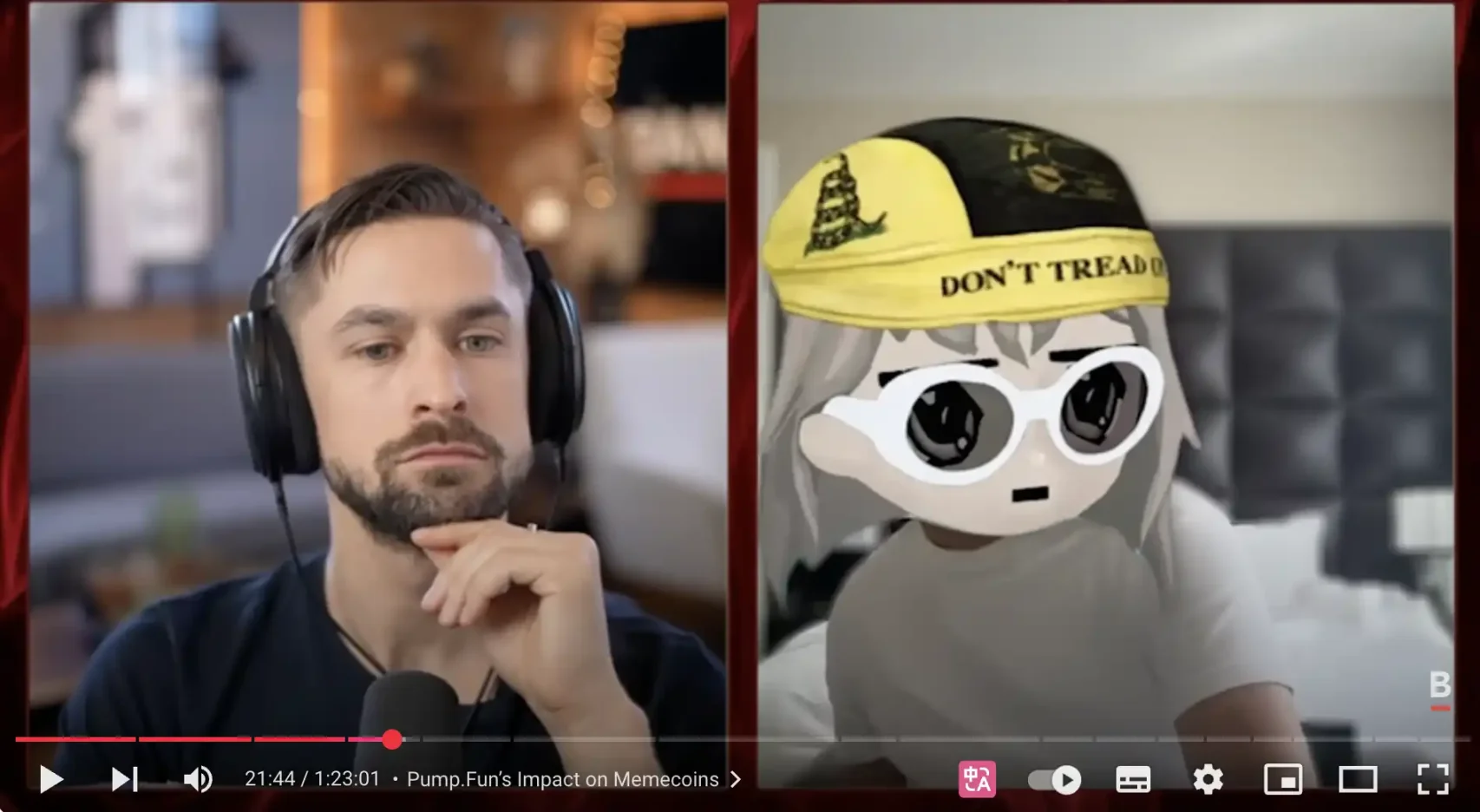
Recently, Pump.fun founder Alon was interviewed on the “Ethereum series” podcast Bankless, where he revealed half of his face at 21 minutes and 44 seconds, after which someone pieced together a photo of Alon’s full face.
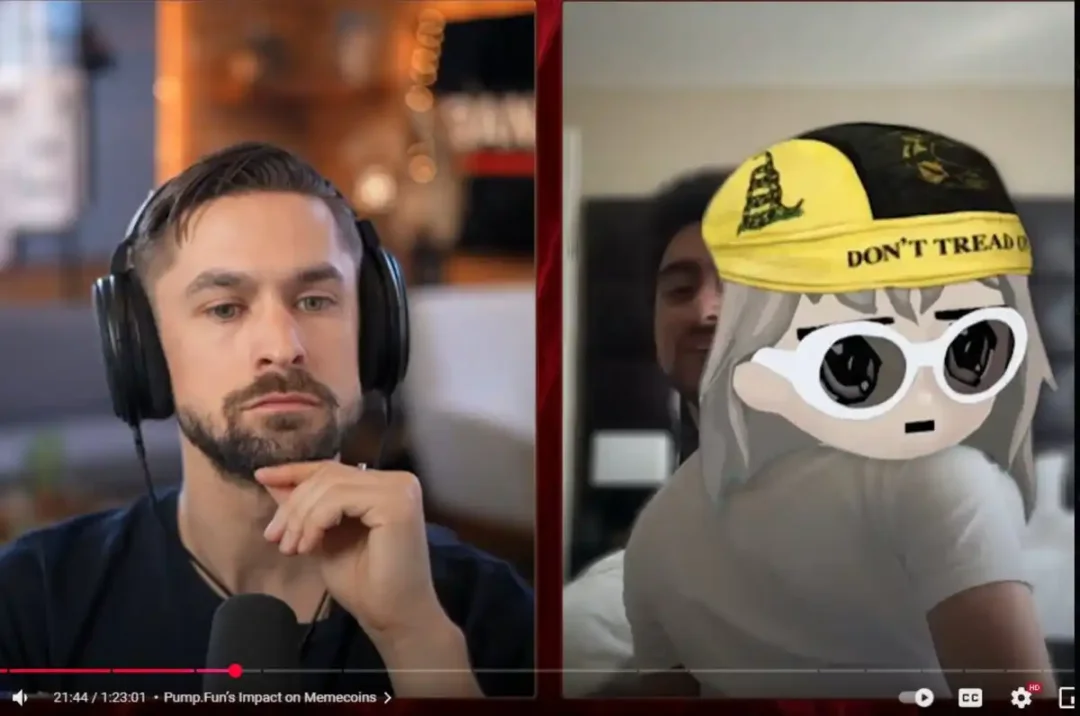
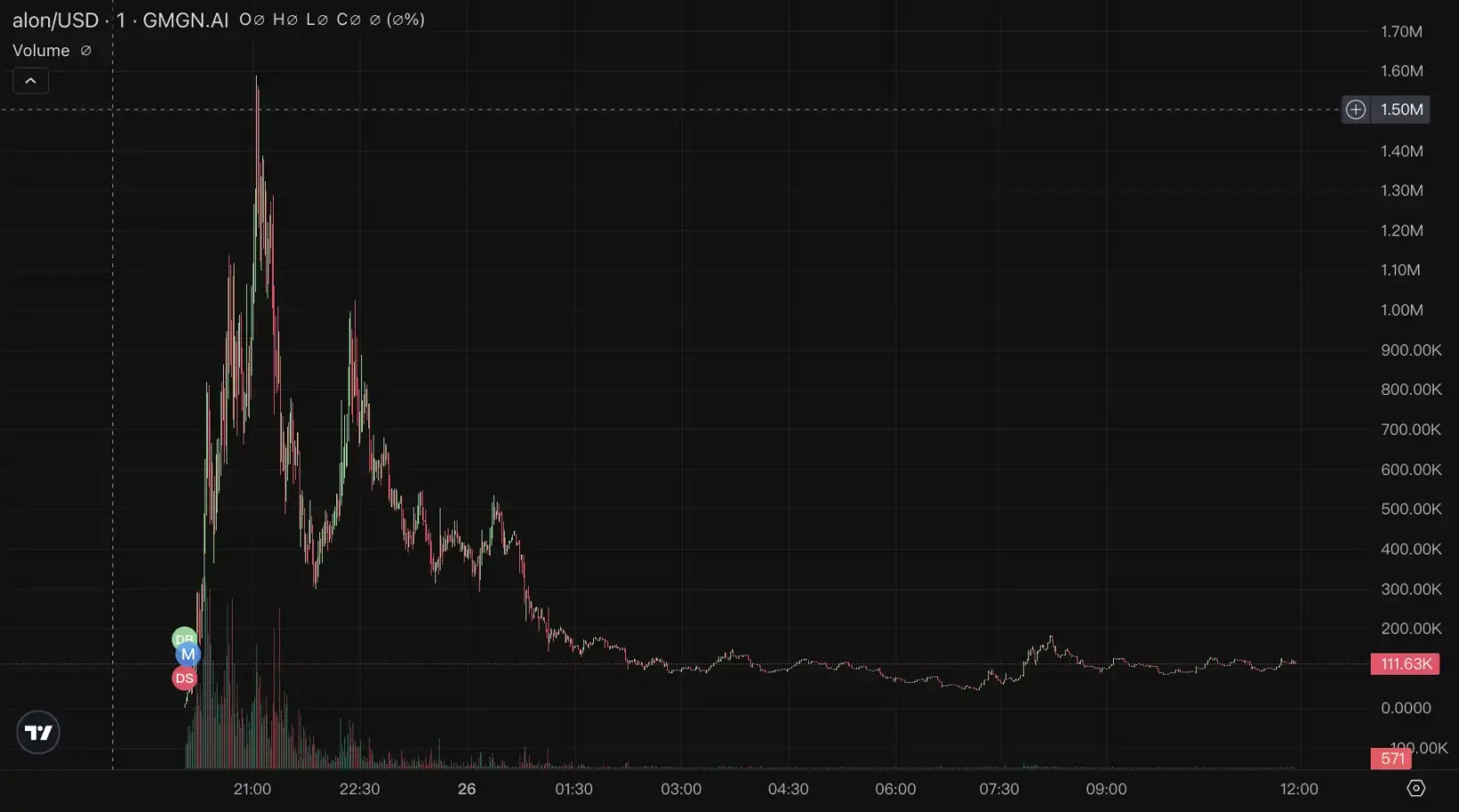
The community quickly launched Alon’s eponymous meme coin alon on Pump.fun, but dramatically, Pump.fun removed the avatar of this meme.
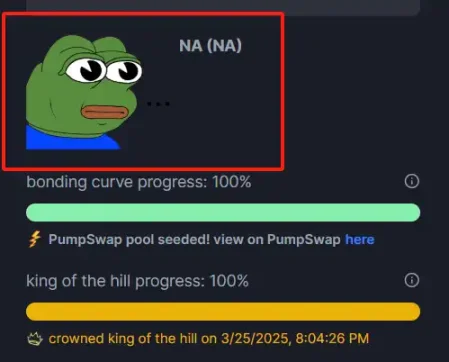
And this meme coin has also had a brief life.
Currently, there is no frame in this episode of the Bankless podcast showing Alon’s face.
Podcast controversy opening, is it a case of good intentions gone wrong?
Since its inception, Pump.fun has been shrouded in mystery, and very few people openly discuss how it has risen to become the most PMF and profitable application of this cycle.
Last year, Alon was interviewed by Threadguy on his podcast, becoming one of the few public sources to learn about the story behind Pump.fun. With the launch of the Swap platform by Pump.fun, Alon recently gave an interview to the crypto podcast Bankless.
In the podcast, Alon talked about the 4Chan aesthetic style, the content review strategy of the Pump.fun platform, and introduced the new product PumpSwap as well as the revenue sharing mechanism for creators. Alon also responded to the competitive relationship with Raydium, explored the relationship between content, attention, and the market, and shared his views on the future of meme coins.
However, after this episode of the podcast was released, it sparked some controversy, mainly due to the opening remarks made by David, the host of the Bankless podcast.
David mentioned at the beginning that the audience might be surprised to see Pump.fun, the most successful application in the Solana ecosystem, featured on an Ethereum-based podcast, especially since Bankless’s platform has consistently opposed meme culture and believes that it undermines the market.
The following is David’s original words:
In this interview, I tried to give Alon a fair opportunity to express his views on meme coins, while also not shying away from the reality - Pump.fun stands at the forefront of one of the most predatory market cycles in our industry’s history, leaving behind a ruined capital wasteland.
Initially, the speculation around meme coins may have been a relatively harmless and fun metaverse, but eventually this trend evolved into a structured and systematic value extraction model, and this wealth ultimately flowed only to a very small number of participants.
With a cautious attitude, I interviewed Alon.
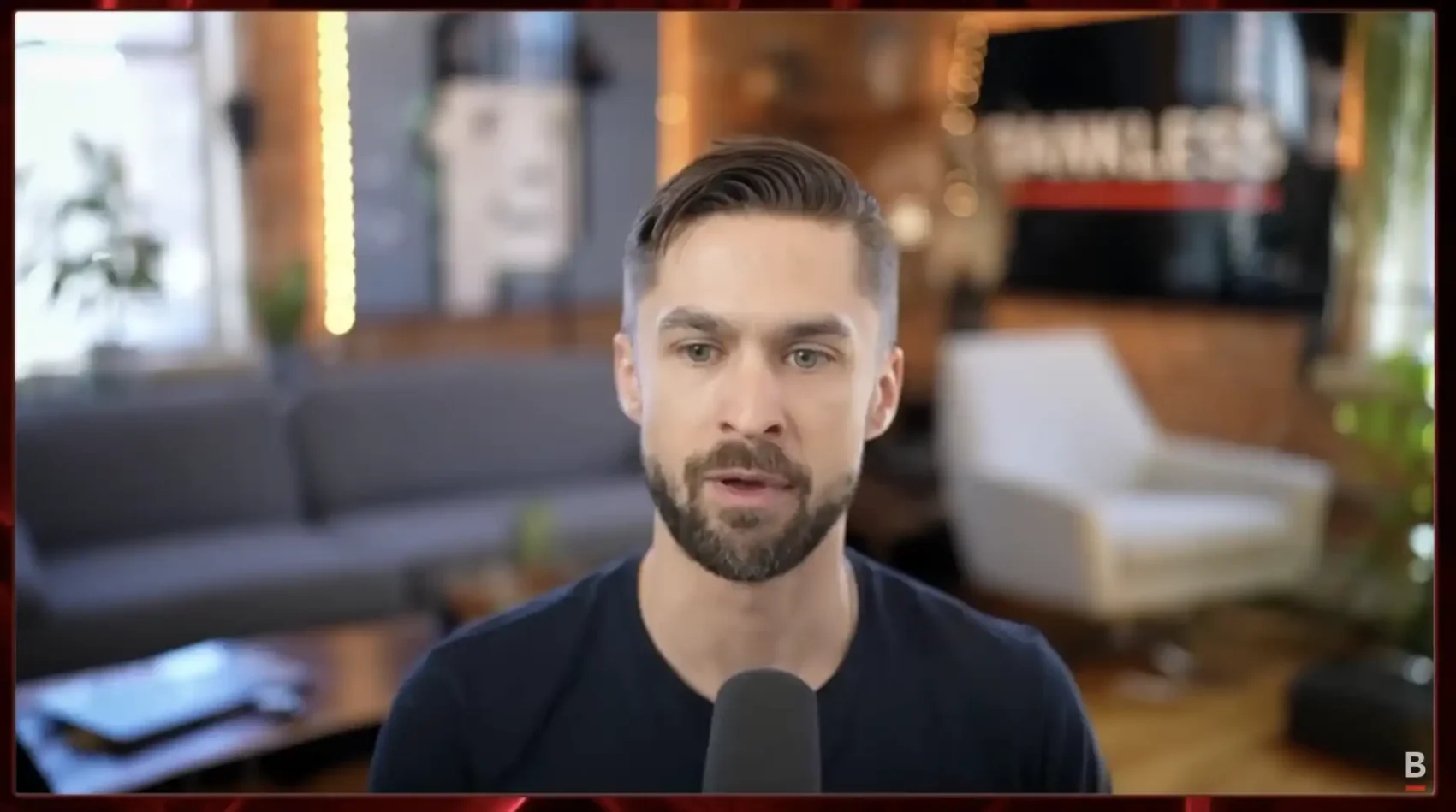
In other words, before this interview began, the host maintained a vigilance regarding the potential negative impacts of Pump.fun, driven by his own preconceived notions. On one hand, David believes it is inappropriate to provide a platform for the founder of Pump.fun to speak, as this platform has caused many people to lose money. On the other hand, he even thinks that allowing Alon to appear on the podcast might enable Pump.fun to whitewash itself and promote Pump Swap through Bankless.
Before this, I had never met him, and I had been wary of some potential negative impacts that this project might bring. I am not sure whether a project like Platforming (giving a platform to voice) is reasonable, especially when it may essentially only bring harmful results to users. At the same time, I also have to be wary of another possibility—Is Pump.fun trying to use Bankless to whitewash its reputation? After all, they recently launched Pump Swap (a Solana-based AMM DEX), trying to transform with new products.
During this interview, what has lingered in my mind is “Operation Berkshire” - if you’re not familiar, it was a conspiracy in the tobacco industry: large tobacco companies banded together to openly deny the health hazards of smoking, fund “pro-tobacco” research, undermine scientific consensus, and influence policy and public opinion by covering up the facts to sustain industry growth.
There are many people in the community who are dissatisfied with the way the beginning of this podcast was handled. They believe that if Pump.fun were on Ethereum, this situation would not have occurred.
Pump.fun is just a token issuance platform, it has no right to interfere with how users use it, and the fees charged are lower than any past and existing token issuance platforms (even years later it will still be so, just because it profits from scaling). In addition, its founder is also one of the most successful consumer entrepreneurs in crypto history to date. However, in the introduction of the Bankless podcast, they are portrayed as if they are criminals, although the show is still “open and inclusive,” giving them a chance to speak, hehe.
This is the most hypocritical podcast opening I have ever seen. They had a wonderful conversation with the founder during the show, but in the pre-recorded introduction afterward, they started to undermine their impact on the crypto industry and question their motives. If Bankless treats its guests like this, how can they recommend entrepreneurs to appear on their show?
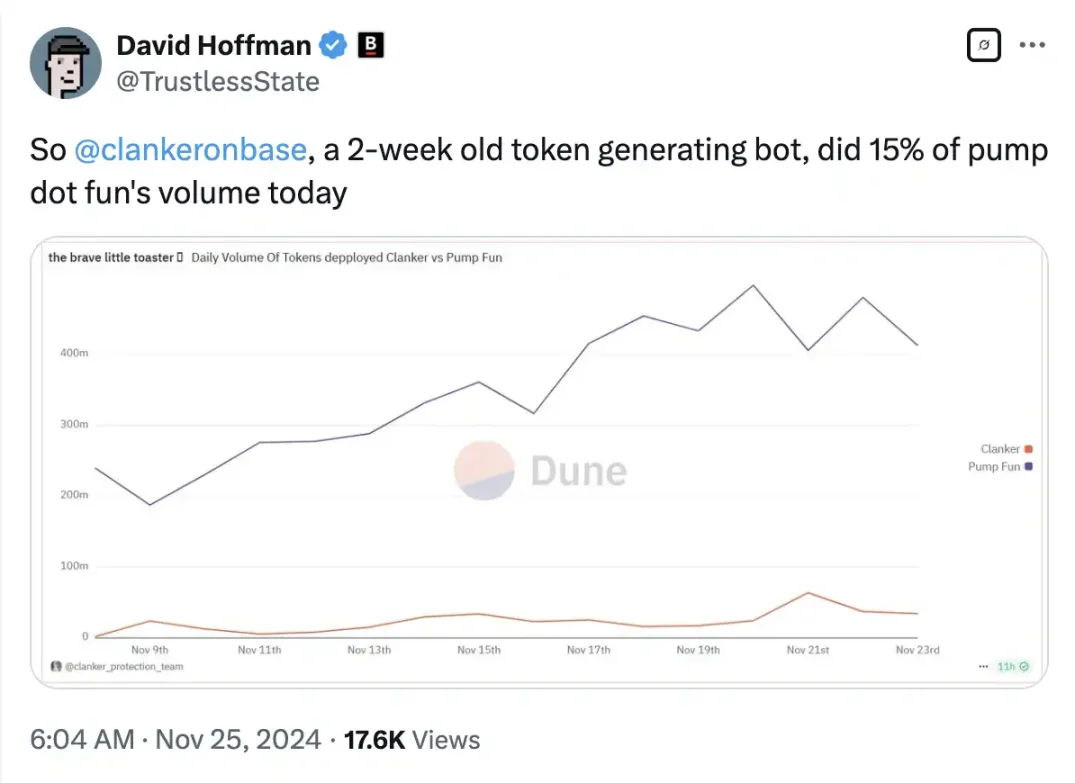
In November last year, David posted, “A two-week-old token generation bot completed 15% of the trading volume on the pump dot fun platform today.” Clearly, Clanker from the Base ecosystem appears to be more “politically correct” on David’s social media.
Back to this episode of the podcast, after the recording, David still stated in the post-editing of the recorded introduction that meme coins are essentially like the impact of tobacco on public health - an “inevitable harmful product,” and anyone working at Pump.fun would have an incentive to deny this.
The following statement is also the reason why David is criticized for being hypocritical—his attempt to maintain neutrality on the issue of values is essentially a form of ambiguity and evasion of his position.
“We are still in the early stages of the crypto industry, and the development of meme coins is no exception; the future is yet to be written. Will future meme coins become a more productive financial tool, or will they continue to be the ‘drugs’ of the market? Ultimately, this will depend on the leaders of the meme coin industry. Whether we like them or not, whether they are the ‘tumor of the crypto industry’ or the ‘starting point for a fairer financial future,’ the final outcome remains uncertain.”
When the product revenue of Pump.fun exceeds 600 million dollars, discussing whether meme coins should exist seems pointless. In an interview, David asked Alon if he would do anything to make memes more sustainable if he could go back to the beginning of the meme craze.
Alon’s response was, “If the essence of cryptocurrency is indeed like this, then when market sentiment becomes euphoric, the things you can actually do are very limited.”
David’s question implies a top-down regulatory mindset, adhering to an elitist approach, hoping that the crypto cycle won’t worsen due to meme coins and PVP, as if the market needs “wise guides” to tame the frenzy of retail investors. Alon’s response, on the other hand, directly points to the essence of the crypto world—it should be an open experiment without permission, no matter how chaotic the results may be.
This small controversy has, to some extent, exposed the long-standing ecological division in the cryptocurrency industry. The Ethereum-style “establishment” attempts to discipline the market with the framework of “responsible finance,” while ignoring the original rebellious genes of cryptocurrency; the Solana-style “barbarians” embrace the raw power of the market, even if it comes with bubbles, scams, and drastic wealth redistribution.
At the end of the podcast, David asked Alon why he chose Bankless as a podcast, given that there are many podcasts in the Solana ecosystem. Alon’s response was, “Our harshest critics mainly come from the Ethereum ecosystem, and I hope they realize that we actually have a lot in common. Many arguments are overly entangled in some trivial details, and Twitter is not an ideal platform; its algorithm amplifies anger to an extreme degree, encouraging people to oppose each other. Therefore, this huge misunderstanding between the Ethereum ecosystem, the Solana ecosystem, and even Pump.fun is not surprising. One of the main reasons I participated in this interview is to break down this barrier.”
Perhaps the future of media lies not in how to correctly evaluate projects, but in whether it can become a translator of on-chain value and a bridge for cross-ecosystem dialogues.


