The rules of the game are changing: the current status of centralized exchange licenses in Vietnam.
This article is written by Tiger Research, providing an in-depth analysis of the new regulations for cryptocurrency exchanges in Vietnam: under a minimum registration capital threshold of $380 million, international giants like Binance and Bybit are fiercely competing with local institutions for limited licenses.
Summary of Key Points
The new regulatory framework in Vietnam establishes extremely high entry barriers, only large banks, securities companies, or global exchanges with strong partners are expected to meet the standards.
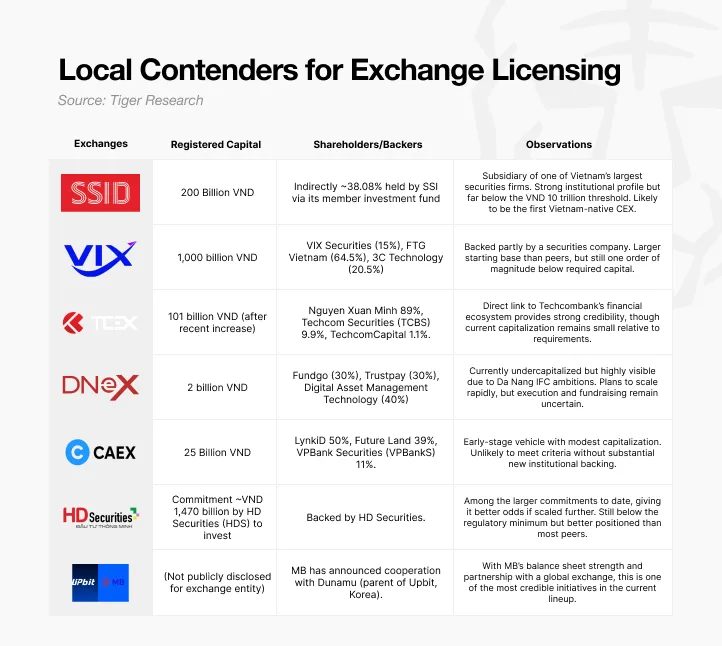
Although the seven local enterprises have been deployed in advance, most of them have weak capital strength and insufficient institutional qualifications, making it difficult to meet regulatory requirements.
Binance and Bybit have been received by senior officials of the Vietnamese government, indicating that foreign exchanges will share the market pie with a few local licensed institutions.
1. Regulatory New Era: Vietnam's Digital Asset Market Moves Towards Standardization
In 2025, Vietnam's digital asset market will undergo a decisive transformation. After years of regulatory ambiguity, the government has successively introduced three major policy frameworks.