







# CLARITYActAdvances

50.6K
#CLARITYActAdvances
The advancement of the CLARITY Act in 2026 represents something far more significant than a regulatory update. It signals a transition phase where the United States is attempting to move from reactive crypto enforcement toward structured legislative architecture. After years of jurisdictional overlap, lawsuits, and compliance uncertainty, the market is now watching whether Congress can deliver a durable framework that reduces ambiguity without suppressing innovation.
At the center of the discussion is jurisdictional clarity between the U.S. Securities and Exchange Commissi
BTC-0,56%
TOKEN0,95%
RWA1,87%
MEME-2,67%
Yusfirahvip
#CLARITYActAdvances
The advancement of the CLARITY Act in 2026 represents something far more significant than a regulatory update. It signals a transition phase where the United States is attempting to move from reactive crypto enforcement toward structured legislative architecture. After years of jurisdictional overlap, lawsuits, and compliance uncertainty, the market is now watching whether Congress can deliver a durable framework that reduces ambiguity without suppressing innovation.
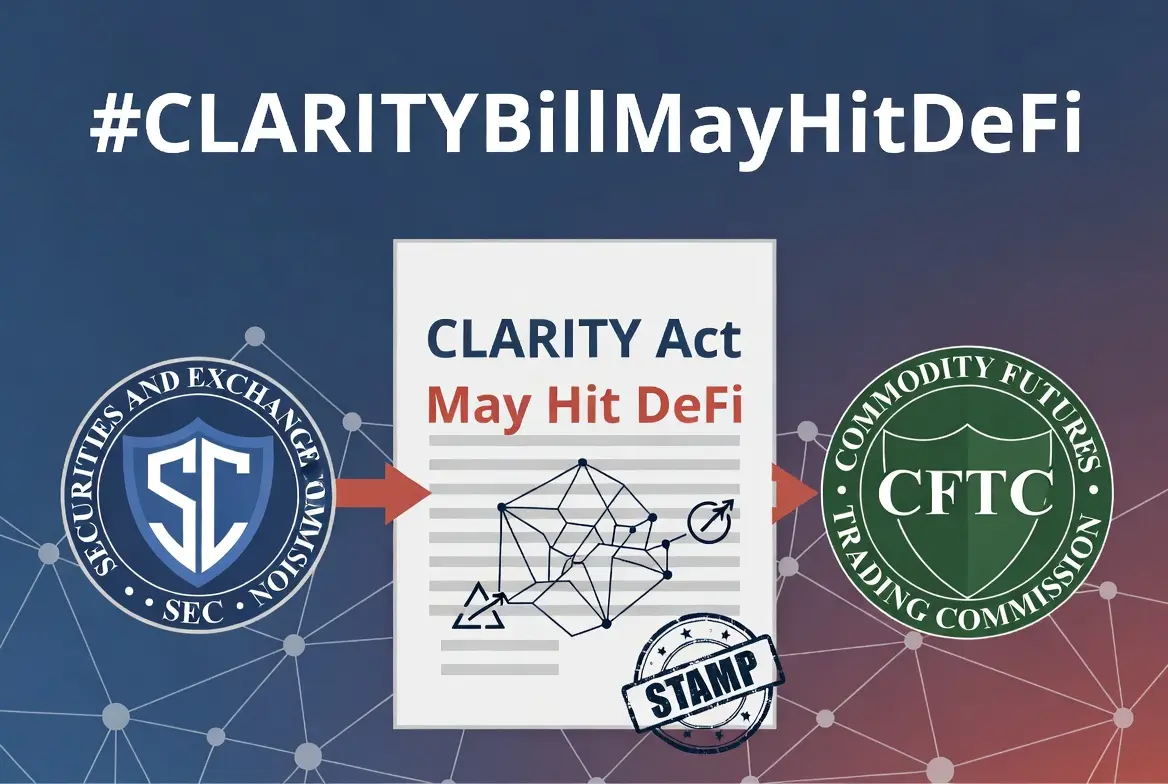
At the center of the discussion is jurisdictional clarity between the U.S. Securities and Exchange Commission and the Commodity Futures Trading Commission, alongside policy coordination with the U.S. Department of the Treasury. For years, digital assets have operated in an environment where classification could change via enforcement rather than statute. That uncertainty imposed a structural risk premium on the entire sector. The CLARITY Act attempts to compress that premium.
Why This Matters in March 2026
The timing is critical. The crypto market is currently navigating a prolonged deleveraging cycle. Bitcoin has printed multiple consecutive red monthly candles. Altcoins remain deeply suppressed, with the majority trading below their 200-day moving averages. Liquidity is selective. Institutional participation has slowed but not exited.
In this environment, regulatory clarity does not function as hype it functions as infrastructure. Capital allocators do not increase exposure when legal definitions are uncertain. Pension funds, sovereign wealth funds, and regulated asset managers require predictable compliance frameworks. The CLARITY Act is positioned to provide that predictability.
Shift From Enforcement Risk to Allocation Strategy
One of the largest hidden costs in crypto markets has been regulatory unpredictability. Projects faced retroactive classification risk. Exchanges faced inconsistent oversight. Investors priced in legal uncertainty as downside volatility.
If the CLARITY Act formalizes:
• Clear digital asset classification standards
• Defined disclosure requirements
• Transparent token issuance guidelines
• Coordinated federal supervision
Then valuation models change. Assets begin trading based more on utility, network activity, and revenue potential rather than litigation risk.
That shift alone could gradually increase institutional confidence.
Multi-Stage Capital Reallocation
I do not expect an immediate vertical rally from legislative progress. Instead, I expect a staged capital rotation.
Stage 1: Liquidity Consolidation
Institutional capital concentrates in high-liquidity, compliance-aligned assets. Major Layer-1 networks and regulated stablecoins benefit first.
Stage 2: Infrastructure Expansion
Custody providers, tokenization platforms, and compliance-focused fintech firms attract funding. Venture capital reallocates from speculative meme ecosystems into regulated blockchain infrastructure.
Stage 3: Product Innovation
Banks and asset managers begin launching tokenized financial instruments that align with federal reporting standards.
The most significant long-term opportunity lies in tokenized real-world assets.
Tokenized Real-World Assets (RWA) Acceleration
Under a clearer legislative framework, U.S. financial institutions could expand blockchain-based issuance of:
• Treasury products
• Corporate bonds
• Structured credit
• Tokenized equity representations
• Real estate-backed instruments
Tokenization reduces settlement friction, improves collateral efficiency, and enhances audit transparency. In a higher-rate macro environment, tokenized yield-bearing assets become particularly attractive.
If regulatory certainty stabilizes, the U.S. could lead institutional tokenization rather than lag behind Europe or Asia.
Volatility Evolution
Historically, crypto volatility has been driven by enforcement headlines and regulatory uncertainty. Under a structured legislative regime, volatility dynamics may gradually transition toward macro-driven behavior rather than policy shock reactions.
Short-term implementation phases could still create turbulence. Compliance deadlines and classification rulings may trigger temporary repricing events. However, over time, systemic uncertainty may decline and with it, extreme risk premiums.
This would not eliminate volatility, but it would professionalize it.
Competitive Global Landscape
If the United States establishes a coherent crypto legislative framework, other jurisdictions will likely respond. Regulatory arbitrage opportunities could narrow. Cross-border capital flows may increasingly depend on compliance equivalence standards.
The country that successfully balances innovation with investor protection will set the tone for global digital asset governance. The CLARITY Act positions the U.S. to attempt that leadership role.
My Perspective and Prediction
From my experience observing multiple regulatory cycles, markets initially resist regulation but long-term growth often depends on it.
In the short term, compliance costs will rise. Smaller projects may struggle. Speculative tokens lacking transparency may underperform.
In the medium to long term, I believe the Act could:
• Strengthen institutional participation
• Increase tokenized asset issuance
• Improve custody and reporting standards
• Reduce enforcement-driven panic events
• Attract long-horizon capital
However, execution matters. Poorly implemented rules could create bottlenecks. Overly rigid classification could suppress experimentation.
My base-case outlook is gradual integration rather than explosive growth. The next bull phase whenever it emerges will likely look different from 2021. It may be less euphoric but more structurally sustainable.
Conclusion
The advancement of the CLARITY Act represents a governance turning point. Crypto is transitioning from frontier innovation toward regulated financial infrastructure.
Speculation will not disappear. Volatility will remain. But the framework surrounding digital assets may become more predictable, more institutional, and more globally influential.
If implemented effectively, this legislation could mark the beginning of crypto’s maturation phase where regulatory clarity becomes not a constraint, but a catalyst.
The next era of digital finance will be defined by the convergence of blockchain technology, institutional capital, and legislative transparency.
And 2026 may be remembered as the year that transition formally began.
repost-content-media
  • Reward
  • 6
  • Repost
  • Share
Discoveryvip:
To The Moon 🌕
View More
#CLARITYActAdvances
The CLARITY Act, formally the Digital Asset Market Clarity Act, has been moving through the halls of the U.S. Congress and has recently advanced further toward potential passage — generating fresh headlines and debate across the crypto world. This legislation seeks to deliver regulatory clarity for digital assets in the United States by defining who regulates what and setting a statutory framework for trading, custody, and token classifications.
🇺🇸 What the CLARITY Act Is
The CLARITY Act is a proposed federal law designed to address long‑standing uncertainty around how c
post-image
post-image
  • Reward
  • 8
  • Repost
  • Share
ybaservip:
2026 GOGOGO 👊
View More
#CLARITYActAdvances 🇺🇸📜
🚨 Crypto Regulation Is Moving Forward.
The CLARITY Act advancing signals one major shift:
Regulatory fog may finally start clearing.
For years, uncertainty has been the biggest risk premium in crypto.
Now? Structure is entering the conversation.
🏛 What This Means for the Market
✔ Clearer asset classification
✔ Defined oversight boundaries
✔ Reduced enforcement ambiguity
✔ Stronger institutional confidence
Markets don’t just react to news.
They react to certainty.
📊 Why This Matters
When regulation becomes clearer:
• Institutions allocate more confidently
• Long-te
  • Reward
  • 9
  • Repost
  • Share
AylaShinexvip:
2026 GOGOGO 👊
View More
#CLARITYActAdvances
Writing the Rulebook for a Decentralized Age 📜⚡
Every transformative industry reaches a moment when innovation alone is no longer enough. Structure becomes necessary. With #CLARITYActAdvances, that moment may have arrived for crypto in the United States. The conversation is evolving from regulatory reaction to regulatory design and that distinction could shape the future of digital finance.
For over a decade, blockchain technology has expanded at a pace lawmakers could hardly anticipate. From decentralized exchanges to tokenized real-world assets, the ecosystem has grown
post-image
post-image
post-image
  • Reward
  • 9
  • Repost
  • Share
MissCryptovip:
Ape In 🚀
View More
#CLARITYActAdvances
The advancement of the CLARITY Act in 2026 represents something far more significant than a regulatory update. It signals a transition phase where the United States is attempting to move from reactive crypto enforcement toward structured legislative architecture. After years of jurisdictional overlap, lawsuits, and compliance uncertainty, the market is now watching whether Congress can deliver a durable framework that reduces ambiguity without suppressing innovation.
At the center of the discussion is jurisdictional clarity between the U.S. Securities and Exchange Commissi
BTC-0,56%
TOKEN0,95%
RWA1,87%
MEME-2,67%
post-image
  • Reward
  • 11
  • Repost
  • Share
ybaservip:
Stay strong and HODL💎
View More
#CLARITYActAdvances 🇺🇸📜
🚨 Crypto Regulation Is Moving Forward.
The CLARITY Act advancing signals one major shift:
Regulatory fog may finally start clearing.
For years, uncertainty has been the biggest risk premium in crypto.
Now? Structure is entering the conversation.
🏛 What This Means for the Market
✔ Clearer asset classification
✔ Defined oversight boundaries
✔ Reduced enforcement ambiguity
✔ Stronger institutional confidence
Markets don’t just react to news.
They react to certainty.
📊 Why This Matters
When regulation becomes clearer:
• Institutions allocate more confidently
• Long-te
  • Reward
  • 9
  • Repost
  • Share
MoonGirlvip:
To The Moon 🌕
View More
#CLARITYActAdvances #CLARITYActAdvances 🏛️💡
The CLARITY Act is moving forward, marking a major milestone for crypto regulation in the United States. This development signals growing momentum for clear, predictable rules governing digital assets, including stablecoins, DeFi platforms, and exchanges.
🔹 What Is the CLARITY Act?
The Act aims to provide legal certainty for crypto projects and investors by:
Defining which digital assets are securities, commodities, or payment tokens
Standardizing compliance for exchanges, custodians, and token issuers
Clarifying jurisdictional responsibilities to
DEFI-3,72%
  • Reward
  • Comment
  • Repost
  • Share
#CLARITYActAdvances
#CLARITYActAdvances
The momentum behind #CLARITYActAdvances is creating waves across the crypto and blockchain space. This legislation, aimed at defining clearer regulatory standards for digital assets in the U.S., could reshape how exchanges, stablecoins, DeFi platforms, and even NFTs operate. Clear rules mean less uncertainty for investors, developers, and institutions — a critical step for mainstream adoption.
One of the biggest challenges in crypto has always been the gray area between innovation and regulation. Many projects have operated in ambiguous legal spaces, w
DEFI-3,72%
  • Reward
  • Comment
  • Repost
  • Share
#CLARITYActAdvances
CLARITY Act Advances – Transforming Crypto Markets in 2026
The CLARITY Act is gaining historic momentum in Congress, marking a defining moment for cryptocurrency regulation in the United States. This legislation is set to provide unprecedented transparency, legal certainty, and operational standards for digital assets, signaling a transformative shift for the entire crypto ecosystem.
What the CLARITY Act Means
The Act is designed to define and regulate cryptocurrencies, stablecoins, and tokenized assets, addressing long-standing ambiguity in U.S. law. By clarifying what co
BTC-0,56%
ETH0,37%
DEFI-3,72%
HighAmbitionvip
#CLARITYActAdvances
CLARITY Act Advances – Transforming Crypto Markets in 2026
The CLARITY Act is gaining historic momentum in Congress, marking a defining moment for cryptocurrency regulation in the United States. This legislation is set to provide unprecedented transparency, legal certainty, and operational standards for digital assets, signaling a transformative shift for the entire crypto ecosystem.
What the CLARITY Act Means
The Act is designed to define and regulate cryptocurrencies, stablecoins, and tokenized assets, addressing long-standing ambiguity in U.S. law. By clarifying what constitutes a security, a commodity, or a stablecoin, it ensures that both investors and institutions can operate confidently within a predictable legal framework.
Market-Wide Implications
Increased Stability & Confidence: Clear regulations reduce uncertainty, encouraging institutional adoption and long-term investment.
Enhanced Transparency: Exchanges and crypto projects may be required to provide audited reserves, trading reports, and disclosures, minimizing fraud risk.
Systemic Risk Mitigation: Regulated stablecoins and properly backed digital assets help prevent sudden market shocks.
Legitimacy & Adoption: The Act positions crypto as a trustworthy component of mainstream finance, attracting retail and institutional participants alike.
Effects on Individual Cryptocurrencies
Bitcoin (BTC): Likely to benefit from institutional inflows and increased market legitimacy.
Ethereum (ETH) & Smart Contract Tokens: Regulatory clarity will boost trust in DeFi projects, reduce fraudulent activity, and encourage innovation.
Stablecoins (USDC, USDT): Directly impacted by reserve and transparency rules, fully compliant stablecoins may see higher adoption.
Altcoins & Smaller Tokens: Short-term volatility possible as projects adjust to regulations, but compliant projects gain credibility and long-term growth potential.
Key Takeaways
The CLARITY Act represents more than legislation – it is a structural transformation:
Crypto Market: Gains resilience, transparency, and institutional participation.
Individual Cryptocurrencies: Established and compliant tokens are likely to thrive, while non-compliant or risky projects face short-term pressure.
In simple terms: The CLARITY Act is setting clear, enforceable rules for crypto, making digital assets safer, more transparent, and legally recognized. Investors, banks, and innovators now have a reliable framework to operate confidently, marking a historic step toward mainstream adoption in 2026.
repost-content-media
  • Reward
  • 2
  • Repost
  • Share
ShainingMoonvip:
2026 GOGOGO 👊
View More
#CLARITYActAdvances #CLARITYActAdvances 🚀 | U.S. Crypto Is Stepping Into a New Era
The #CLARITYActAdvances is more than a law—it’s a turning point for the U.S. crypto market. After years of regulatory uncertainty, the act finally creates a structured bridge between innovation and compliance, transforming uncertainty into institutional opportunity. Analysts predict this could reshape capital flows, investor behavior, and project valuations over the next several years.
💡 What This Means for the Market:
Institutional Capital Influx: Hedge funds, banks, and asset managers now have a compliance-s
post-image
post-image
  • Reward
  • 3
  • Repost
  • Share
Yunnavip:
Buy To Earn 💰️
View More
Load More
Trade Crypto Anywhere Anytime
qrCode
Scan to download Gate App
Community
  • 简体中文
  • English
  • Tiếng Việt
  • 繁體中文
  • Español
  • Русский
  • Français (Afrique)
  • Português (Portugal)
  • Bahasa Indonesia
  • 日本語
  • بالعربية
  • Українська
  • Português (Brasil)