


#Gate广场四月发帖挑战 Two-week ceasefire between the US and Iran: War slows down abruptly, negotiations face a life-and-death dilemma, global markets迎来 a critical turning point!
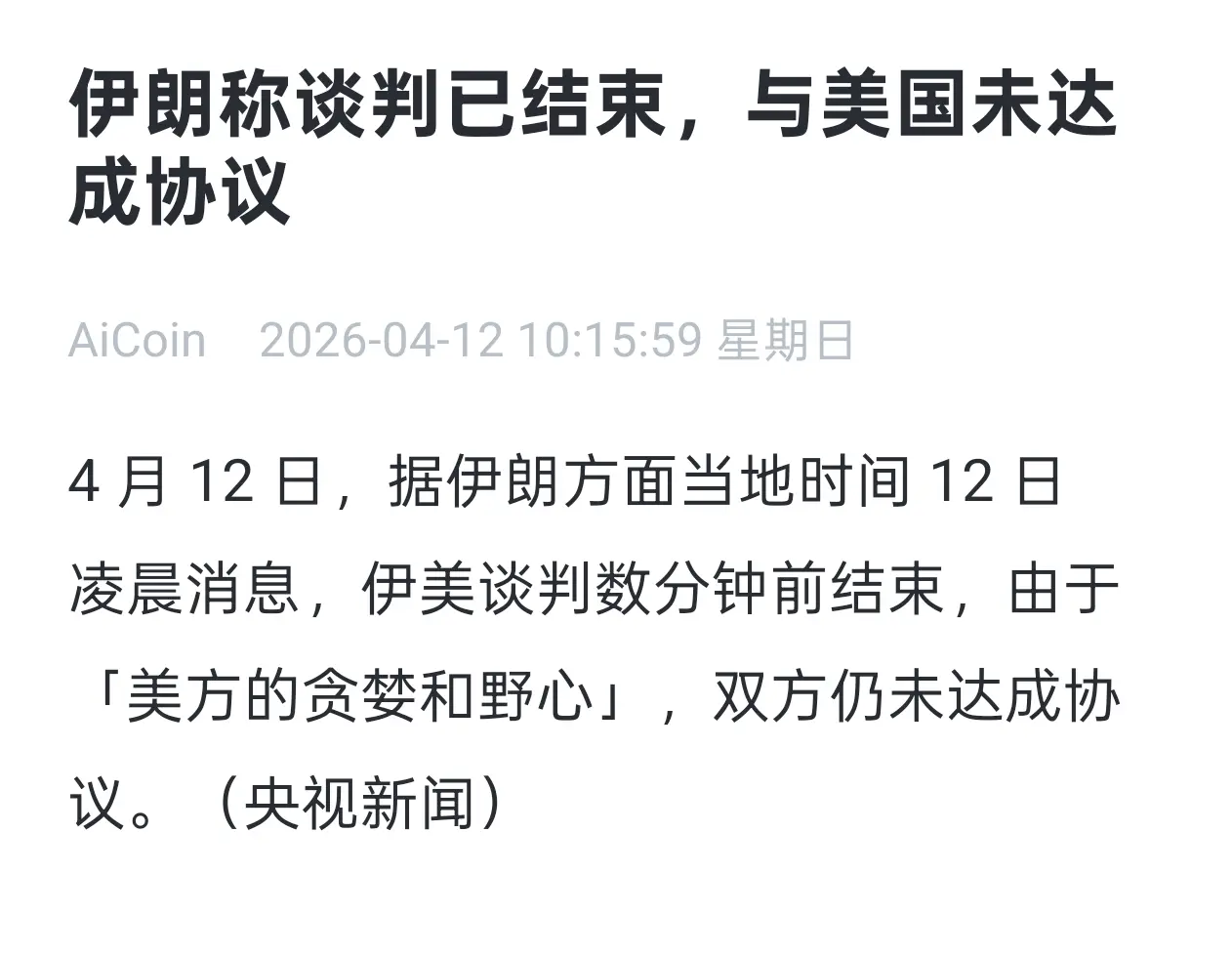
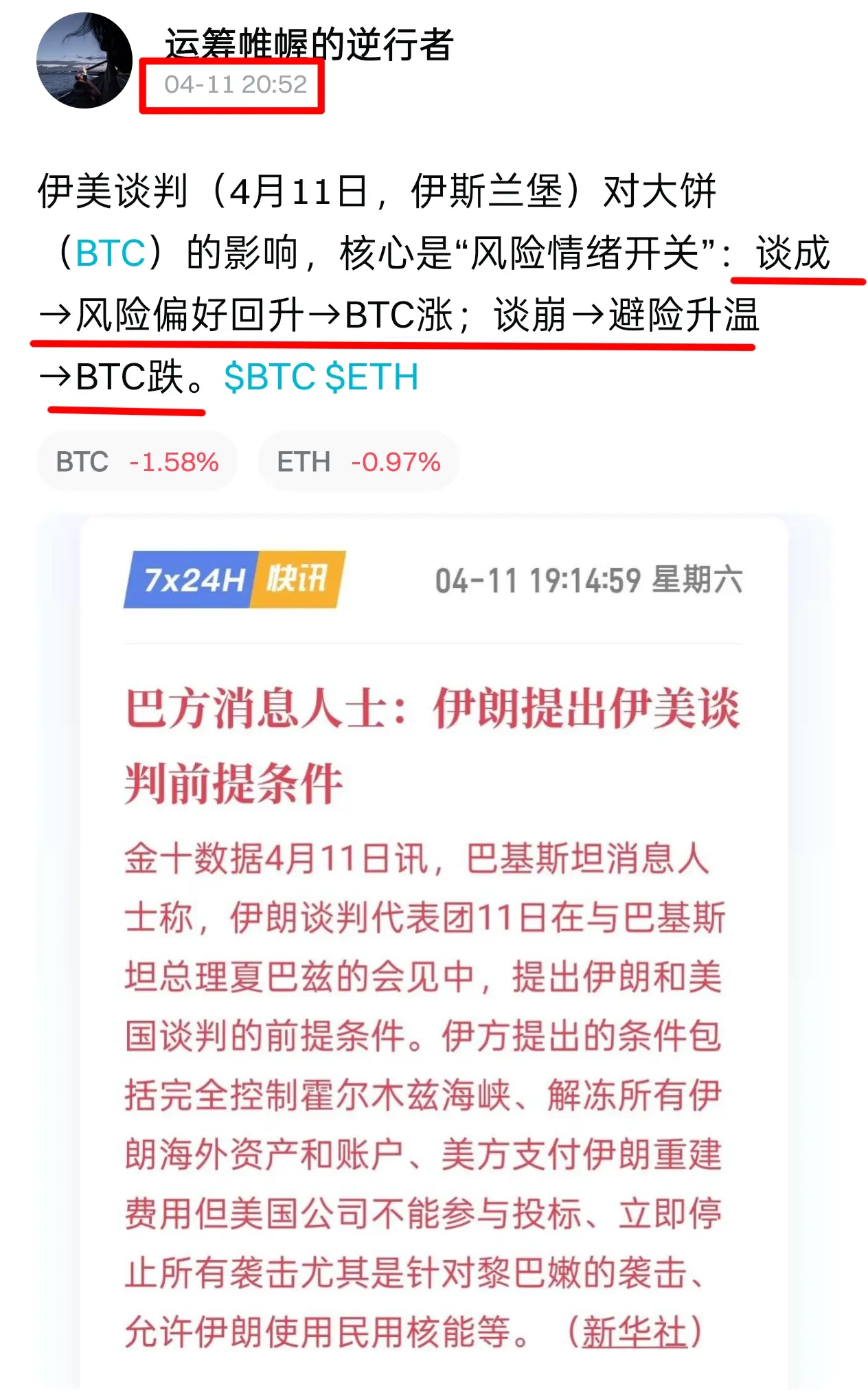
On April 12th, local time, after mediation by Pakistan, the third round of US-Iran negotiations in Islamabad concluded, with Iran stating this was the last chance to reach a framework agreement. The two-week ceasefire window is nearing its end, with sharp disagreements on three core issues, diplomatic games and military pressure intensifying simultaneously. The Middle East stands at the crossroads of war and peace, and global capital markets are holding their breath.
1. From war to ceasefire: the pragmatic logic of forced compromise
The US-Iran ceasefire this time is not out of goodwill, but a pragmatic retreat amid high war costs and failed objectives.
- US: Over a month of fighting, 13 soldiers killed, daily costs exceeding $1 billion, ammunition rapidly depleted. Failed to destroy Iran’s nuclear capability, and did not open the Strait of Hormuz. Domestic anti-war voices are rising, cracks appear within the Republican Party, and Trump urgently needs a “diplomatic victory” to mitigate electoral losses.
- Iran: Subjected to multiple airstrikes, high-level attacks, economic and livelihood pressures, but still controls the Strait, retains half of its arsenal, and refuses to submit to the US. The ceasefire aims to breathe, seek sanctions relief, asset thawing, and stabilize the regime and regional position.
2. Core contradictions: three deadlocks, two weeks unlikely to break
At the negotiation table, both sides’ demands are worlds apart, with three major issues refusing to budge:
1. Strait of Hormuz: US demands Iran fully open and international co-management; Iran insists on sovereignty control, negotiable transit rules, and refuses to abandon the strategic chokepoint.
2. Asset thawing abroad: Iran demands full unfreezing of frozen assets; the White House directly denies related commitments, only willing limited relaxations with harsh conditions.
3. Uranium enrichment: US demands Iran reduce to 3.67% and undergo comprehensive inspections; Iran refuses to give up nuclear capability, only willing limited concessions, and rejects linking missile and regional issues.
3. Both sides’ chips: hard power and vulnerabilities
- US chips: military superiority, global sanctions, cooperation with Israel, dollar hegemony;
Vulnerabilities: domestic anti-war sentiment, election pressures, allied disunity, high oil prices dragging down the economy.
- Iran chips: control of the Strait (20%-30% of global oil transit), missile and drone stockpiles, regional proxy networks, resistance will;
Vulnerabilities: economic sanctions, livelihood hardships, military losses.
4. Outlook prediction: three possible directions, many uncertainties
- Optimistic (40%): Achieve a temporary framework, extend ceasefire, Iran limits uranium enrichment, some assets unfreezed, Strait opened, negotiations continue.
- Neutral (45%): Maintain ceasefire, defer disagreements, establish working groups, limited Strait opening, prolong negotiations.
- Pessimistic (15%): Negotiations break down, fighting reignites, US targets infrastructure, Iran attacks Middle Eastern energy facilities, oil prices surge to $200/barrel.
The biggest variable: Israel. Netanyahu says he will continue striking Iran’s proxies or stir trouble through Lebanon conflicts, undermining ceasefire and negotiations, and consolidating domestic hardline support. Additionally, strong domestic hardline factions in the US and Iran oppose each other, with zero mutual trust—both are ticking time bombs.
5. Impact on global and Chinese markets
- Global capital markets—
Crude oil: smooth negotiations could bring prices back to $80-90; if negotiations break, prices could spike above $150, triggering stagflation risks.
- Stock markets: easing tensions may boost tech and consumer sectors; deterioration could cause global crashes, with military and energy sectors outperforming against the trend.
- Gold/USD: risk aversion rising boosts gold prices and strengthens the dollar; easing tensions weakens the dollar and causes gold to fluctuate.
- Tomorrow’s A-share trend—overall: risk appetite recovers, major indices oscillate upward, ChiNext more elastic.
- Beneficiary sectors: technology (AI, computing power), aerospace and shipping, mid- and downstream chemicals, consumer goods.
- Under pressure sectors: oil and gas, coal, military industry (risk aversion wanes).
- Risks: if negotiations suddenly turn sour, A-shares will quickly retreat, and safe-haven sectors will rise again.
A two-week ceasefire is a breathing space, not a final resolution. The essence of US-Iran negotiations is a “dignified ceasefire” game. Core disagreements are hard to resolve, and variables like Israel are brewing. The probability of reaching a comprehensive agreement within two weeks is extremely low; the most likely scenario is an extension of the ceasefire and postponement of disputes.
For markets, short-term focus on negotiation news pulses, medium-term on Strait navigation and sanctions easing. Investors should beware of black swans, control positions, buy on dips in growth and consumption sectors, and keep safe-haven sectors as hedges.
On April 12th, local time, after mediation by Pakistan, the third round of US-Iran negotiations in Islamabad concluded, with Iran stating this was the last chance to reach a framework agreement. The two-week ceasefire window is nearing its end, with sharp disagreements on three core issues, diplomatic games and military pressure intensifying simultaneously. The Middle East stands at the crossroads of war and peace, and global capital markets are holding their breath.
1. From war to ceasefire: the pragmatic logic of forced compromise
The US-Iran ceasefire this time is not out of goodwill, but a pragmatic retreat amid high war costs and failed objectives.
- US: Over a month of fighting, 13 soldiers killed, daily costs exceeding $1 billion, ammunition rapidly depleted. Failed to destroy Iran’s nuclear capability, and did not open the Strait of Hormuz. Domestic anti-war voices are rising, cracks appear within the Republican Party, and Trump urgently needs a “diplomatic victory” to mitigate electoral losses.
- Iran: Subjected to multiple airstrikes, high-level attacks, economic and livelihood pressures, but still controls the Strait, retains half of its arsenal, and refuses to submit to the US. The ceasefire aims to breathe, seek sanctions relief, asset thawing, and stabilize the regime and regional position.
2. Core contradictions: three deadlocks, two weeks unlikely to break
At the negotiation table, both sides’ demands are worlds apart, with three major issues refusing to budge:
1. Strait of Hormuz: US demands Iran fully open and international co-management; Iran insists on sovereignty control, negotiable transit rules, and refuses to abandon the strategic chokepoint.
2. Asset thawing abroad: Iran demands full unfreezing of frozen assets; the White House directly denies related commitments, only willing limited relaxations with harsh conditions.
3. Uranium enrichment: US demands Iran reduce to 3.67% and undergo comprehensive inspections; Iran refuses to give up nuclear capability, only willing limited concessions, and rejects linking missile and regional issues.
3. Both sides’ chips: hard power and vulnerabilities
- US chips: military superiority, global sanctions, cooperation with Israel, dollar hegemony;
Vulnerabilities: domestic anti-war sentiment, election pressures, allied disunity, high oil prices dragging down the economy.
- Iran chips: control of the Strait (20%-30% of global oil transit), missile and drone stockpiles, regional proxy networks, resistance will;
Vulnerabilities: economic sanctions, livelihood hardships, military losses.
4. Outlook prediction: three possible directions, many uncertainties
- Optimistic (40%): Achieve a temporary framework, extend ceasefire, Iran limits uranium enrichment, some assets unfreezed, Strait opened, negotiations continue.
- Neutral (45%): Maintain ceasefire, defer disagreements, establish working groups, limited Strait opening, prolong negotiations.
- Pessimistic (15%): Negotiations break down, fighting reignites, US targets infrastructure, Iran attacks Middle Eastern energy facilities, oil prices surge to $200/barrel.
The biggest variable: Israel. Netanyahu says he will continue striking Iran’s proxies or stir trouble through Lebanon conflicts, undermining ceasefire and negotiations, and consolidating domestic hardline support. Additionally, strong domestic hardline factions in the US and Iran oppose each other, with zero mutual trust—both are ticking time bombs.
5. Impact on global and Chinese markets
- Global capital markets—
Crude oil: smooth negotiations could bring prices back to $80-90; if negotiations break, prices could spike above $150, triggering stagflation risks.
- Stock markets: easing tensions may boost tech and consumer sectors; deterioration could cause global crashes, with military and energy sectors outperforming against the trend.
- Gold/USD: risk aversion rising boosts gold prices and strengthens the dollar; easing tensions weakens the dollar and causes gold to fluctuate.
- Tomorrow’s A-share trend—overall: risk appetite recovers, major indices oscillate upward, ChiNext more elastic.
- Beneficiary sectors: technology (AI, computing power), aerospace and shipping, mid- and downstream chemicals, consumer goods.
- Under pressure sectors: oil and gas, coal, military industry (risk aversion wanes).
- Risks: if negotiations suddenly turn sour, A-shares will quickly retreat, and safe-haven sectors will rise again.
A two-week ceasefire is a breathing space, not a final resolution. The essence of US-Iran negotiations is a “dignified ceasefire” game. Core disagreements are hard to resolve, and variables like Israel are brewing. The probability of reaching a comprehensive agreement within two weeks is extremely low; the most likely scenario is an extension of the ceasefire and postponement of disputes.
For markets, short-term focus on negotiation news pulses, medium-term on Strait navigation and sanctions easing. Investors should beware of black swans, control positions, buy on dips in growth and consumption sectors, and keep safe-haven sectors as hedges.