BlackRiderCryptoLord

vip
Age 0.6 Yıl
Peak Tier 0
No content yet
#StablecoinDeYieldDebateIntensifies
The Core Fight: Who Owns the Yield?
The single biggest battle in crypto today isn’t about which blockchain wins or which Layer 2 scales fastest. It’s about who ultimately captures the yield — the holders, or the issuers themselves. Tether and Circle, the two largest stablecoin issuers, collectively control over $420 billion in U.S. Treasuries, money market funds, and other liquid reserves. Yet, the majority of stablecoin holders earn almost nothing from these massive reserve profits. In 2024 alone, Tether pocketed over $10 billion in profits from its reserv
AAVE-8,29%
MORPHO-4,48%
HighAmbitionvip
#StablecoinDeYieldDebateIntensifies
The Core Fight: Who Owns the Yield?
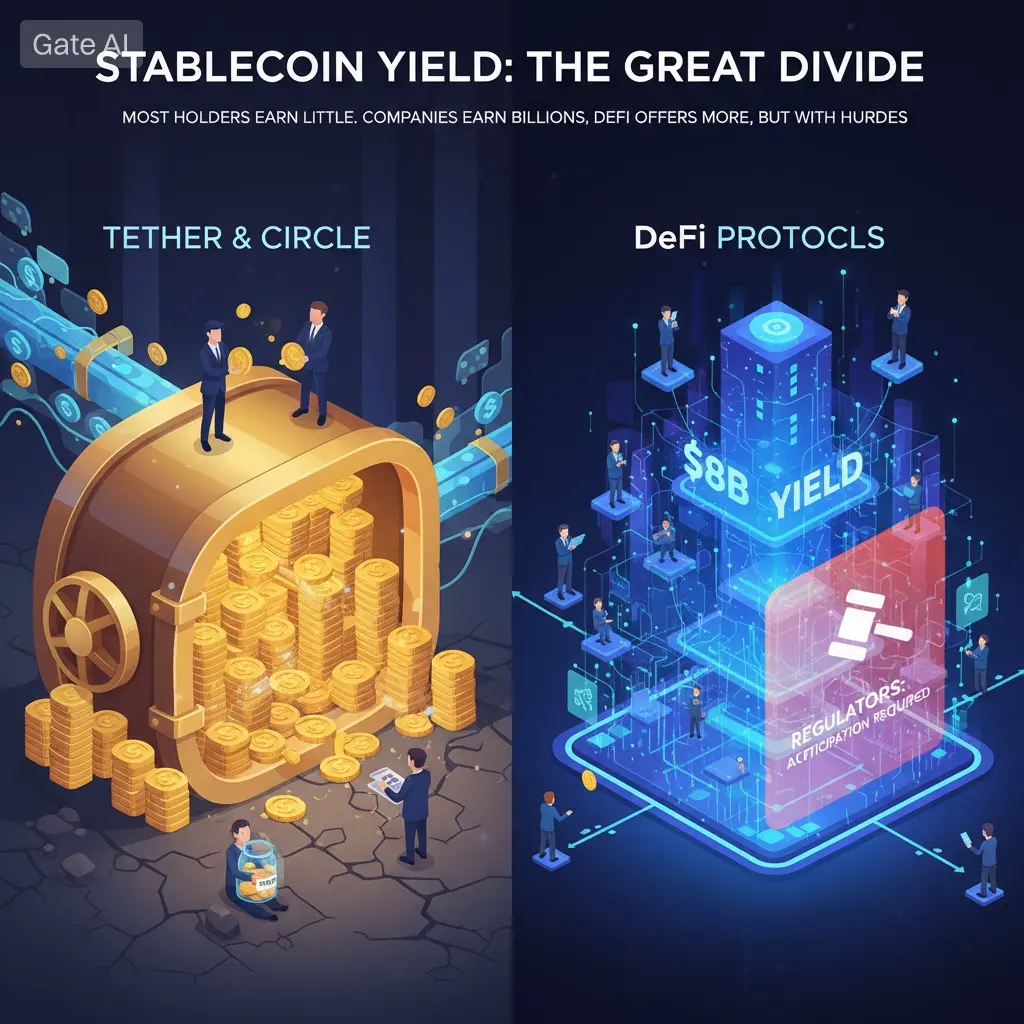
The single biggest battle in crypto today isn’t about which blockchain wins or which Layer 2 scales fastest. It’s about who ultimately captures the yield — the holders, or the issuers themselves. Tether and Circle, the two largest stablecoin issuers, collectively control over $420 billion in U.S. Treasuries, money market funds, and other liquid reserves. Yet, the majority of stablecoin holders earn almost nothing from these massive reserve profits. In 2024 alone, Tether pocketed over $10 billion in profits from its reserve allocations. Meanwhile, 58% of all stablecoin TVL generates less than 3% APY for holders — often below what even a standard savings account would pay.
USDC, for example, with a total TVL of $50.3 billion, delivers only 2.1% APY to holders, while USDT, with $85.7 billion TVL, offers 1.8% APY. Yield-bearing sUSDe, though offering higher APY of 4.1%, has a total TVL of only $2.1 billion, and most of its liquidity is concentrated on platforms like Aave and Morpho. This creates an unequal system where the infrastructure generates enormous yield, but only a small subset of active DeFi users can access it, leaving passive holders on the sidelines.
Globally, LATAM stablecoin volume reached $89 billion, but this usage is largely for remittances and savings, not for chasing yield. Users in Asia and Africa are following similar patterns: stability and accessibility are the priorities, not APY. This demonstrates the global stakes — regulatory decisions in the U.S. could ripple across continents, influencing adoption patterns in major emerging markets.
DeFi Yield Generation: The Reality of 2025
The DeFi ecosystem generated roughly $8 billion in on-chain yield in 2025. Automated Market Makers contributed $4.2 billion in trading fees, primarily from high-liquidity pools on Uniswap, SushiSwap, and Curve. Lending and borrowing platforms like Aave, Morpho, and Spark generated $1.76 billion, with APYs ranging from 2% to 5%, depending on demand, liquidity, and borrower risk. Real-World Asset protocols, including BlackRock’s BUIDL, contributed $600–900 million, offering returns typically between 1.5–3%, and perpetuals funding rates added another $300 million, albeit with high volatility and short-term exposure.
Despite these impressive numbers, passive stablecoin holders earn very little. Most yield remains concentrated in active protocols, creating a structural imbalance. The system works best for those who are actively managing their positions, providing liquidity, or participating in lending and borrowing. Passive holders — the majority — are left to rely on low, fixed APY rates from issuers who retain most of the profits.
Regulatory Flashpoint: Clarity Act 2026
The U.S. Senate’s Digital Asset Market Clarity Act, updated in March 2026, has sent shockwaves across crypto markets. Its most controversial provision bans passive yield, explicitly preventing stablecoin issuers from passing T-bill interest directly to holders. At the same time, it permits activity-based rewards, including lending, liquidity provisioning, and trading incentives.
The market reacted immediately. Circle stock dropped 12% in a single session, while Coinbase shares fell 8%. Active DeFi protocols experienced capital inflows, but lending spreads are compressing: Aave USDC is now at -1.97%, and sUSDe yields have compressed to -3.48%. This regulation forces passive holders into active management, increasing friction for average users and complicating adoption for retail investors who prefer a “set-and-forget” APY.
The legislation mirrors the earlier GENIUS Act of mid-2025, which already prohibited stablecoin yield on parked funds. By doubling down, the Clarity Act signals that regulators want yield to be earned through activity, not ownership, effectively shifting the ecosystem from a passive income model to an active participation economy.
Bull Case: DeFi Poised to Benefit
This regulatory shift could dramatically accelerate DeFi adoption. Capital that previously sat idle in stablecoins will flow into active protocols like Aave, Morpho, Pendle, and RWA lending vaults. The total stablecoin market could expand from current levels to $780 billion or more, potentially capturing the market traditionally held by money market funds.
Regulated DeFi yield could emerge as a legitimate product category, challenging the banks’ deposit monopoly. Even at reduced APY rates, absolute revenue could rise significantly. For example, $50 billion at 2% APY generates more total revenue than $10 billion at 5%, illustrating that a larger pie at lower yields can benefit the ecosystem. Moreover, this regulatory clarity could attract institutional participation, providing liquidity depth and long-term stability to the DeFi ecosystem.
Bear Case: Yield Compression and Friction Risks
On the other hand, the new framework risks friction and yield compression. Passive holders who expected stable returns of 4–5% are now forced to actively manage positions or join DeFi protocols, increasing complexity. Narrow legislative language creates compliance grey zones, potentially slowing institutional entry rather than accelerating it.
Global adoption could also be impacted. Users in LATAM, Asia, and Africa primarily rely on stablecoins for remittances and savings, not yield farming. Overly restrictive regulation could push these users toward unregulated alternatives, reducing the reach of compliant stablecoins and slowing broader adoption of crypto rails for everyday finance.
The Bigger Picture: Global Implications
The issue isn’t simply DeFi versus TradFi. It’s about whether public blockchain financial infrastructure should redistribute economic value to users or consolidate it at the issuer level, replicating the dynamics of traditional banks. Yield exists across AMMs, lending, RWA protocols, and perpetual funding rates, but the battle is over who owns it.
The next few months, including the Senate Banking Committee markup expected in late April 2026, could determine whether stablecoins evolve into efficient, regulated global savings rails or remain primarily a profit center for issuers. Positioning early is crucial: the choice is between capturing active yield in DeFi or remaining part of the issuer profit engine.
Bottom Line:
Yield exists everywhere in the ecosystem — from AMM fees and lending to RWA and perpetual protocols — but regulatory and structural dynamics are determining who benefits most. The fight is not theoretical; it’s already shaping markets, liquidity flows, APYs, and institutional participation. Crypto participants must choose whether to remain passive or become active to capture the emerging value streams.
repost-content-media
  • Reward
  • Comment
  • Repost
  • Share
#UKToSuspendCryptoPoliticalDonations
On March 25, 2026, UK Prime Minister Keir Starmer announced an immediate ban on all cryptocurrency donations to political parties, following the independent Rycroft Review that examined risks of foreign interference in UK politics. The announcement also introduced an annual £100,000 cap on donations from British citizens abroad and proposed reducing the political donation disclosure threshold from £11,180 to just £500, signaling a major tightening of transparency rules. This move comes amid fears that crypto donations, due to their inherent pseudonymity, c
BTC-4,24%
ETH-4,07%
HighAmbitionvip
#UKToSuspendCryptoPoliticalDonations
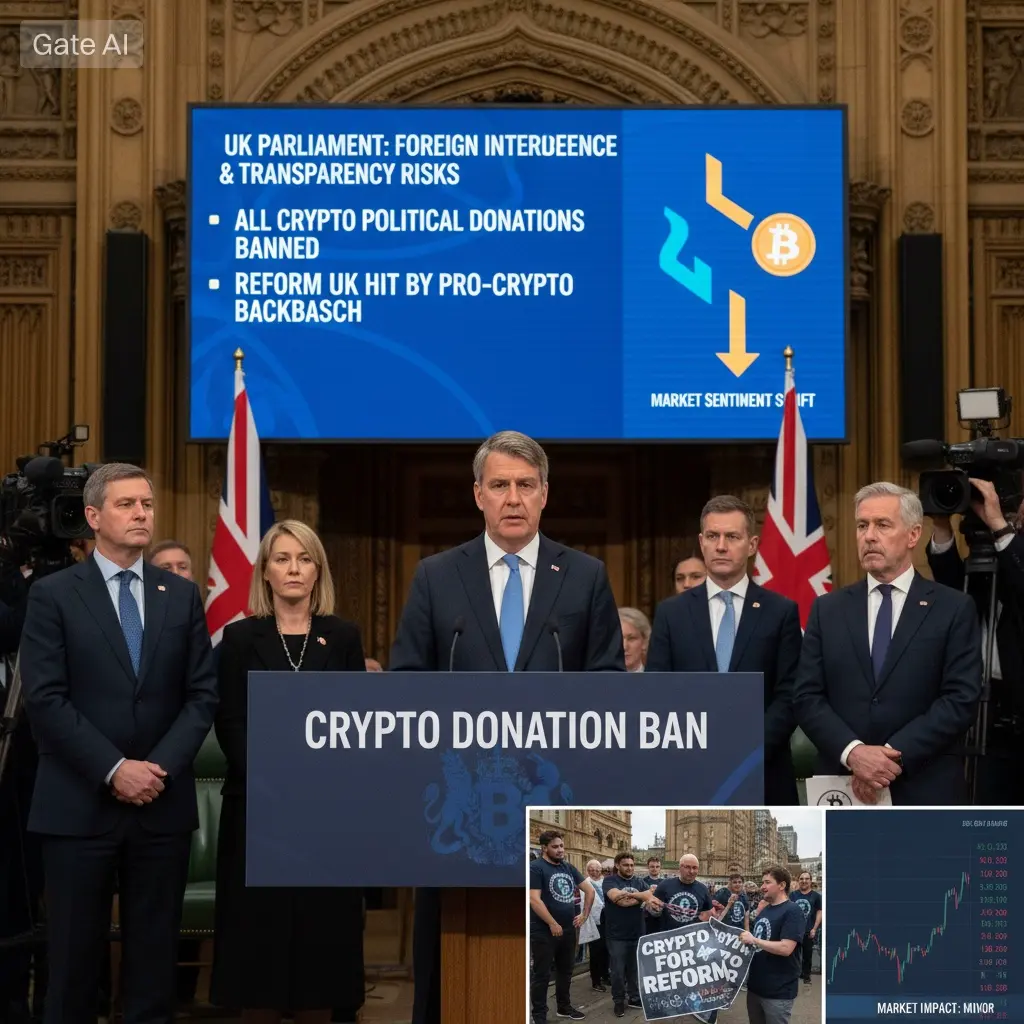
On March 25, 2026, UK Prime Minister Keir Starmer announced an immediate ban on all cryptocurrency donations to political parties, following the independent Rycroft Review that examined risks of foreign interference in UK politics. The announcement also introduced an annual £100,000 cap on donations from British citizens abroad and proposed reducing the political donation disclosure threshold from £11,180 to just £500, signaling a major tightening of transparency rules. This move comes amid fears that crypto donations, due to their inherent pseudonymity, could be exploited by foreign entities to influence UK political parties, as highlighted by past incidents involving Reform UK politicians and pro-Russian lobbying attempts.
The ban primarily affects Reform UK, the only Westminster party openly accepting Bitcoin, which had received £5.5 million in crypto donations in 2025, including a single £3 million contribution from Christopher Harborne. Traditional GBP donations are fully traceable through Companies House and HMRC, but crypto donations can obscure identity even on public blockchains, creating a high-risk vector for political finance. A cross-party parliamentary committee had already recommended a moratorium before Starmer’s announcement, providing institutional legitimacy to the ban.
While the direct financial impact on the crypto market is minimal, since the total volume of crypto donated to UK parties is a tiny fraction of global market liquidity, the signal is significant. Institutional and retail investors track government sentiment closely. The UK framing crypto as a vehicle for "illicit finance" and a threat to democratic integrity sends a negative regulatory signal, potentially influencing other jurisdictions. In contrast, the US has taken an embracing stance, integrating crypto into political donations, creating a global regulatory divide.
The ban also undermines the UK’s ambition to become a crypto hub. London has been courting crypto firms, promoting digital asset ETFs, and developing stablecoin frameworks. Yet legislating crypto out of politics while simultaneously welcoming it in finance sends mixed signals, potentially affecting liquidity inflows and the decision of crypto firms to base operations in the UK. Reform UK’s previous acceptance of Bitcoin was a visible political ally for crypto, providing legitimacy within the Westminster system. With this channel removed, the industry loses a key foothold in political influence.
The precedent risk is significant. If the UK, a G7 financial heavyweight, restricts crypto in political finance citing national security, other nations, including the EU, Canada, Australia, and Japan, may follow. This could affect global adoption sentiment and indirectly influence price volatility, trading volume, and institutional participation. HMRC’s intensified surveillance — over 100,000 “nudge letters” sent to crypto holders between 2020–2025, more than 40x those for equities — reinforces the picture of a government treating crypto as a financial risk to be contained rather than a mainstream technology.
It is critical to note what this does not mean: crypto ownership, trading, and exchanges like Gate remain unaffected, BTC and ETH fundamentals are unchanged, and institutional adoption in markets like the US continues unabated. The immediate market reaction in terms of liquidity and pricing was muted, but the broader regulatory sentiment creates a yellow-flag risk, particularly for institutions evaluating UK exposure or European expansion.
Bottom line: The UK crypto donation ban is a regulatory signal, not a market crash. It weakens political allies, complicates the crypto hub narrative, and sets a precedent other G7 nations may follow. Crypto holders and investors should monitor whether the EU or other major economies adopt similar restrictions, as that would be a market-moving escalation. For now, the ban highlights regulatory friction, underscores political scrutiny of crypto, and may affect trading volume, liquidity flows, and institutional confidence in UK-based crypto operations — all while global markets continue to price in contrasting US policy, creating a geopolitical regulatory split that could influence sentiment and adoption trends worldwide.
repost-content-media
  • Reward
  • Comment
  • Repost
  • Share
#CircleFreezes16HotWallets

On March 24‑26, 2026, Circle, the issuer of the major USDC stablecoin, temporarily froze USDC funds in 16 active hot wallets used by exchanges, casinos, forex and other crypto services amid a sealed U.S. civil case. Some wallets were later unfrozen after industry backlash.
Here’s everything you need to know — clearly & briefly:
🔍 1) What Really Happened
👉 Circle restricted access to 16 USDC hot wallets that were actively processing business transactions.
👉 These wallets held significant USDC liquidity, not dormant or suspicious addresses.
👉 A few wallets were
HighAmbitionvip
#CircleFreezes16HotWallets

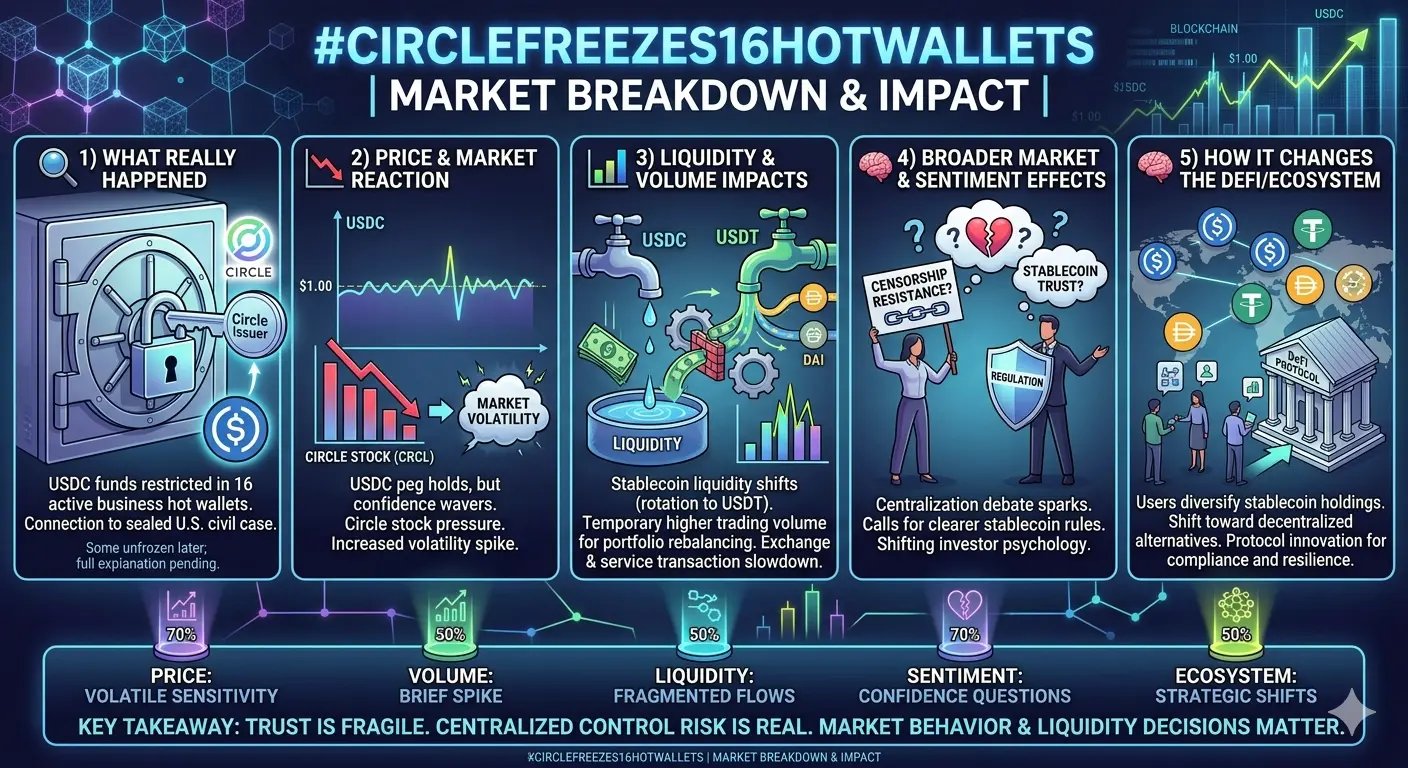
On March 24‑26, 2026, Circle, the issuer of the major USDC stablecoin, temporarily froze USDC funds in 16 active hot wallets used by exchanges, casinos, forex and other crypto services amid a sealed U.S. civil case. Some wallets were later unfrozen after industry backlash.
Here’s everything you need to know — clearly & briefly:
🔍 1) What Really Happened
👉 Circle restricted access to 16 USDC hot wallets that were actively processing business transactions.
👉 These wallets held significant USDC liquidity, not dormant or suspicious addresses.
👉 A few wallets were later restored after community pushback — but a full explanation hasn’t been publicly shared.
Hot wallets are connected online and used for regular transfers — so freezing them disrupts routine operations.
📉 2) price & Market Reaction
📌 Stablecoin Shock: USDC’s price remained mostly stable, but market confidence wavered due to issuer control risk.
📉 Circle/CRCL Stock Moves: The company behind USDC saw sharp sell‑offs and stock pressure as investor anxiety rose.
💹 Volatility Spike: Uncertainty around freezing powers tends to increase trading volatility as traders adjust positions.
Key takeaway: Even though USDC stayed near its $1 peg, trust concerns drove short‑term price sensitivity and broader risk sentiment.
📊 3) Liquidity & Volume Impacts
💧 Stablecoin Liquidity Shift: Some USDC users rotated capital into other stablecoins like USDT, fragmenting liquidity flows.
📈 Higher Trading Volume: Short‑term activity spiked as traders rebalanced portfolios — typical when confidence is tested.
💱 Exchange & Service Flows: Businesses temporarily lost access to transaction liquidity, slowing transactions and cash flow.
Stablecoins are often the backbone of crypto liquidity, so disruptions can ripple into order book depth, execution quality, and funding rates.
🧠 4) Broader Market & Sentiment Effects
🔎 Trust & Permissionless Claims: Many in crypto argued this highlights the limitations of centralized stablecoins, sparking debate about censorship resistance.
⚖ Regulation Risk: Events like this often accelerate calls for clearer rules on stablecoin governance and issuer powers.
💬 Investor Psychology: The market reacts as much to perception as fundamentals — and perceived control over liquidity can shift sentiment.
🧠 5) How it Changes the DeFi/Ecosystem Landscape
📍 Stablecoin Choice Matters: Dependence on a single issuer heightens systemic risk — some users may diversify stablecoin holdings.
📉 Risk on Centralization: Investor focus may shift toward more decentralized alternatives or multi‑reserve stablecoins.
📈 Innovation & Compliance: Platforms might redesign protocols to reduce single‑point control risks while remaining compliant.
🧠 Quick Summary — What This Means for Crypto
✔ Price: USDC managed to stay pegged, but trust pressure created volatility in related assets.
✔ Volume: Trading volumes rose briefly as rotation and rebalancing took place.
✔ Liquidity: Some liquidity flows moved away from USDC, increasing fragmentation.
✔ Sentiment: Confidence questions around stablecoin centralized control became a market
🚀 Final Thought
Events like this remind the crypto world that security, transparency, and issuer governance matter just as much as protocols and technology. The market impact may be subtle in prices but profound in trust, behavior, and strategic liquidity decisions.
repost-content-media
  • Reward
  • Comment
  • Repost
  • Share
#CreatorLeaderboard
The Creator Leaderboard is more than a ranking system — it is a platform that highlights the most impactful contributors in the crypto ecosystem. These are the analysts, educators, strategists, and community builders who consistently share high-quality insights, market research, and actionable strategies. By recognizing and promoting their contributions, the leaderboard helps the broader crypto community discover trusted voices and make informed decisions.
What the Creator Leaderboard Represents
At its core, the leaderboard reflects community recognition, transparency, and
HighAmbitionvip
#CreatorLeaderboard
The Creator Leaderboard is more than a ranking system — it is a platform that highlights the most impactful contributors in the crypto ecosystem. These are the analysts, educators, strategists, and community builders who consistently share high-quality insights, market research, and actionable strategies. By recognizing and promoting their contributions, the leaderboard helps the broader crypto community discover trusted voices and make informed decisions.
What the Creator Leaderboard Represents
At its core, the leaderboard reflects community recognition, transparency, and credibility. Creators are ranked based on the quality and value of their content, engagement with the community, and accuracy of market predictions. It emphasizes the importance of trust and expertise in a rapidly evolving market. For both new and experienced traders, the leaderboard serves as a reliable source of insight that can guide decision-making and enhance understanding of complex market dynamics.
Market Influence and Sentiment
The content shared by top creators has a direct impact on market sentiment and behavior. Traders often rely on creator insights to interpret price movements, liquidity conditions, and trading opportunities. A well-researched analysis can boost confidence in specific assets or market phases, while thoughtful critiques or warnings can prevent losses and stabilize trader behavior.
Creators also contribute to market education, reducing mistakes by providing clear explanations of trading mechanics, risk management, and market cycles. When high-quality insights are shared widely, the market becomes more efficient, and misinformation declines.
Trading Strategy Implications
Creators on the leaderboard focus on multiple aspects of trading:
Technical Analysis: Identifying trends, chart patterns, momentum indicators, volume changes, and key support and resistance levels.
Fundamental Analysis: Evaluating project fundamentals, protocol upgrades, adoption metrics, and macroeconomic factors.
Risk Management: Advising on position sizing, stop-loss strategies, and portfolio diversification.
Sentiment Analysis: Highlighting on-chain activity, social trends, and behavioral signals that can precede market moves.
By following top creators, traders gain a strategic advantage, improving the quality of their market entries and exits while staying informed about emerging trends and potential risks.
Market Analysis — Leaderboard Impact
The influence of creators often manifests in trading volume, liquidity, and price movement patterns.
Volume: Popular insights can trigger higher trading volumes as followers act on signals.
Liquidity: When multiple traders align with creator guidance, liquidity clusters form at key price levels, enhancing market depth and execution efficiency.
Price: While creators alone do not drive prices, their collective influence can coincide with market phases such as bull runs, consolidations, or corrections.
Over time, the leaderboard creates a feedback loop where reliable insights reinforce positive market behavior, improving overall market health.
Gate.io and Gate Square — Empowering Creators and Traders
Gate.io is recognized for its security, liquidity, and innovation, providing traders with robust tools for analysis and execution. Gate Square complements this by offering a vibrant community hub where creators, traders, and analysts converge to share knowledge, discuss strategies, and elevate collective understanding.
The leaderboard within Gate Square rewards value creation, giving creators a platform to grow their influence while helping users filter quality insights from noise. This system strengthens the ecosystem by encouraging data-driven content and rewarding expertise.
Practical Takeaways for Traders and Investors
Follow consistent, data-backed creators to enhance your trading perspective.
Use insights as guidance, not absolute signals, combining them with your research and risk assessments.
Focus on risk management — even top creators cannot predict sudden market shocks.
Diversify your information sources to avoid overreliance on any single viewpoint.
Leverage Gate.io’s advanced tools for real-time charts, on-chain data, and trading execution to act on insights effectively.
Conclusion
The Creator Leaderboard is a lighthouse in the complex crypto market, promoting credible voices, quality analysis, and informed participation. By bridging creators and traders, it enhances transparency, improves market literacy, and supports smarter decision-making. Platforms like Gate.io and Gate Square are pivotal in this ecosystem, enabling creators to shine and empowering users to navigate the market with confidence.
This is not just a leaderboard — it is a community-driven mechanism that raises the standard of crypto analysis and strengthens the foundation of digital asset trading.
repost-content-media
  • Reward
  • Comment
  • Repost
  • Share
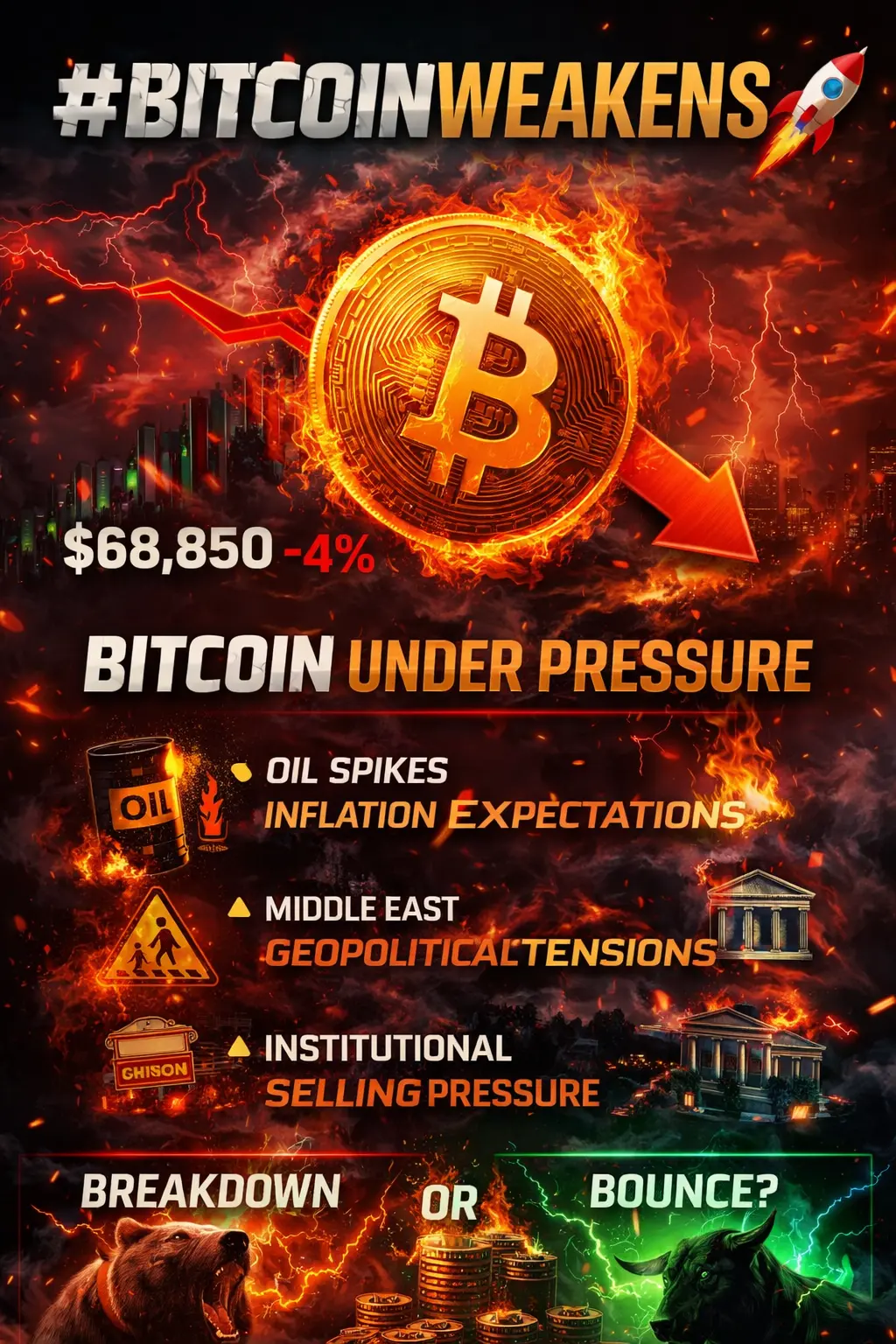
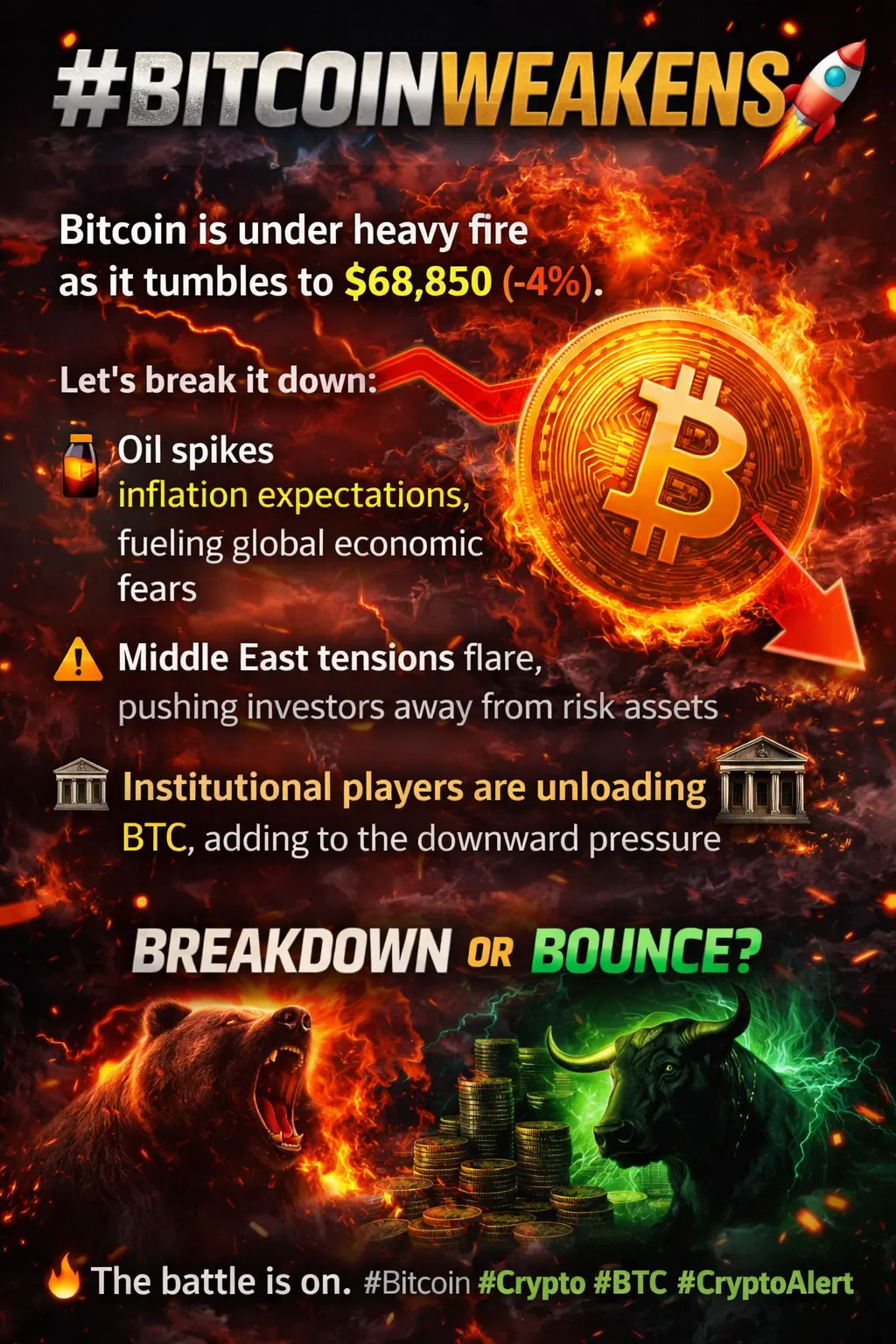
#BitcoinWeakens
Bitcoin does not weaken without a reason.
There is always something happening behind the move, but most people only look at the price.
Right now, many people think Bitcoin is “weak,” but they are misunderstanding the situation.
Weak compared to what?
Last week’s price?
Market expectations?
Or the hype people followed without understanding?
Price changes are temporary.
Understanding the situation is more important.
Let’s be clear:
This is not a collapse of Bitcoin.
It is a test of investor confidence.
Bitcoin often looks weak just before it becomes strong again.
What is happeni
BTC-4,24%
post-image
post-image
  • Reward
  • Comment
  • Repost
  • Share
#OilPricesResumeUptrend
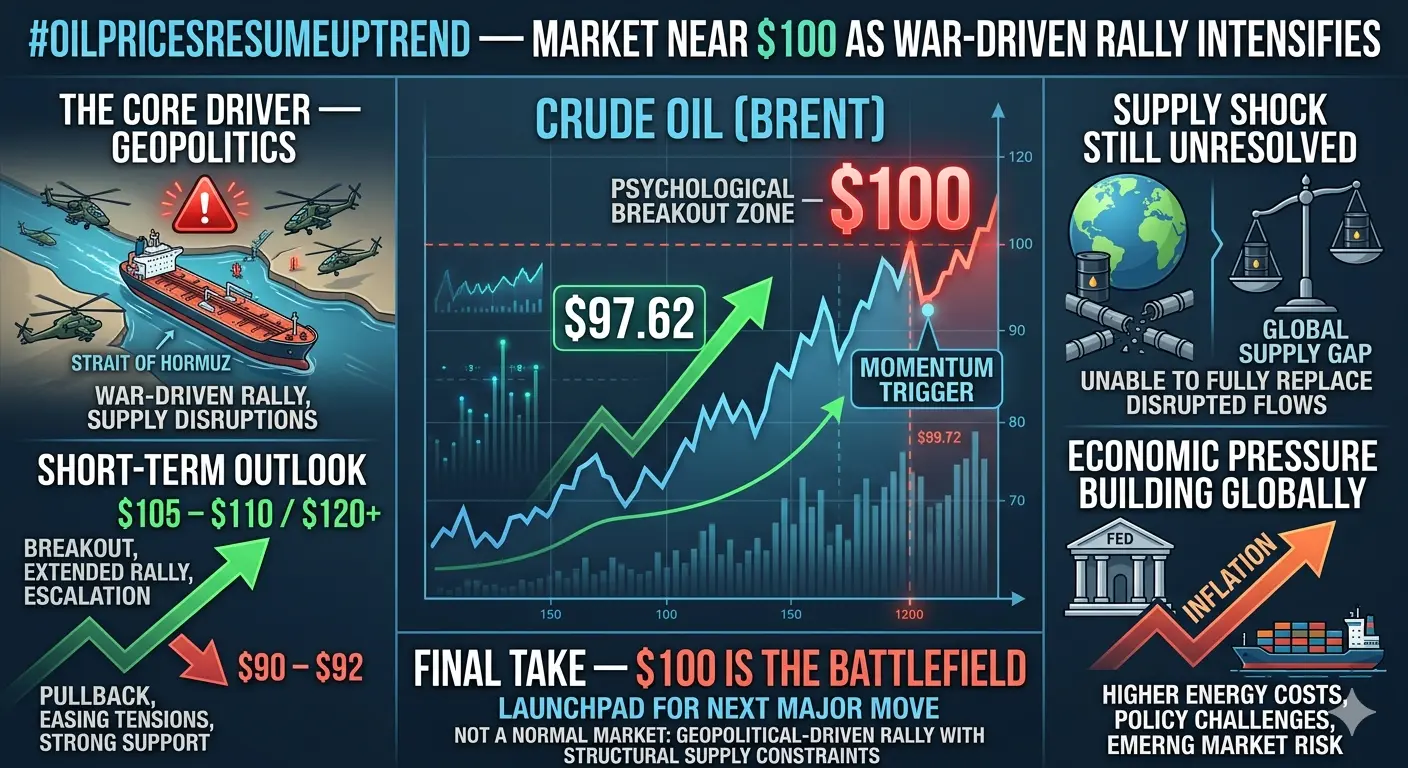
#OilPricesResumeUptrend — Market Near $100 as War-Driven Rally Intensifies
Oil Near Triple Digits — Momentum Still Building
Crude oil is now trading around $97.62, putting the market just a step away from reclaiming the critical $100 level. This zone is not just psychological—it acts as a momentum trigger where breakout flows, hedge activity, and speculative buying tend to accelerate sharply. The recent rally has been aggressive, and despite minor pullbacks, the structure remains firmly bullish with buyers consistently stepping in on dips. This suggests that the market
HighAmbitionvip
#OilPricesResumeUptrend
#OilPricesResumeUptrend — Market Near $100 as War-Driven Rally Intensifies
Oil Near Triple Digits — Momentum Still Building
Crude oil is now trading around $97.62, putting the market just a step away from reclaiming the critical $100 level. This zone is not just psychological—it acts as a momentum trigger where breakout flows, hedge activity, and speculative buying tend to accelerate sharply. The recent rally has been aggressive, and despite minor pullbacks, the structure remains firmly bullish with buyers consistently stepping in on dips. This suggests that the market is not yet exhausted and could be preparing for another leg higher.
The Core Driver — Geopolitics Controlling the Market
The ongoing conflict centered around the Strait of Hormuz continues to dominate price action. With a significant portion of global oil supply disrupted, the market is being driven less by traditional demand-supply cycles and more by geopolitical risk premium. As long as this chokepoint remains unstable, oil prices will likely stay elevated with sudden spikes on any escalation headlines.
Short-Term Outlook — Where Can Price Go Next?
From the current $97.62 level, the market is sitting just below a breakout zone. If momentum continues and price sustains above $100, the next upside targets quickly open toward the $105–$110 range, where historical resistance and liquidity clusters exist. In a stronger continuation scenario—especially if geopolitical tensions escalate further—prices could extend toward the $120+ zone, revisiting extreme levels seen during past supply shocks.
However, if the market fails to hold above $100 and faces temporary easing in tensions, a short-term pullback toward the $90–$92 support zone is possible. Even in that case, the broader structure remains bullish unless there is a major geopolitical resolution.
Supply Shock Still Unresolved
Despite small adjustments from OPEC+, the global supply gap remains significant. Alternative routes and reserves are unable to fully replace the disrupted flows, keeping the market structurally tight. This ongoing imbalance is the key reason why dips are being bought aggressively and why downside remains limited for now.
Economic Pressure Building Globally
Higher oil prices are already feeding into inflation, transportation costs, and global supply chains. Central banks like the Federal Reserve are now facing increased pressure as energy-driven inflation complicates policy decisions. Emerging markets are particularly vulnerable, with rising import costs and currency pressure adding another layer of risk to the global economy.
Volatility Trigger — Diplomacy vs Escalation
The biggest wildcard remains geopolitics. Any positive diplomatic development could quickly cool prices, while further escalation could send oil sharply higher in a very short time. This creates a highly reactive market environment where sentiment can shift rapidly on headlines
.
Final Take — $100 Is the Battlefield
Oil at $97.62 is not just a number—it’s a launchpad. The market is approaching a key breakout zone, and the reaction around $100 will likely define the next major move. A clean break above could accelerate the rally toward $110 and beyond, while rejection may trigger a temporary pullback—but not necessarily a trend reversal.
Right now, this is not a normal market—it’s a geopolitical-driven rally with structural supply constraints, and until the situation around the Strait of Hormuz stabilizes, the upside risk in oil remains firmly intact.
repost-content-media
  • Reward
  • Comment
  • Repost
  • Share
#GateOfficiallyIntegratesPolymarket
🚀 🔥 Big News in Crypto!
Gate has officially integrated Polymarket — becoming the world’s first centralized exchange (CEX) to bring prediction markets directly into its trading ecosystem.
📅 March 27, 2026 — This groundbreaking feature is now live in public beta, opening the door to a whole new era of event-driven trading.
⚡ Seamless Trading Experience
No complexity. No barriers.
✔ Trade directly using USDT from your spot account
✔ No wallet setup required
✔ No on-chain transactions or gas fees
Simply update your Gate App (v8.12.5+) and start predicting!
GT-2,42%
post-image
post-image
  • Reward
  • Comment
  • Repost
  • Share
#GateOfficiallyIntegratesPolymarket
Here’s your high-quality, polished version of the post (more professional, engaging, and powerful tone):
🔮 The Prediction Economy Has Officially Gone Mainstream
Gate.io × Polymarket — two platforms, one bold vision.
The future of finance isn’t waiting. It’s already unfolding.
For years, prediction markets existed on the edge — niche, misunderstood, and often dismissed as experimental. A space where only a few explored the potential of event-based trading while the broader financial world looked away.
That era is over.
🚀 What Just Changed
This integration
post-image
  • Reward
  • Comment
  • Repost
  • Share
#CryptoMarketClimbs
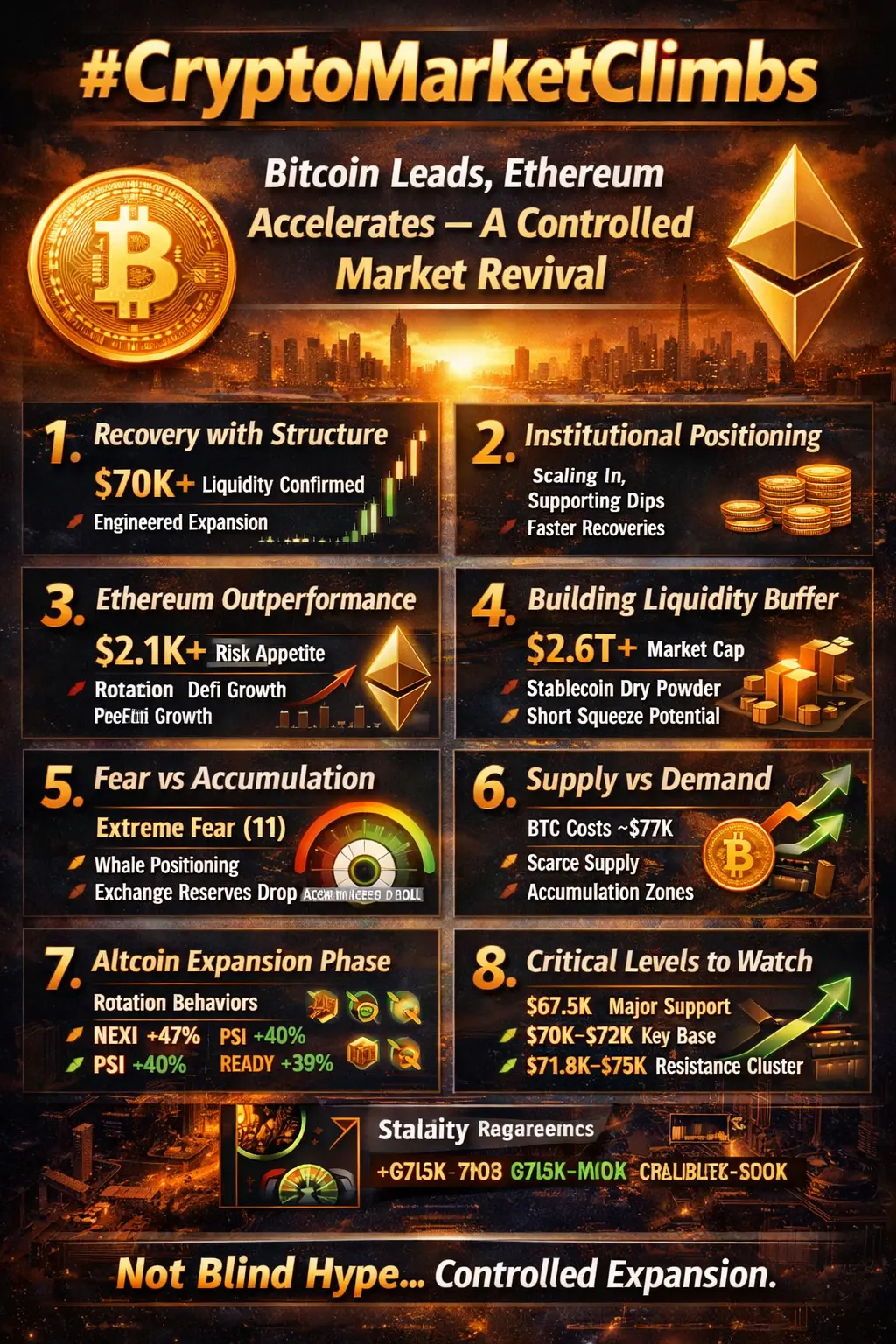
🚀 Bitcoin Leads, Ethereum Accelerates — A Controlled Market Revival
After weeks of compression, uncertainty, and macro pressure, the crypto market is no longer drifting —
it’s re-structuring.
Bitcoin reclaiming the $70K level is not just a recovery…
it’s a signal of underlying strength returning with discipline.
This isn’t a hype-driven rally.
This is capital positioning.
⚡ 1. A Recovery Backed by Structure, Not Emotion
BTC holding above $70K, after tapping $71.8K, reflects more than momentum —
it reflects liquidity alignment.
Key characteristics of this move:
• Tight con
BTC-4,24%
ETH-4,07%
AAVE-8,29%
NEXI-1,87%
post-image
  • Reward
  • Comment
  • Repost
  • Share
#BTCBreaks$71000
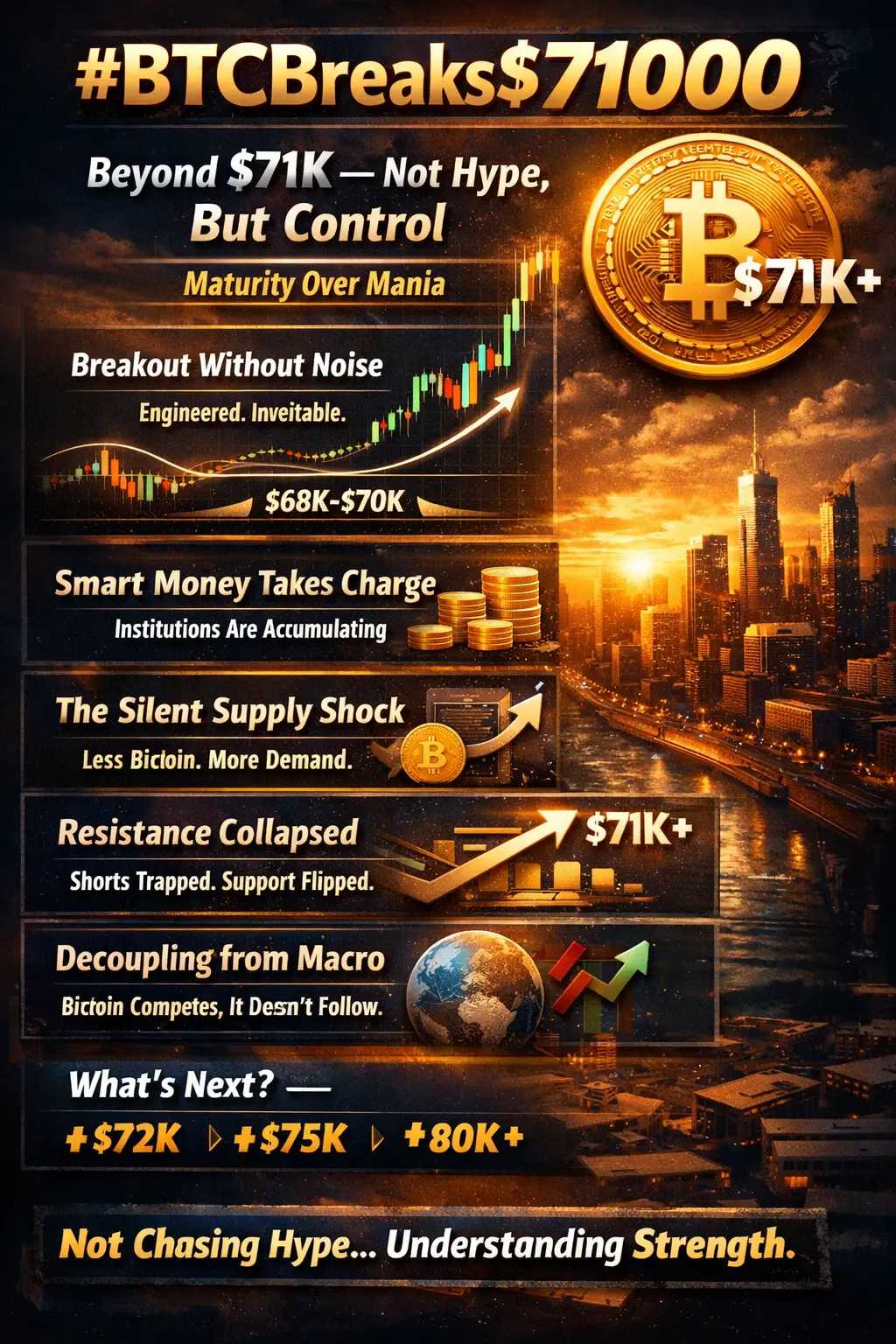
🚀 Bitcoin Above $71K — Not Hype, But Control
Bitcoin pushing beyond $71,000 isn’t just another breakout — it’s a structural statement.
No euphoria. No chaos. No retail frenzy.
This is something the market rarely delivers at all-time highs: controlled strength.
After tapping near $71.8K and holding firmly above $70K, Bitcoin isn’t chasing attention —
it’s absorbing capital with precision.
This is what a maturing market looks like.
⚡ 1. Breakout Without Noise
Previous cycles were driven by emotion — explosive rallies, violent pullbacks, and hype-driven momentum.
This time?
The
BTC-4,24%
post-image
post-image
  • Reward
  • Comment
  • Repost
  • Share
#GateOfficiallyIntegratesPolymarket
🚀 Gate x Polymarket — Redefining the Future of Event Trading
Gate has taken a bold leap into the next frontier of crypto innovation by becoming the first centralized exchange (CEX) to integrate Polymarket—unlocking a powerful, next-generation prediction market ecosystem. This move signals a paradigm shift, transforming how users engage with global narratives, from financial markets to geopolitical and cultural events.
🔮 From Trading Assets to Trading Outcomes
This integration introduces a new asset class: event-driven speculation. Users are no longer limi
BTC-4,24%
post-image
post-image
  • Reward
  • 1
  • Repost
  • Share
HighAmbitionvip:
2026 GOGOGO 👊
#CryptoMarketVolatility
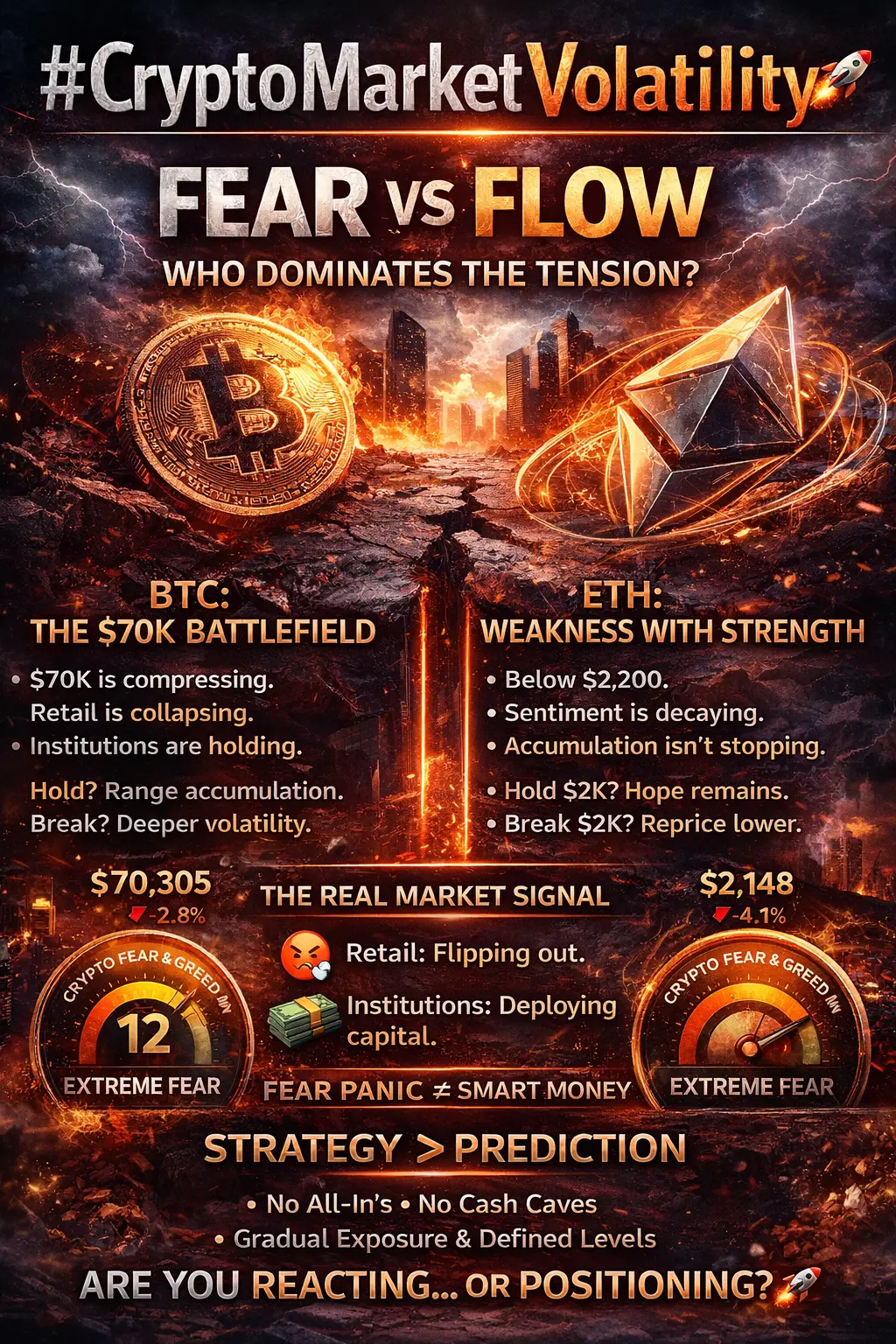
The market isn’t just weak—it’s testing conviction.
BTC briefly lost the $69K level before reclaiming $70K, while ETH cracked below $2,200 and is now hovering near critical ground. Meanwhile, the Fear & Greed Index has collapsed to 12 (Extreme Fear), and retail participation is fading fast. On the surface, this looks like classic distribution.
But beneath that surface, something far more strategic is unfolding.
While retail sentiment is breaking down, institutional behavior is doing the opposite. ETF inflows remain steady, corporate accumulation continues, and large of
BTC-4,24%
ETH-4,07%
post-image
  • Reward
  • 3
  • Repost
  • Share
BlackRiderCryptoLordvip:
2026 GOGOGO 👊
View More
#TradFiIntroducesMultiLeverageFirst
The line between Wall Street and crypto degeneracy just got erased.
For years, leverage was crypto’s unfair advantage—50x, 100x, and capital efficiency that TradFi couldn’t match. While institutions were stuck in slow, over-regulated systems, DeFi dominated the high-risk, high-reward game.
Not anymore.
TradFi has fired back with its first multi-leverage product, blending equities and crypto inside a single, regulated margin engine. Think AAPL + NVDA + BTC in one account—with cross-margining unlocking capital efficiency that even DeFi struggles to deliver.
T
BTC-4,24%
post-image
post-image
post-image
  • Reward
  • 1
  • Repost
  • Share
BlackRiderCryptoLordvip:
To The Moon 🌕
#Gate13thAnniversaryGlobalCelebration
Thirteen years in crypto is not longevity—it’s proof of resilience, adaptability, and dominance in one of the most unforgiving financial arenas on the planet. The #Gate13thAnniversaryGlobalCelebration is not merely a milestone; it is a declaration of survival through volatility, innovation through disruption, and leadership through transformation.
In an industry where most platforms fade with market cycles, Gate has continuously reinvented itself, evolving from a traditional exchange into a multi-dimensional digital asset powerhouse. Today, it operates at
post-image
post-image
  • Reward
  • 1
  • Repost
  • Share
BlackRiderCryptoLordvip:
Diamond Hands 💎
#SECAndCFTCNewGuidelines
A Turning Point in U.S. Crypto Regulation
The United States has entered a decisive new phase in digital asset governance as the U.S. Securities and Exchange Commission (SEC) and the Commodity Futures Trading Commission (CFTC) formalize cooperation through a landmark Memorandum of Understanding.
This is more than policy alignment—it’s a structural reset for the crypto industry, replacing years of regulatory fragmentation with a coordinated, forward-looking framework.
⚖️ From Confusion to Clarity
For years, crypto operated in a legal gray zone:
Was a token a security or
BTC-4,24%
post-image
post-image
  • Reward
  • 1
  • Repost
  • Share
BlackRiderCryptoLordvip:
2026 GOGOGO 👊
#GateSquareAIReviewer
🚀 Gate AI Ecosystem — Redefining Smart Crypto Trading
Artificial intelligence is no longer optional in crypto—it’s the edge that separates winners from spectators. Gate.io has built a powerful AI-driven ecosystem that transforms how users trade, analyze, and automate.
🤖 Gate AI — Smart Trading Companion
An intelligent assistant that simplifies market analysis, guides beginners, and delivers data-driven insights for smarter decisions.
⚙️ Gate Claw — Automation Engine
A next-level platform where users can build custom AI agents, automate strategies, and turn trading into
post-image
post-image
  • Reward
  • 2
  • Repost
  • Share
ybaservip:
Diamond Hands 💎
View More
#Gate13thAnniversaryGlobalCelebration
🚀 13 Years of Dominance — Powering the Future of Crypto
✨ From Vision to Global Authority — Gate’s Unstoppable Evolution
Since its inception in 2013, Gate has not merely grown—it has redefined the architecture of digital asset trading. What began as a bold vision has transformed into a global powerhouse, trusted by over 50 million users worldwide, delivering cutting-edge access to spot markets, derivatives, and next-generation financial ecosystems.
Over 13 years, Gate has consistently stayed ahead of the curve—anticipating market shifts, pioneering innov
post-image
post-image
  • Reward
  • 1
  • Repost
  • Share
BlackRiderCryptoLordvip:
2026 GOGOGO 👊
#CryptoMarketBouncesBack
🚀 Crypto Market Regains Momentum — Structural Shift or Temporary Expansion?
The digital asset landscape is transitioning from passive consolidation into directional expansion, as key assets reclaim critical liquidity zones and re-establish bullish market structure.
This is not just a bounce.
👉 This is capital re-engagement across the risk curve.
🧠 Bitcoin Above $75K — Market Leadership Reconfirmed
Bitcoin’s reclaim above $75K is not merely technical —
it represents a macro-aligned liquidity breakout.
• Aggressive short liquidations
• Sustained ETF inflows
• Institu
BTC-4,24%
ETH-4,07%
SOL-4,9%
post-image
post-image
  • Reward
  • 2
  • Repost
  • Share
CryptoSelfvip:
To The Moon 🌕
View More
#GateSquareAIReviewer
🚨 Gate AI + Blue Lobster — The Intelligence Layer Reshaping Crypto Markets
This isn’t just innovation.
This is algorithmic dominance entering retail trading.
Gate.io is no longer just a trading platform —
it’s evolving into a full-scale AI-powered market intelligence ecosystem.
🧠 Gate AI — Beyond Indicators, Into Predictive Control
Forget lagging indicators.

Gate AI operates on:
• Real-time data ingestion
• Machine learning-driven pattern recognition
• Predictive market modeling
• Continuous adaptive intelligence
👉 It doesn’t follow the market —
It anticipates structu
post-image
post-image
  • Reward
  • 1
  • Repost
  • Share
BlackRiderCryptoLordvip:
To The Moon 🌕
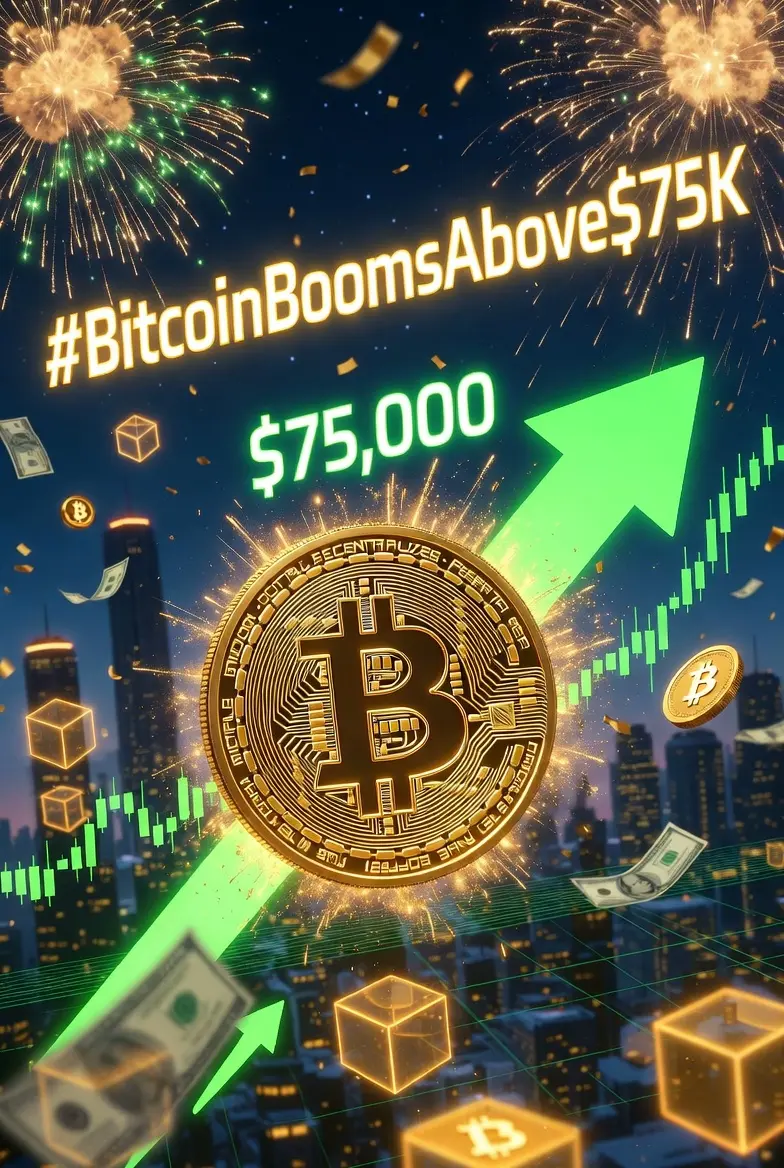
#BitcoinBoomsAbove$75K
Above $75K — This Isn’t a Breakout… It’s a Test of Intelligence
Everyone is celebrating.
Green candles.
Breakout tweets.
“$80K next” everywhere.
But let’s get something straight:
👉 This move is not about price.
👉 This move is about positioning.
⚠️ The Truth Most Traders Are Missing
Bitcoin didn’t “break” $75K.
It touched liquidity… and got rejected.
That wick to $75,900?
That’s not strength.
That’s a message.
“There’s still supply here… and smart money is not done yet.”
🧠 What Actually Caused This Move?
Not demand. Not adoption. Not retail.
This was derivatives press
BTC-4,24%
post-image
post-image
  • Reward
  • 1
  • Repost
  • Share
BlackRiderCryptoLordvip:
Diamond Hands 💎
  • Pin