GateUser-1cd076a3

vip
Age 1.3 Yıl
Peak Tier 5
No content yet
#btc #eth #sol #xrp , Try it and gain with patient
BTC-0,54%
ETH-0,47%
SOL-0,86%
XRP-0,44%
post-image
[The user has shared his/her trading data. Go to the App to view more.]
EagleEyevip
#美联储加息预期再起
The current macro environment has shifted from uncertainty to instability, and markets are reacting accordingly. Just weeks ago, expectations were centered around rate cuts and liquidity expansion, but now the narrative is changing rapidly toward the possibility of renewed tightening. This shift is not random—it reflects deeper structural fears around inflation persistence, geopolitical risk, and fragile global confidence. The 10-day pause in US-Iran tensions adds another layer of complexity, as markets struggle to interpret whether this is a genuine step toward de-escalation or merely a strategic delay before further escalation. In such conditions, price action across assets is no longer driven by fundamentals alone but by expectations, fear, and positioning.
Regarding the 10-day pause, it appears less like a stable diplomatic breakthrough and more like a tactical window. Historically, short-term pauses in geopolitical conflicts often serve strategic purposes rather than signaling resolution. The timing suggests an attempt to reassess positioning, manage international pressure, or prepare for the next phase of operations. Markets are not fully convinced by the pause, which is why risk sentiment remains fragile. If this were a genuine de-escalation, we would expect stronger recovery in risk assets and a clearer decline in safe-haven demand. Instead, we are seeing cautious reactions, indicating that participants are pricing in the possibility of renewed tension.
The more surprising development is the shift in Federal Reserve expectations. The idea of a potential rate hike in the current environment may seem counterintuitive, but it highlights the underlying concern about inflation reacceleration, especially if geopolitical conflict disrupts energy supply chains. If oil prices spike due to escalation, inflationary pressure could return quickly, forcing the Federal Reserve into a difficult position. In such a scenario, the central bank may prioritize inflation control over growth concerns, even if it risks slowing the economy further. This creates a highly unstable policy outlook, where both tightening and easing scenarios remain possible depending on how events unfold.
If the conflict escalates, the probability of a forced policy response increases significantly. Rising energy costs would directly impact inflation metrics, and market expectations would adjust rapidly. The bond market’s “panic mode” behavior already reflects this uncertainty, as yields react not just to current data but to future risks. A forced rate hike scenario would not necessarily mean aggressive tightening, but even a shift in tone could have strong effects on global liquidity and risk appetite. This is why markets are extremely sensitive right now—because the policy path is no longer clear.
In terms of positioning, a defensive yet flexible strategy appears most appropriate. Oil remains the most directly impacted asset in this situation. Any escalation could drive sharp upward moves due to supply concerns, making oil a strong candidate for short-term momentum trades. However, volatility will be high, so risk management is essential. Gold continues to act as a hedge against both geopolitical risk and monetary instability. In uncertain environments like this, it tends to attract capital seeking safety, although short-term fluctuations should still be expected.
Bitcoin presents a more complex case. It is increasingly viewed as both a risk asset and a hedge, depending on the context. In the short term, it may follow broader market sentiment and react negatively to risk-off conditions. However, if confidence in traditional financial systems weakens or monetary policy becomes unpredictable, Bitcoin could benefit from its decentralized narrative. This dual nature makes it important to watch closely, particularly around key support and resistance levels.
Overall, the current market is defined by uncertainty rather than direction. The combination of geopolitical tension, shifting monetary expectations, and fragile sentiment creates an environment where aggressive positioning carries significant risk. The focus should be on adaptability—responding to developments rather than trying to predict them with certainty. Preserving capital while remaining ready to act on high-probability opportunities is likely the most effective approach in such conditions.
In moments like this, the market rewards discipline more than aggression. Whether the coming days bring escalation or stabilization, those who manage risk effectively and remain emotionally controlled will be in the strongest position to benefit when clearer trends emerge.
repost-content-media
  • Reward
  • Comment
  • Repost
  • Share
share amount each other so everyone from top to bottom cant avail easily and timely !!! your few minutes can not only in favour of your portfolio and assessts even it will help evey one here in the community so stay positive and contribute your part. best of luck
CryptoEyevip
#CircleFreezes16HotWallets
What It Means for the Crypto Market
In a significant move that has caught the attention of the crypto community, Circle has reportedly frozen 16 hot wallets, raising fresh concerns about security, compliance, and centralization in the digital asset space.
🔍 Key Highlights:
• Security Action: The freezing of these wallets appears to be part of a broader effort to prevent suspicious or unauthorized activity. This reflects Circle’s proactive stance in maintaining the integrity of its ecosystem.
• Regulatory Pressure: With increasing global scrutiny on crypto platforms, actions like these may be linked to compliance with regulatory requirements. Authorities are pushing for tighter controls to combat money laundering and illicit transactions.
• User Concerns: While security is essential, such actions also raise concerns among users about control over their assets. The ability of a centralized entity to freeze funds highlights ongoing debates around decentralization vs. regulation.
• Market Reaction: News like this can create short-term uncertainty in the market, especially for stablecoin users. However, it can also strengthen trust among institutional investors who prioritize compliance and risk management.
• Transparency Matters: The crypto community is now looking for clear communication from Circle regarding the reasons behind this decision. Transparency will play a crucial role in maintaining user confidence.
📊 Why This Matters:
This event underscores a critical reality in crypto — while blockchain technology promotes decentralization, many major players still operate within centralized frameworks. As a result, user funds can be subject to intervention under certain circumstances.
💡 Final Thought:
The freezing of 16 hot wallets is a reminder for users to stay informed, prioritize security, and understand the platforms they trust with their assets. As the crypto industry evolves, the balance between regulation and decentralization will continue to shape its future.
repost-content-media
  • Reward
  • Comment
  • Repost
  • Share
BTC-0,61%
post-image
EagleEyevip

How to Navigate Volatile Markets and Profit with Discipline
Crypto markets in 2026 have become increasingly volatile, with sudden swings, unexpected news events, and conflicting signals challenging even seasoned traders. While some traders rush into short-term trades, others wait patiently for confirmations, and a select few combine both approaches with a structured plan. Understanding the psychology behind market volatility and the tools to navigate it is essential for long-term success. The first step is recognizing that volatility itself is not a risk—it is an opportunity. Traders who react impulsively often lose, while those who approach volatility strategically can capitalize on mispricing and market inefficiencies.
A disciplined approach starts with preparation and planning. This includes defining clear entry and exit points, establishing risk limits, and knowing which assets to monitor. Technical analysis remains vital, but it must be complemented by an understanding of market sentiment, macroeconomic factors, and potential catalysts. For example, sharp moves in Bitcoin often precede similar movements in altcoins, while sudden news in the energy or geopolitical space can shift liquidity across markets. By combining data, trend analysis, and a flexible mindset, traders can structure trades that aim to maximize opportunity while minimizing unnecessary exposure.
Tools and indicators play a critical role but must be used wisely. Moving averages help identify trend direction, RSI signals momentum extremes, and volume indicators reveal whether price moves are supported by real activity or speculative noise. However, indicators alone cannot predict market moves—they are guides, not guarantees. Advanced traders integrate multiple data points, including order book depth, liquidity zones, and recent market reactions to news, to make high-probability decisions. This multi-layered approach is what separates consistent traders from those who rely solely on intuition.
Equally important is risk management, which often defines long-term success. Beginners commonly overleverage, chase trends, or ignore stop-loss discipline, resulting in disproportionate losses. Experienced traders understand that preserving capital is the foundation for profit—every trade is a probability game, and surviving losing streaks is as crucial as capturing winning trades. Position sizing, diversification, and using a clear risk-reward framework are essential components of a robust strategy, particularly in markets that are highly sensitive to external events.
Finally, volatility rewards adaptability and patience. Some opportunities will be fleeting, requiring quick decision-making, while others may require holding positions through temporary uncertainty. Combining these approaches—reacting decisively when high-probability setups appear, but remaining patient when conditions are ambiguous—creates a balance that allows traders to navigate even the most turbulent markets. With preparation, strategic analysis, disciplined risk management, and emotional control, traders can turn volatility from a challenge into a consistent source of opportunity.
In conclusion, the key to profiting in volatile crypto markets is not chasing every move but applying a structured, data-driven approach that balances attack and defense, short-term action and long-term positioning. Those who master these principles stand to gain not just in profits, but in resilience and insight—qualities that compound over time, making every market cycle an opportunity for growth.
#GateSquare #CreatorLeaderboard #ContentMining
repost-content-media
  • Reward
  • Comment
  • Repost
  • Share
must try it
BTC-0,61%
post-image
EagleEyevip

How to Navigate Volatile Markets and Profit with Discipline
Crypto markets in 2026 have become increasingly volatile, with sudden swings, unexpected news events, and conflicting signals challenging even seasoned traders. While some traders rush into short-term trades, others wait patiently for confirmations, and a select few combine both approaches with a structured plan. Understanding the psychology behind market volatility and the tools to navigate it is essential for long-term success. The first step is recognizing that volatility itself is not a risk—it is an opportunity. Traders who react impulsively often lose, while those who approach volatility strategically can capitalize on mispricing and market inefficiencies.
A disciplined approach starts with preparation and planning. This includes defining clear entry and exit points, establishing risk limits, and knowing which assets to monitor. Technical analysis remains vital, but it must be complemented by an understanding of market sentiment, macroeconomic factors, and potential catalysts. For example, sharp moves in Bitcoin often precede similar movements in altcoins, while sudden news in the energy or geopolitical space can shift liquidity across markets. By combining data, trend analysis, and a flexible mindset, traders can structure trades that aim to maximize opportunity while minimizing unnecessary exposure.
Tools and indicators play a critical role but must be used wisely. Moving averages help identify trend direction, RSI signals momentum extremes, and volume indicators reveal whether price moves are supported by real activity or speculative noise. However, indicators alone cannot predict market moves—they are guides, not guarantees. Advanced traders integrate multiple data points, including order book depth, liquidity zones, and recent market reactions to news, to make high-probability decisions. This multi-layered approach is what separates consistent traders from those who rely solely on intuition.
Equally important is risk management, which often defines long-term success. Beginners commonly overleverage, chase trends, or ignore stop-loss discipline, resulting in disproportionate losses. Experienced traders understand that preserving capital is the foundation for profit—every trade is a probability game, and surviving losing streaks is as crucial as capturing winning trades. Position sizing, diversification, and using a clear risk-reward framework are essential components of a robust strategy, particularly in markets that are highly sensitive to external events.
Finally, volatility rewards adaptability and patience. Some opportunities will be fleeting, requiring quick decision-making, while others may require holding positions through temporary uncertainty. Combining these approaches—reacting decisively when high-probability setups appear, but remaining patient when conditions are ambiguous—creates a balance that allows traders to navigate even the most turbulent markets. With preparation, strategic analysis, disciplined risk management, and emotional control, traders can turn volatility from a challenge into a consistent source of opportunity.
In conclusion, the key to profiting in volatile crypto markets is not chasing every move but applying a structured, data-driven approach that balances attack and defense, short-term action and long-term positioning. Those who master these principles stand to gain not just in profits, but in resilience and insight—qualities that compound over time, making every market cycle an opportunity for growth.
#GateSquare #CreatorLeaderboard #ContentMining
repost-content-media
  • Reward
  • Comment
  • Repost
  • Share
must try it
BTC-0,61%
post-image
EagleEyevip

How to Navigate Volatile Markets and Profit with Discipline
Crypto markets in 2026 have become increasingly volatile, with sudden swings, unexpected news events, and conflicting signals challenging even seasoned traders. While some traders rush into short-term trades, others wait patiently for confirmations, and a select few combine both approaches with a structured plan. Understanding the psychology behind market volatility and the tools to navigate it is essential for long-term success. The first step is recognizing that volatility itself is not a risk—it is an opportunity. Traders who react impulsively often lose, while those who approach volatility strategically can capitalize on mispricing and market inefficiencies.
A disciplined approach starts with preparation and planning. This includes defining clear entry and exit points, establishing risk limits, and knowing which assets to monitor. Technical analysis remains vital, but it must be complemented by an understanding of market sentiment, macroeconomic factors, and potential catalysts. For example, sharp moves in Bitcoin often precede similar movements in altcoins, while sudden news in the energy or geopolitical space can shift liquidity across markets. By combining data, trend analysis, and a flexible mindset, traders can structure trades that aim to maximize opportunity while minimizing unnecessary exposure.
Tools and indicators play a critical role but must be used wisely. Moving averages help identify trend direction, RSI signals momentum extremes, and volume indicators reveal whether price moves are supported by real activity or speculative noise. However, indicators alone cannot predict market moves—they are guides, not guarantees. Advanced traders integrate multiple data points, including order book depth, liquidity zones, and recent market reactions to news, to make high-probability decisions. This multi-layered approach is what separates consistent traders from those who rely solely on intuition.
Equally important is risk management, which often defines long-term success. Beginners commonly overleverage, chase trends, or ignore stop-loss discipline, resulting in disproportionate losses. Experienced traders understand that preserving capital is the foundation for profit—every trade is a probability game, and surviving losing streaks is as crucial as capturing winning trades. Position sizing, diversification, and using a clear risk-reward framework are essential components of a robust strategy, particularly in markets that are highly sensitive to external events.
Finally, volatility rewards adaptability and patience. Some opportunities will be fleeting, requiring quick decision-making, while others may require holding positions through temporary uncertainty. Combining these approaches—reacting decisively when high-probability setups appear, but remaining patient when conditions are ambiguous—creates a balance that allows traders to navigate even the most turbulent markets. With preparation, strategic analysis, disciplined risk management, and emotional control, traders can turn volatility from a challenge into a consistent source of opportunity.
In conclusion, the key to profiting in volatile crypto markets is not chasing every move but applying a structured, data-driven approach that balances attack and defense, short-term action and long-term positioning. Those who master these principles stand to gain not just in profits, but in resilience and insight—qualities that compound over time, making every market cycle an opportunity for growth.
#GateSquare #CreatorLeaderboard #ContentMining
repost-content-media
  • Reward
  • Comment
  • Repost
  • Share
BTC-0,61%
post-image
EagleEyevip

How to Navigate Volatile Markets and Profit with Discipline
Crypto markets in 2026 have become increasingly volatile, with sudden swings, unexpected news events, and conflicting signals challenging even seasoned traders. While some traders rush into short-term trades, others wait patiently for confirmations, and a select few combine both approaches with a structured plan. Understanding the psychology behind market volatility and the tools to navigate it is essential for long-term success. The first step is recognizing that volatility itself is not a risk—it is an opportunity. Traders who react impulsively often lose, while those who approach volatility strategically can capitalize on mispricing and market inefficiencies.
A disciplined approach starts with preparation and planning. This includes defining clear entry and exit points, establishing risk limits, and knowing which assets to monitor. Technical analysis remains vital, but it must be complemented by an understanding of market sentiment, macroeconomic factors, and potential catalysts. For example, sharp moves in Bitcoin often precede similar movements in altcoins, while sudden news in the energy or geopolitical space can shift liquidity across markets. By combining data, trend analysis, and a flexible mindset, traders can structure trades that aim to maximize opportunity while minimizing unnecessary exposure.
Tools and indicators play a critical role but must be used wisely. Moving averages help identify trend direction, RSI signals momentum extremes, and volume indicators reveal whether price moves are supported by real activity or speculative noise. However, indicators alone cannot predict market moves—they are guides, not guarantees. Advanced traders integrate multiple data points, including order book depth, liquidity zones, and recent market reactions to news, to make high-probability decisions. This multi-layered approach is what separates consistent traders from those who rely solely on intuition.
Equally important is risk management, which often defines long-term success. Beginners commonly overleverage, chase trends, or ignore stop-loss discipline, resulting in disproportionate losses. Experienced traders understand that preserving capital is the foundation for profit—every trade is a probability game, and surviving losing streaks is as crucial as capturing winning trades. Position sizing, diversification, and using a clear risk-reward framework are essential components of a robust strategy, particularly in markets that are highly sensitive to external events.
Finally, volatility rewards adaptability and patience. Some opportunities will be fleeting, requiring quick decision-making, while others may require holding positions through temporary uncertainty. Combining these approaches—reacting decisively when high-probability setups appear, but remaining patient when conditions are ambiguous—creates a balance that allows traders to navigate even the most turbulent markets. With preparation, strategic analysis, disciplined risk management, and emotional control, traders can turn volatility from a challenge into a consistent source of opportunity.
In conclusion, the key to profiting in volatile crypto markets is not chasing every move but applying a structured, data-driven approach that balances attack and defense, short-term action and long-term positioning. Those who master these principles stand to gain not just in profits, but in resilience and insight—qualities that compound over time, making every market cycle an opportunity for growth.
#GateSquare #CreatorLeaderboard #ContentMining
repost-content-media
  • Reward
  • Comment
  • Repost
  • Share
must try it
BTC-0,61%
post-image
EagleEyevip

How to Navigate Volatile Markets and Profit with Discipline
Crypto markets in 2026 have become increasingly volatile, with sudden swings, unexpected news events, and conflicting signals challenging even seasoned traders. While some traders rush into short-term trades, others wait patiently for confirmations, and a select few combine both approaches with a structured plan. Understanding the psychology behind market volatility and the tools to navigate it is essential for long-term success. The first step is recognizing that volatility itself is not a risk—it is an opportunity. Traders who react impulsively often lose, while those who approach volatility strategically can capitalize on mispricing and market inefficiencies.
A disciplined approach starts with preparation and planning. This includes defining clear entry and exit points, establishing risk limits, and knowing which assets to monitor. Technical analysis remains vital, but it must be complemented by an understanding of market sentiment, macroeconomic factors, and potential catalysts. For example, sharp moves in Bitcoin often precede similar movements in altcoins, while sudden news in the energy or geopolitical space can shift liquidity across markets. By combining data, trend analysis, and a flexible mindset, traders can structure trades that aim to maximize opportunity while minimizing unnecessary exposure.
Tools and indicators play a critical role but must be used wisely. Moving averages help identify trend direction, RSI signals momentum extremes, and volume indicators reveal whether price moves are supported by real activity or speculative noise. However, indicators alone cannot predict market moves—they are guides, not guarantees. Advanced traders integrate multiple data points, including order book depth, liquidity zones, and recent market reactions to news, to make high-probability decisions. This multi-layered approach is what separates consistent traders from those who rely solely on intuition.
Equally important is risk management, which often defines long-term success. Beginners commonly overleverage, chase trends, or ignore stop-loss discipline, resulting in disproportionate losses. Experienced traders understand that preserving capital is the foundation for profit—every trade is a probability game, and surviving losing streaks is as crucial as capturing winning trades. Position sizing, diversification, and using a clear risk-reward framework are essential components of a robust strategy, particularly in markets that are highly sensitive to external events.
Finally, volatility rewards adaptability and patience. Some opportunities will be fleeting, requiring quick decision-making, while others may require holding positions through temporary uncertainty. Combining these approaches—reacting decisively when high-probability setups appear, but remaining patient when conditions are ambiguous—creates a balance that allows traders to navigate even the most turbulent markets. With preparation, strategic analysis, disciplined risk management, and emotional control, traders can turn volatility from a challenge into a consistent source of opportunity.
In conclusion, the key to profiting in volatile crypto markets is not chasing every move but applying a structured, data-driven approach that balances attack and defense, short-term action and long-term positioning. Those who master these principles stand to gain not just in profits, but in resilience and insight—qualities that compound over time, making every market cycle an opportunity for growth.
#GateSquare #CreatorLeaderboard #ContentMining
repost-content-media
  • Reward
  • Comment
  • Repost
  • Share
latest updates
Shenron1226vip
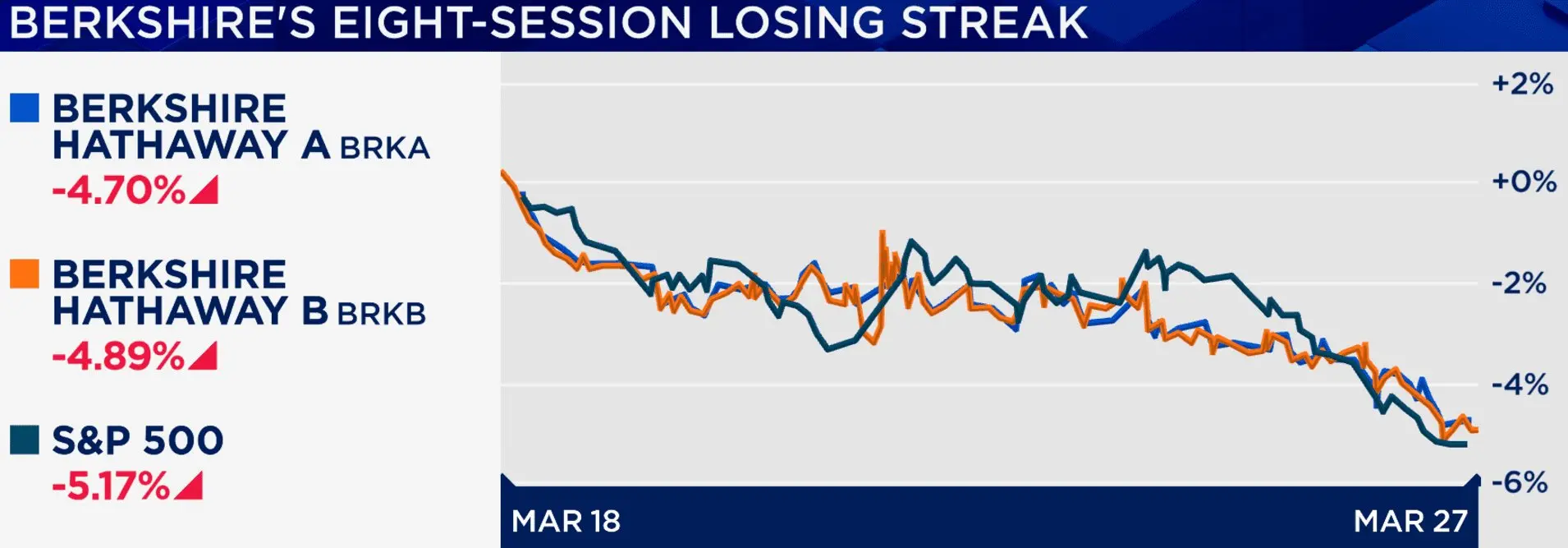
BERKSHIRE HATHAWAY POSTS LONGEST LOSING STREAK IN OVER 7 YEARS
Shares have fallen for 8 straight sessions, the longest stretch since December 2018.
Since their last gain on March 17, Class A shares are down 4.7% and Class B shares are down 4.9%.
The move comes as markets face pressure from rising energy prices and uncertainty tied to the Iran war.
Over the same period, the S&P 500 is down 5.2%.
repost-content-media
  • Reward
  • Comment
  • Repost
  • Share
BrotherXinWeiDbg956vip
In my early days, I started with a principal of 50,000 and gradually grew it to 302,000 in the first two years, stabilized at 590,000 in the third year, and by the fourth year, I was completely carried away — in August, my account reached 3.78 million, and by November, it exceeded 7 million.
Back then, I was impulsive, quit my stable job, borrowed money to leverage, and thought “luck will always be on my side.” As a result, when the financial crisis hit, I not only lost all my profits but also took on debt. I had to sell my house to pay off debts, and my family almost fell apart. It was only during the lows that I woke up: all I had earned before was luck, not skill.
In the following three years, I stopped making reckless trades, reviewed and summarized day and night, and finally turned things around with a practical trading logic. These 6 core principles can avoid 80% of the pitfalls:
1. Don’t be a “coin collector.” I used to hold a dozen niche coins, most of which went to zero. Later, I learned that just 3 core strategies are enough: hold BTC for long-term to avoid missing out, trade ETH with moderate volatility for swings, and pick one strong sector leader (like AI, RWA). It’s much more reliable than random buying.
2. Stop when emotions run high. Once, during a surge of liquidations across the internet, I didn’t stop and lost 200,000 in a day. Now I set strict rules: if liquidation numbers are high, or three consecutive big green candles hit the hot search, or amateurs follow the trend and buy, I stop and cool down for two hours. It saves a lot of losses.
3. Position size is a life line. In the early days, I went all-in and had no funds left to add during a sharp drop. Now I have fixed positions: 50% USDT for emergencies, 30% quality coins for long-term holdings, and 20% for short-term quick trades. Keeping capital intact is the key to turning things around.
4. Take profits and cut losses without illusions. I used to add to positions after a 10% drop, which led to despair. Now I follow strict rules: take half profit after a 10% rise, close completely after 20% gain to secure profits; wait for a 5% dip to re-enter if the logic is solid, and cut losses at 10% without hesitation.
5. Master the basics in a week. When I first entered the market, I bought blindly and lost badly. Later, I summarized three steps: look at daily candles + MA10/MA30 to find support and resistance; fake breakouts happen when volume increases but price doesn’t rise; don’t chase after late gains in sectors, understand the market in a week.
6. Build positions like fighting a battle—step by step. I used to go all-in with 3,000 yuan, panicking at the first dip. Now I start with 900 yuan as a base, add 900 on support dips, add 600 on resistance breakthroughs, and keep 600 for sudden drops. It’s about rhythm, not speed.
Crypto is never about luck; discipline is the key to long-term success.
There are many ghosts in the crypto world, but I only help those who are willing to save themselves. $BTC $ETH #以太坊L2叙事再升级 $BTC $ETH
  • Reward
  • Comment
  • Repost
  • Share
BTC-0,55%
ETH-0,55%
SOL-0,96%
[The user has shared his/her trading data. Go to the App to view more.]
CoCo
CoCoCoco
MC:$2.25KHolders:1
0.00%
  • Reward
  • Comment
  • Repost
  • Share
post-image
post-image
CryptoSelfvip
The Illusion of Control: How Smart Money Moves Before You Even See the Chart
Crypto markets create an illusion of control where most traders believe they act early, but in reality, smart money has already positioned itself. Price follows liquidity, narrative, and attention—not indicators. Retail traders act predictably, chasing momentum and reacting emotionally, while smart money accumulates quietly and exits before peak euphoria. True success comes from understanding positioning, controlling emotions, and recognizing that markets reward discipline, not reaction.
repost-content-media
  • Reward
  • Comment
  • Repost
  • Share
BTC-0,55%
CryptoSelfvip
In late March 2026, the U.S. cryptocurrency industry was once again thrust into the spotlight. The key event was that leading exchange Coinbase publicly opposed the latest draft of the "Cryptocurrency Market Structure Act" (CLARITY Act) for the second time, causing a setback in the bill's progress in the Senate. This time, the opposition focus was highly concentrated—on the rights to earnings for stablecoin holders. Unlike before, Coinbase's firm stance not only sparked ongoing clashes with banks and traditional finance sectors but also triggered a rare "boycott storm" within the crypto community. A profound split over industry interests and the overall regulatory framework is now unfolding.
Stablecoin Earnings Clause Becomes a "Deadlock" in the Bill
Recently, Coinbase clearly stated in communications with Senate offices that they could not support the latest draft of the CLARITY Act. The fundamental disagreement lies in the draft's provisions regarding
  • Reward
  • 4
  • Repost
  • Share
GateUser-1cd076a3vip:
1000x VIbes 🤑
View More
ethusdt future long from 1976 or 1980 , stop loss 1956, taeget TP1 2080 TP2 2135
  • Reward
  • 1
  • Repost
  • Share
HighAmbitionvip:
Make a fortune in the Year of the Horse 🐴
#GateOfficiallyIntegratesPolymarket $BTC @WyckoffTradingAnalysis #USStockIndexesCloseHigher
whats going on in the market , it is look like gambling game, its seem not be look lije market
BTC-0,55%
post-image
  • Reward
  • 1
  • Repost
  • Share
HighAmbitionvip:
2026 GOGOGO 👊
  • Reward
  • Comment
  • Repost
  • Share
great
Gate_Squarevip
Gate Skills Hub has just completed a major upgrade, bringing AI capabilities to a whole new level.
From 11 to over 10,000 AI skills, Gate is building a complete AI trading ecosystem.
Key highlights:
🔹 Covers core trading scenarios including market analysis, trade execution, arbitrage, and risk management
🔹 8 categories + tag-based search for faster, more precise strategy discovery
🔹 Aggregates resources from GitHub and other ecosystems, providing users with more high-quality strategies
🔹 Curates top projects while filtering out redundant or low-value information
🔹 Provides key details such as author, popularity, and latest updates to help users evaluate strategy value
🔹 Dual-mode design: one-click execution for beginners, with support for local deployment and advanced development for professionals
Combined with Gate MCP, Skills Hub enables multi-skill synergy and a complete trading loop, ushering in a new era of AI-powered trading. Users can now easily harness intelligent strategies and unlock the full potential of AI.
Learn more: https://www.gate.com/announcements/article/50317
#Gate #SkillsHub #GateForAI
repost-content-media
  • Reward
  • Comment
  • Repost
  • Share
  • Pin