FlamingoFacingJudgment

vip
Age 0.1 Yıl
Peak Tier 0
No content yet
Lately, watching L2s argue over TPS, fees, and subsidies, I instead want to say: Slow down. Whether on-chain transfers are fast or not, it's actually not as quick as you losing a private key once...
If the asset size is small and just for pocket money, a hardware wallet is enough; don't turn yourself into a "security engineer." But when the money starts making you lose sleep at night, multi-signature becomes more like being an adult: a bit more trouble, signing a bit slower, but it's less likely you'll go all-in and send yourself away in one shot. As for social recovery, honestly, it's suitabl
View Original
  • Reward
  • Comment
  • Repost
  • Share
Valuation of 500 billion… It seems that AI programming tools are heading toward the SaaS giant route.
View Original
CryptoFrontier
Cursor Raises $2B at $50B Valuation Led by Thrive Capital
Cursor, an AI coding startup, is set to raise at least $2 billion at a $50 billion valuation, led by Thrive Capital and Andreessen Horowitz. It aims for over $6 billion in revenue by 2026 and distinguishes itself with a tiered pricing model and SOC 2 Type 2 certification.
  • Reward
  • Comment
  • Repost
  • Share
Recently the chain has been clogged, and when I send a transaction it feels like I’m queuing up for a number in the mempool: first it gets stuffed into a “waiting room,” and miners/packagers only care about whose tip is juicier—plainly speaking, it’s gas. If you bid too low, you just get left hanging the whole time. And even later transactions with the same nonce can end up blocking you, like you can’t even cleanly cancel—your mindset just totally breaks down.
The airdrop season is even crazier. Everyone does tasks like clocking in for work, and the platforms also run anti-bot/anti-witchcraft
View Original
  • Reward
  • Comment
  • Repost
  • Share
It feels like the calm before the storm; the longer it lasts, the more intense the pull/attack.
View Original
CryptoSat
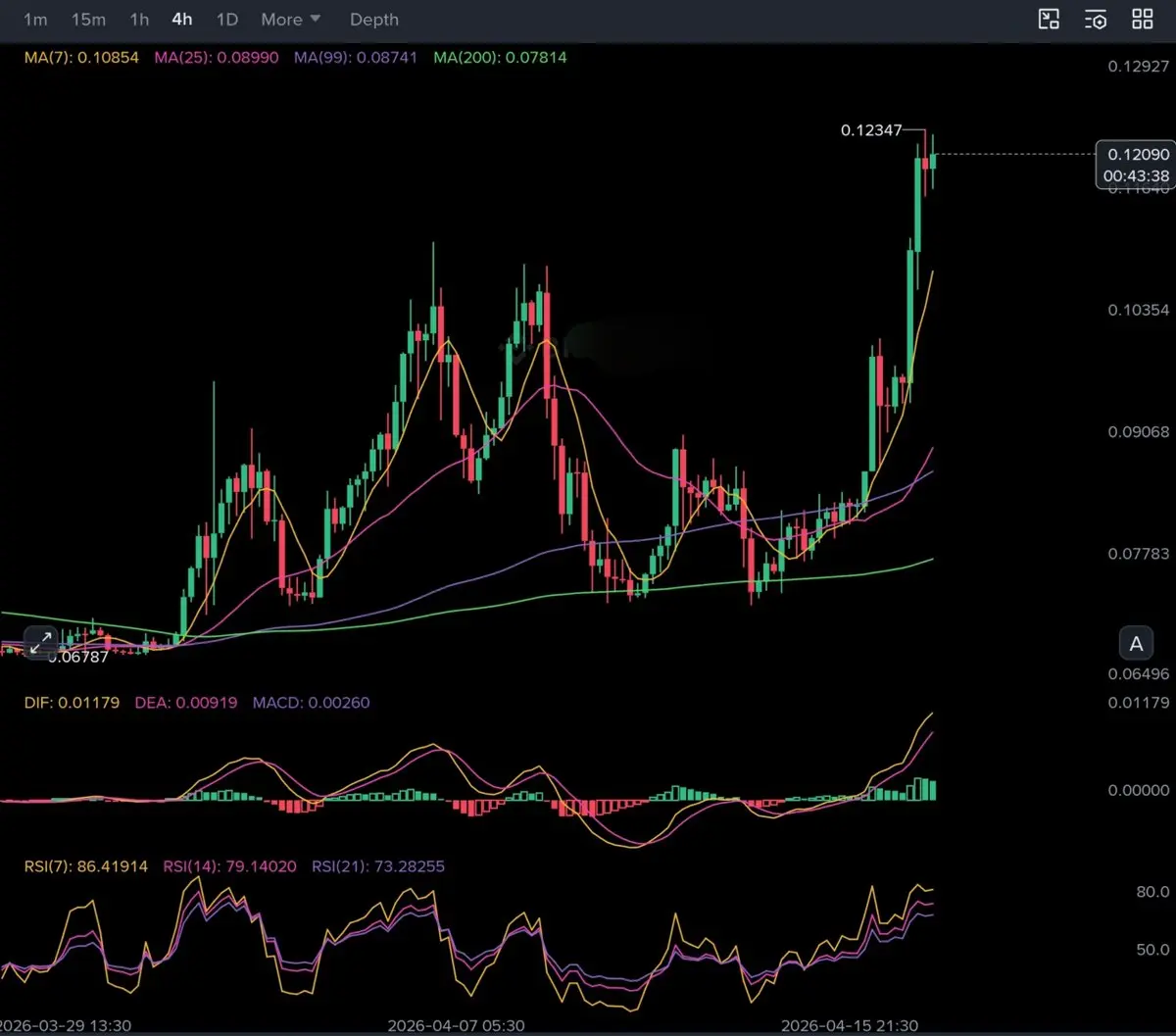
$CLO price is stuck around 0.120–0.123, just below a key resistance ✨
This is not weakness — this is compression. When price pauses after a strong move like this, it usually means energy is building for the next leg.
The breakout level is clear: 0.123 – 0.124. If price breaks and holds above this zone, momentum can expand quickly toward 0.13 – 0.144. And if buyers keep control after that, extension toward 0.18 is very possible.
On the downside, 0.116 is the immediate support. Losing this level means short-term weakness and a pullback toward 0.106 is likely — just a correction, not a full trend break yet.
But if sellers take control and buyers fail to defend, then deeper downside toward 0.093 – 0.095 can come fast.
Simple view:
Break 0.124 → expansion mode 🚀
Lose 0.116 → correction phase
Right now, it’s sitting in that calm before the storm zone… next move won’t be small.
repost-content-media
  • Reward
  • Comment
  • Repost
  • Share
Recently, I've been looking at a bunch of RWA on-chain projects, and the "liquidity" written on their pages sounds pretty lively. But when you click on the redemption terms, it starts to get complicated: T+ days, window periods, quota limits, and the possibility of suspension in "special circumstances"... Basically, what you buy might not be assets that can be redeemed at any time, but more like depositing money into a window that could be shut at any moment. It’s like stocks but also like fixed-term financial products, but the worst part is you think you're holding the former.
Some people a
View Original
  • Reward
  • Comment
  • Repost
  • Share
Recently, I keep seeing charts comparing RWA, U.S. Treasury yields, and on-chain yield products. Frankly, my first thought isn't whether the "returns look similar," but rather "who can pause if something goes wrong." Beginners wanting to assess credibility shouldn't be intimidated by a bunch of jargon. First, check GitHub: Is there long-term activity? Are commits not just made in a single day? Are there discussion traces on key changes? Then look at audit reports—don't just focus on "audited." Find out how high-risk issues were handled, whether there are clear fix versions and re-testing. Fina
View Original
  • Reward
  • Comment
  • Repost
  • Share
Japan's inclusion of crypto assets into the Financial Instruments and Exchange Act is a crucial step: it treats them more like "financial products" rather than payment tools, with insider trading + disclosure + heavy penalties all in place, benefiting compliance and long-term capital inflows.
View Original
CryptoNewcomersAreHere22222
(The FSA) previously regulated cryptocurrency assets under the “Funds Settlement Act,” using payment methods as the basis for supervision. With the continued expansion of cryptocurrency assets’ investment uses, the proportion of users holding such assets for profit has risen significantly, and the current regulatory framework is no longer able to effectively protect investors’ rights and interests. Against this backdrop, the Financial Services Agency decided to shift the regulatory framework to the “Financial Instruments and Exchange Act,” so that, in terms of legal classification, cryptocurrency assets are placed alongside traditional financial products such as stocks and bonds, and relevant industry players will also face compliance standards similar to those of traditional financial institutions. This transition further aligns Japan’s cryptocurrency regulatory framework with the mainstream financial regulations of major G7 economies.
Core provisions of the amendment: stronger obligations and upgraded criminal penalties
Key changes in this amendment include:
- **Insider trading ban:** An explicit prohibition on trading cryptocurrency assets using material non-public information, filling a gap in current law.
- **Annual information disclosure obligation:** Cryptocurrency asset issuers must regularly disclose financial and business information to the competent authorities and investors.
- **Change of industry operator name:** Registered operators will be officially renamed from “cryptocurrency exchange operators” to “cryptocurrency trading operators.”
- **Harsher criminal penalties:** For unlicensed operators, the maximum prison term increases from 3 years to 10 years, and the fine cap increases from 3,000,000 yen to 10,000,000 yen.
  • Reward
  • Comment
  • Repost
  • Share
  • Pin