iceTreder

vip
Age 0 Yıl
Peak Tier 0
No content yet
good work
YounasTradervip
As Ethereum solidifies its position in the tokenization of traditional assets, the wealth of its co-founder Vitalik Buterin stands to benefit significantly. With an estimated net worth of approximately $479 million—driven primarily by his holdings of 224,000 ETH tokens—Buterin's asset valuation is intrinsically tied to the platform's market performance.
The recent surge in institutional interest from financial giants like JPMorgan and BlackRock in Ethereum-based tokenization projects reflects a broader shift toward blockchain integration in traditional finance. This institutional appetite is expected to accelerate ETH adoption and drive substantial price growth. As more Wall Street players enter the space, the infrastructure layer that Ethereum provides for asset tokenization becomes increasingly essential, suggesting potential appreciation in ETH's valuation.
At current pricing levels—ETH trading around $2.14K—Vitalik Buterin's net worth remains substantially anchored to Ethereum's performance. The convergence of institutional capital inflows and the platform's critical role in fintech infrastructure positions Ethereum, and by extension Buterin's substantial holdings, for potential significant upside. For observers tracking how founder wealth correlates with protocol success, Vitalik Buterin's net worth serves as a compelling indicator of Ethereum's expanding influence in reshaping global finance.

  • Reward
  • Comment
  • Repost
  • Share
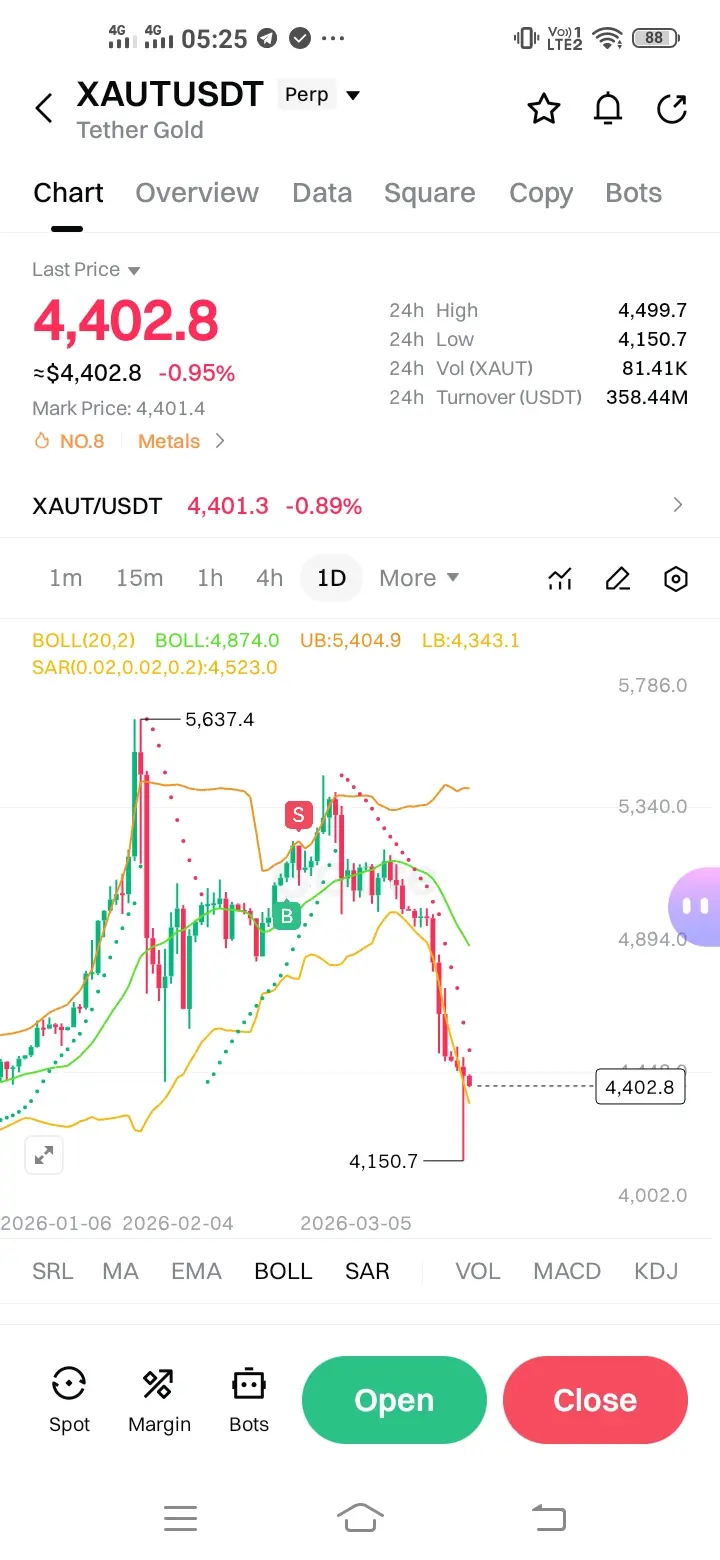
📉 #GoldSeesLargestWeeklyDropIn43Years
A historic shake-up in the commodities market as gold records its biggest weekly decline in over four decades.
Shifting macro trends, stronger risk appetite, and changing rate expectations are reshaping safe-haven demand.
When fear cools, flows move.
Markets never stay still.
#GoldMarket #Commodities #MarketTrends #GlobalMarkets
  • Reward
  • Comment
  • Repost
  • Share
📉 #GoldSeesLargestWeeklyDropIn43Years
A historic shake-up in the commodities market as gold records its biggest weekly decline in over four decades.
Shifting macro trends, stronger risk appetite, and changing rate expectations are reshaping safe-haven demand.
When fear cools, flows move.
Markets never stay still.
#GoldMarket #Commodities #MarketTrends #GlobalMarkets
post-image
post-image
  • Reward
  • Comment
  • Repost
  • Share
🎯 #PolymarketBetsOnGlobalEvents
Prediction markets are heating up as users turn real-world events into real-time opportunities.
Platforms like Polymarket are transforming how people track politics, economics, and global trends — blending information with market-driven insights.
Where news meets probability, markets speak. 📊
#PredictionMarkets #CryptoUtility #Web3 #BlockchainUseCases
post-image
post-image
  • Reward
  • Comment
  • Repost
  • Share
📜 #ClarityActLatestDraft
A new step toward clearer crypto regulation is on the table.
The latest draft of the Clarity Act aims to define rules, reduce uncertainty, and create a more structured path for digital asset innovation.
Clarity brings confidence.
Confidence brings adoption.
Adoption drives the future. 🚀
#CryptoRegulation #DigitalAssets #BlockchainPolicy #CryptoNews
post-image
post-image
  • Reward
  • Comment
  • Repost
  • Share
🔥 #GateOfficiallyIntegratesPolymarket
Big move for prediction markets!
Gate.io officially integrates with Polymarket — unlocking smarter trading, real-time market insights, and expanded opportunities for users.
Where crypto trading meets prediction power. 📊⚡
Innovation keeps accelerating in Web3.
Stay ahead. Trade smarter. 🚀
post-image
  • Reward
  • Comment
  • Repost
  • Share
📈 #CryptoMarketClimbs
The market is gaining strength as buyers step back in and momentum builds across major coins.
Confidence is returning and bullish sentiment is spreading fast.
Green candles, rising volume, and fresh opportunities for smart traders.
Stay focused. Trade wisely. 🚀💰
post-image
post-image
  • Reward
  • Comment
  • Repost
  • Share
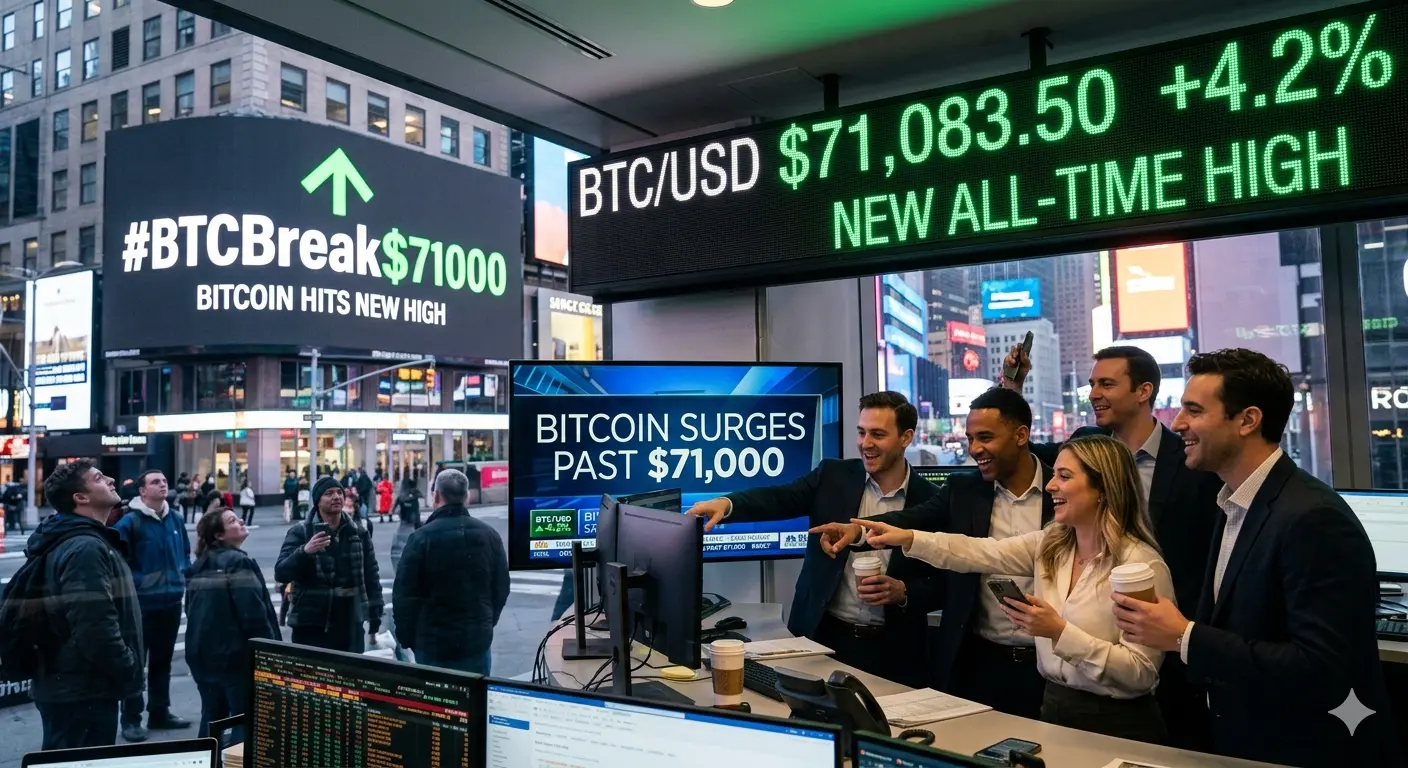
🚀 #BTCBreaks$71000
Bitcoin just smashed through the $71K level!
Momentum is strong, buyers are in control, and market sentiment is turning ultra bullish.
Is this the start of the next major leg up or a breakout fakeout? 👀
Traders watching resistance flips and volume closely.
Stay sharp. Manage risk. Opportunities everywhere. 💰📈
BTC0,32%
post-image
post-image
  • Reward
  • Comment
  • Repost
  • Share
good work
HotTradervip
Gate becomes the first centralized exchange (CEX) to integrate Polymarket, unlocking a new prediction trading experience for users.
The product is now in beta testing. From sports and crypto to macro trends, users simply select Yes/No to participate in global trending events and earn returns based on outcomes.
🔹 Support one-click login to Polymarket via App and Web3 wallet, easily participate in trading with USDT and USDC
🔹 Support viewing market details and executing trades quickly on the same page, no need to switch pages
🔹 After settlement, automatically exchange 1:1 for stablecoins and transfer to spot account
🔹 Through visualized probability and odds mechanisms, help users efficiently understand market expectations
Gate is making prediction markets more accessible, deeper, and more valuable. Going forward, Gate will continue to enrich the prediction market ecosystem, cover more global trending topics, and continuously upgrade trading tools and liquidity to create more possibilities and opportunities for users.
Learn more: https://www.gate.com/announcements/article/50377
repost-content-media
  • Reward
  • Comment
  • Repost
  • Share
good job
HotTradervip
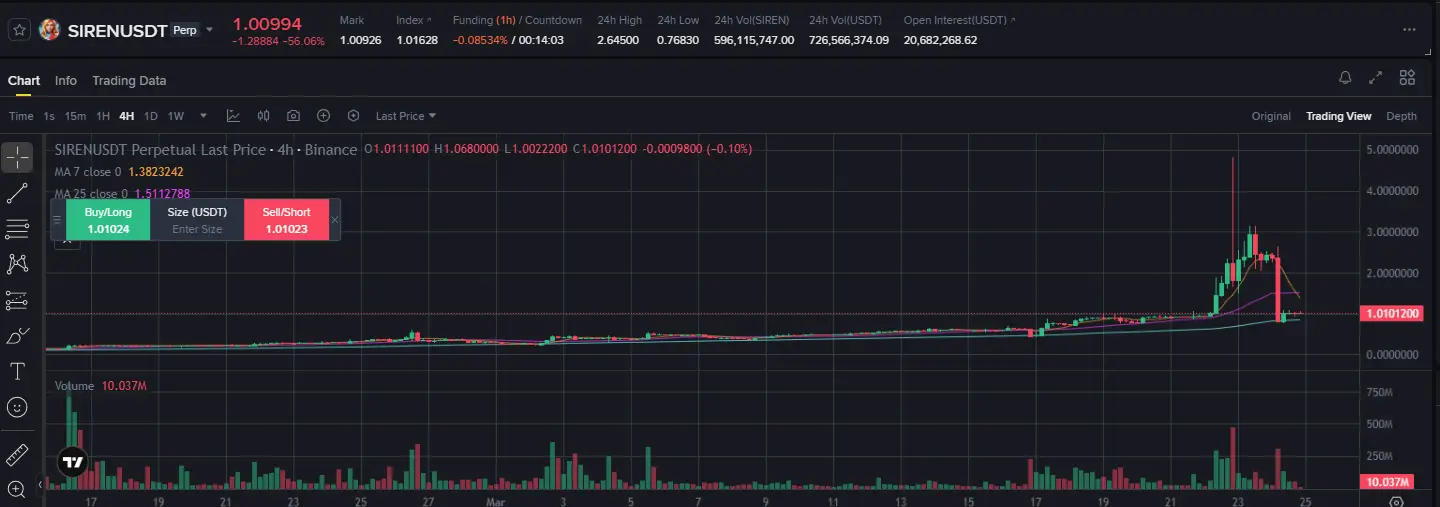
$SIREN $SIREN USDT
Entry Zone: 0.98 – 1.02
Targets: TP1 1.15 | TP2 1.35 | TP3 1.60
Stop Loss: 0.90
SIREN still in strong bullish mode after massive earlier pump, holding gains with high volume. Price above all MAs, parabolic structure intact despite small pullback. Momentum favors continuation if holds 1.02 zone. Targets next liquidity spikes. High volatility, trail stops tight!💫
repost-content-media
  • Reward
  • Comment
  • Repost
  • Share
good luck
HotTradervip
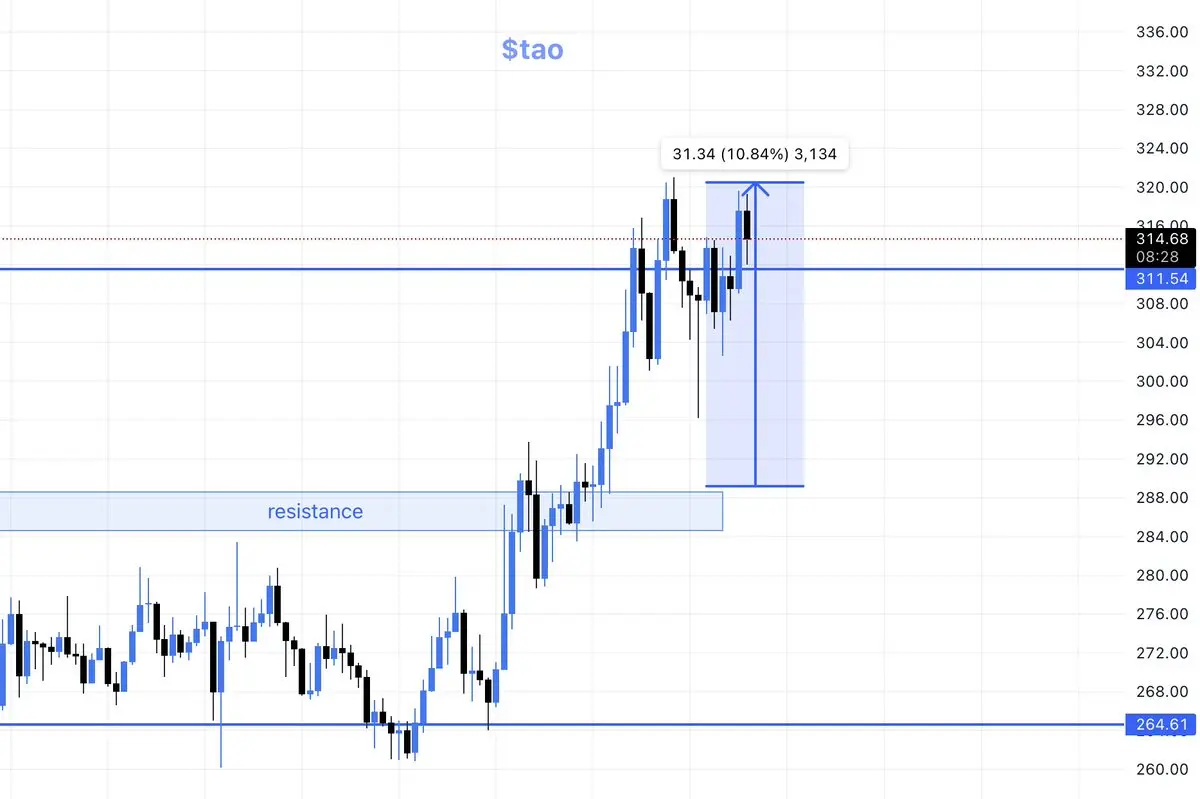
$TAO is strong today while $BTC drops 💪
repost-content-media
  • Reward
  • Comment
  • Repost
  • Share
good job
HotTradervip
JUST IN: The European Central Bank reiterated its vision for the bloc's financial future, if tokenization is to truly scale in the European Union, it will require more than just blockchain.
According to Piero Cipollone, its takeoff will depend on three key elements: a digital euro, cooperation with businesses, and legal harmonization, which is currently lacking among the 27 member states.
repost-content-media
  • Reward
  • Comment
  • Repost
  • Share
good job
HotTradervip
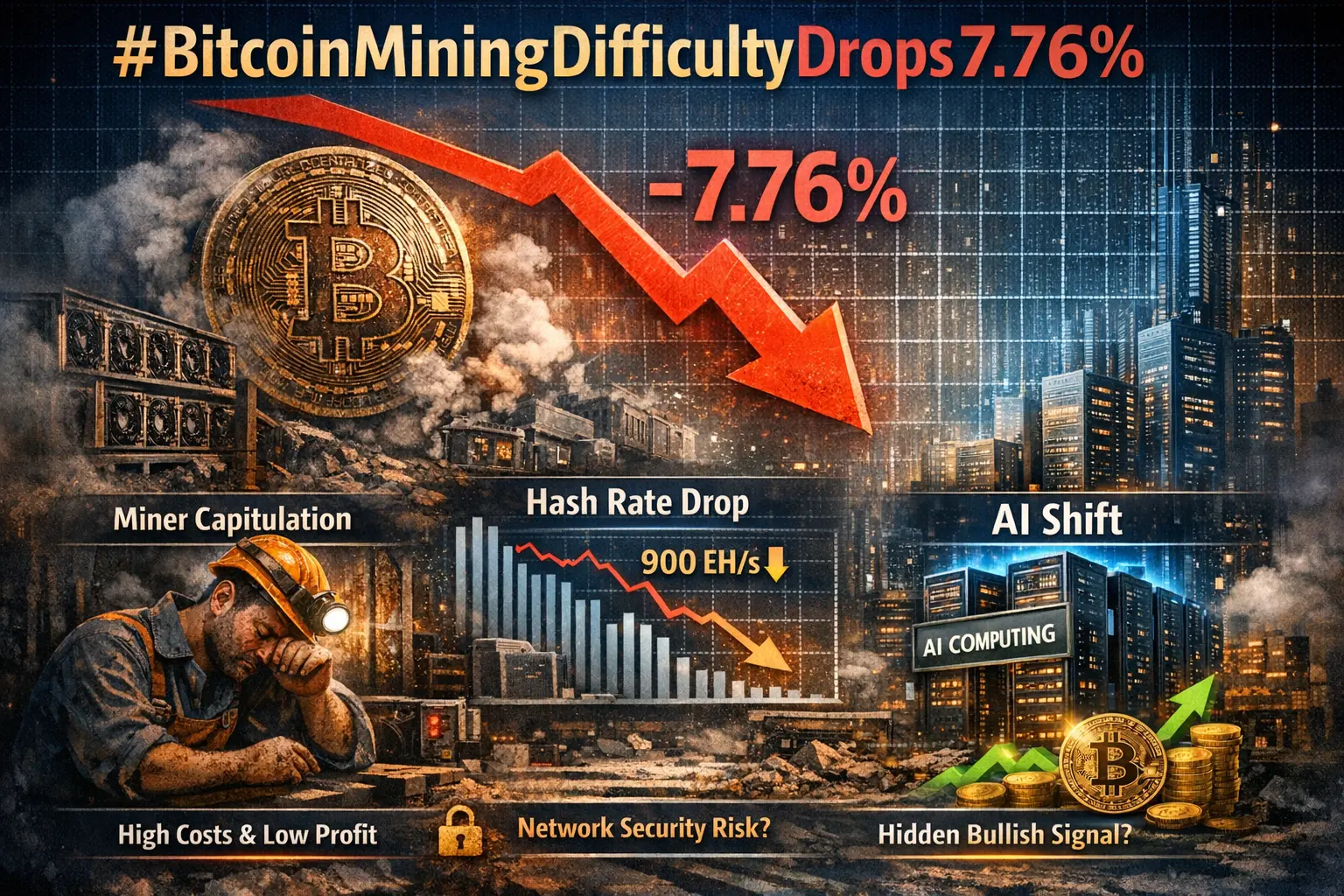
#BitcoinMiningDifficultyDrops7.76%
The recent 7.76 percent drop in mining difficulty of Bitcoin is not just a routine adjustment. It is a multi-layered signal reflecting economic stress, structural transformation, and evolving capital dynamics within the crypto mining ecosystem.
1. What Actually Happened
In the latest biweekly adjustment, Bitcoin mining difficulty fell to approximately 133.79 trillion, marking the second-largest decline of 2026
This adjustment occurred because:
Average block time slowed to ~12 minutes 36 seconds, above the target 10 minutes
Network hash rate declined significantly
Mining participation weakened
Bitcoin’s protocol automatically reduces difficulty when blocks are produced too slowly, restoring equilibrium.
2. Hash Rate Collapse — The Core Signal
The most critical underlying factor is the decline in hash rate, which reflects active mining power:
Hash rate dropped to roughly 900–940 EH/s, well below peak levels
It is now 20 percent+ below previous highs
This indicates:
Machines are being turned off
Mining farms are shutting down or downsizing
Network participation is shrinking
In simple terms: less competition → lower difficulty
3. Miner Capitulation — Economic Pressure
The drop strongly signals miner capitulation, a phase where weaker miners exit due to unprofitability.
Key pressures include:
1. Production Cost vs Market Price
Estimated mining cost: ~$77,000–$87,000
Bitcoin price: ~$70,000 range
👉 Many miners are operating below breakeven
2. Rising Energy Costs
Electricity remains the largest operational expense. High-cost regions are being forced out.
3. Falling Hashprice
Revenue per unit of hash power has dropped to near or below sustainable levels
Conclusion:
Only the most efficient miners survive. Others exit.
4. Structural Shift — AI vs Crypto Mining
This is where the story becomes deeper.
A major trend is emerging:
👉 Mining companies are shifting toward AI and high-performance computing
Examples:
Large firms reallocating infrastructure to AI workloads
Selling Bitcoin reserves to fund AI expansion
Why?
Bitcoin Mining
AI Computing
Volatile revenue
Stable contracts
Dependent on BTC price
Enterprise demand
High risk
Predictable cash flow
This represents a capital migration from crypto to AI infrastructure
5. Network Security — Is Bitcoin at Risk?
Despite the decline, the network remains resilient due to Proof of Work.
However:
Short-Term Risks
Lower hash rate = slightly reduced security margin
Increased centralization risk if only large players remain
Long-Term Strength
Automatic difficulty adjustment stabilizes block production
Incentives remain aligned for miners to return
👉 Bitcoin is adaptive, not fragile
6. Supply Dynamics — Hidden Bullish Signal?
An overlooked factor:
Miners are selling most newly mined BTC to survive
This creates constant sell pressure
But here’s the twist:
👉 Once weak miners exit:
Selling pressure reduces
Strong miners accumulate more rewards
Historically, such phases often precede:
Market stabilization
Potential bullish reversals
7. Cyclical vs Structural Breakdown
This event is a mix of two forces:
Cyclical Factors
Price volatility
Energy costs
Temporary shutdowns
Structural Factors
Shift to AI computing
Institutional mining consolidation
Changing revenue models
👉 This is not just a dip — it's an evolution phase
8. What Comes Next
Data suggests:
Next adjustment may increase difficulty slightly (~4–5 percent)
This means some miners may return
Key scenarios:
Bullish Scenario
Price rises above production cost
Hash rate recovers
Difficulty increases
Bearish Scenario
More miners exit
Hash rate declines further
Difficulty keeps dropping
9. Strategic Insight for Traders
For traders like you focusing on price action:
Watch These Indicators:
Difficulty trend
Hash rate recovery
Miner selling behavior
Key Insight:
👉 Mining stress often appears before major market moves
It acts as a leading indicator, not a lagging one.
Final Verdict
The 7.76 percent drop in Bitcoin mining difficulty is not a random fluctuation. It is a convergence of economic pressure, technological transition, and capital reallocation.
Weak miners are exiting
Strong players are consolidating
Industry is shifting toward AI
Network remains adaptive
In essence:
👉 This is a stress test phase for Bitcoin’s mining economy
👉 And historically, such phases often precede major directional moves
repost-content-media
  • Reward
  • Comment
  • Repost
  • Share
good job
HotTradervip
#BitcoinMiningDifficultyDrops7.76%
The recent 7.76 percent drop in mining difficulty of Bitcoin is not just a routine adjustment. It is a multi-layered signal reflecting economic stress, structural transformation, and evolving capital dynamics within the crypto mining ecosystem.
1. What Actually Happened
In the latest biweekly adjustment, Bitcoin mining difficulty fell to approximately 133.79 trillion, marking the second-largest decline of 2026
This adjustment occurred because:
Average block time slowed to ~12 minutes 36 seconds, above the target 10 minutes
Network hash rate declined significantly
Mining participation weakened
Bitcoin’s protocol automatically reduces difficulty when blocks are produced too slowly, restoring equilibrium.
2. Hash Rate Collapse — The Core Signal
The most critical underlying factor is the decline in hash rate, which reflects active mining power:
Hash rate dropped to roughly 900–940 EH/s, well below peak levels
It is now 20 percent+ below previous highs
This indicates:
Machines are being turned off
Mining farms are shutting down or downsizing
Network participation is shrinking
In simple terms: less competition → lower difficulty
3. Miner Capitulation — Economic Pressure
The drop strongly signals miner capitulation, a phase where weaker miners exit due to unprofitability.
Key pressures include:
1. Production Cost vs Market Price
Estimated mining cost: ~$77,000–$87,000
Bitcoin price: ~$70,000 range
👉 Many miners are operating below breakeven
2. Rising Energy Costs
Electricity remains the largest operational expense. High-cost regions are being forced out.
3. Falling Hashprice
Revenue per unit of hash power has dropped to near or below sustainable levels
Conclusion:
Only the most efficient miners survive. Others exit.
4. Structural Shift — AI vs Crypto Mining
This is where the story becomes deeper.
A major trend is emerging:
👉 Mining companies are shifting toward AI and high-performance computing
Examples:
Large firms reallocating infrastructure to AI workloads
Selling Bitcoin reserves to fund AI expansion
Why?
Bitcoin Mining
AI Computing
Volatile revenue
Stable contracts
Dependent on BTC price
Enterprise demand
High risk
Predictable cash flow
This represents a capital migration from crypto to AI infrastructure
5. Network Security — Is Bitcoin at Risk?
Despite the decline, the network remains resilient due to Proof of Work.
However:
Short-Term Risks
Lower hash rate = slightly reduced security margin
Increased centralization risk if only large players remain
Long-Term Strength
Automatic difficulty adjustment stabilizes block production
Incentives remain aligned for miners to return
👉 Bitcoin is adaptive, not fragile
6. Supply Dynamics — Hidden Bullish Signal?
An overlooked factor:
Miners are selling most newly mined BTC to survive
This creates constant sell pressure
But here’s the twist:
👉 Once weak miners exit:
Selling pressure reduces
Strong miners accumulate more rewards
Historically, such phases often precede:
Market stabilization
Potential bullish reversals
7. Cyclical vs Structural Breakdown
This event is a mix of two forces:
Cyclical Factors
Price volatility
Energy costs
Temporary shutdowns
Structural Factors
Shift to AI computing
Institutional mining consolidation
Changing revenue models
👉 This is not just a dip — it's an evolution phase
8. What Comes Next
Data suggests:
Next adjustment may increase difficulty slightly (~4–5 percent)
This means some miners may return
Key scenarios:
Bullish Scenario
Price rises above production cost
Hash rate recovers
Difficulty increases
Bearish Scenario
More miners exit
Hash rate declines further
Difficulty keeps dropping
9. Strategic Insight for Traders
For traders like you focusing on price action:
Watch These Indicators:
Difficulty trend
Hash rate recovery
Miner selling behavior
Key Insight:
👉 Mining stress often appears before major market moves
It acts as a leading indicator, not a lagging one.
Final Verdict
The 7.76 percent drop in Bitcoin mining difficulty is not a random fluctuation. It is a convergence of economic pressure, technological transition, and capital reallocation.
Weak miners are exiting
Strong players are consolidating
Industry is shifting toward AI
Network remains adaptive
In essence:
👉 This is a stress test phase for Bitcoin’s mining economy
👉 And historically, such phases often precede major directional moves
repost-content-media
  • Reward
  • Comment
  • Repost
  • Share
good job
HotTradervip
#BitcoinMiningDifficultyDrops7.76%
The recent 7.76 percent drop in mining difficulty of Bitcoin is not just a routine adjustment. It is a multi-layered signal reflecting economic stress, structural transformation, and evolving capital dynamics within the crypto mining ecosystem.
1. What Actually Happened
In the latest biweekly adjustment, Bitcoin mining difficulty fell to approximately 133.79 trillion, marking the second-largest decline of 2026
This adjustment occurred because:
Average block time slowed to ~12 minutes 36 seconds, above the target 10 minutes
Network hash rate declined significantly
Mining participation weakened
Bitcoin’s protocol automatically reduces difficulty when blocks are produced too slowly, restoring equilibrium.
2. Hash Rate Collapse — The Core Signal
The most critical underlying factor is the decline in hash rate, which reflects active mining power:
Hash rate dropped to roughly 900–940 EH/s, well below peak levels
It is now 20 percent+ below previous highs
This indicates:
Machines are being turned off
Mining farms are shutting down or downsizing
Network participation is shrinking
In simple terms: less competition → lower difficulty
3. Miner Capitulation — Economic Pressure
The drop strongly signals miner capitulation, a phase where weaker miners exit due to unprofitability.
Key pressures include:
1. Production Cost vs Market Price
Estimated mining cost: ~$77,000–$87,000
Bitcoin price: ~$70,000 range
👉 Many miners are operating below breakeven
2. Rising Energy Costs
Electricity remains the largest operational expense. High-cost regions are being forced out.
3. Falling Hashprice
Revenue per unit of hash power has dropped to near or below sustainable levels
Conclusion:
Only the most efficient miners survive. Others exit.
4. Structural Shift — AI vs Crypto Mining
This is where the story becomes deeper.
A major trend is emerging:
👉 Mining companies are shifting toward AI and high-performance computing
Examples:
Large firms reallocating infrastructure to AI workloads
Selling Bitcoin reserves to fund AI expansion
Why?
Bitcoin Mining
AI Computing
Volatile revenue
Stable contracts
Dependent on BTC price
Enterprise demand
High risk
Predictable cash flow
This represents a capital migration from crypto to AI infrastructure
5. Network Security — Is Bitcoin at Risk?
Despite the decline, the network remains resilient due to Proof of Work.
However:
Short-Term Risks
Lower hash rate = slightly reduced security margin
Increased centralization risk if only large players remain
Long-Term Strength
Automatic difficulty adjustment stabilizes block production
Incentives remain aligned for miners to return
👉 Bitcoin is adaptive, not fragile
6. Supply Dynamics — Hidden Bullish Signal?
An overlooked factor:
Miners are selling most newly mined BTC to survive
This creates constant sell pressure
But here’s the twist:
👉 Once weak miners exit:
Selling pressure reduces
Strong miners accumulate more rewards
Historically, such phases often precede:
Market stabilization
Potential bullish reversals
7. Cyclical vs Structural Breakdown
This event is a mix of two forces:
Cyclical Factors
Price volatility
Energy costs
Temporary shutdowns
Structural Factors
Shift to AI computing
Institutional mining consolidation
Changing revenue models
👉 This is not just a dip — it's an evolution phase
8. What Comes Next
Data suggests:
Next adjustment may increase difficulty slightly (~4–5 percent)
This means some miners may return
Key scenarios:
Bullish Scenario
Price rises above production cost
Hash rate recovers
Difficulty increases
Bearish Scenario
More miners exit
Hash rate declines further
Difficulty keeps dropping
9. Strategic Insight for Traders
For traders like you focusing on price action:
Watch These Indicators:
Difficulty trend
Hash rate recovery
Miner selling behavior
Key Insight:
👉 Mining stress often appears before major market moves
It acts as a leading indicator, not a lagging one.
Final Verdict
The 7.76 percent drop in Bitcoin mining difficulty is not a random fluctuation. It is a convergence of economic pressure, technological transition, and capital reallocation.
Weak miners are exiting
Strong players are consolidating
Industry is shifting toward AI
Network remains adaptive
In essence:
👉 This is a stress test phase for Bitcoin’s mining economy
👉 And historically, such phases often precede major directional moves
repost-content-media
  • Reward
  • Comment
  • Repost
  • Share
good job
HotTradervip
#CryptoMarketVolatility
The market is in extreme fear. The Crypto Fear and Greed Index is sitting at 8 out of 100right now. That is not a typo.
Here is what the data actually shows:
BTC is trading around $70,936, up 3.75% on the day — coming off a low of $67,353 just 24 hours ago. ETH is at $2,162, up 4.77% — bouncing off a $2,023 floor. Both are recovering, but the broader market environment is anything but calm.
What is driving the volatility? Three overlapping forces:
Macro pressure. The Middle East conflict has pushed oil prices sharply higher, forcing the Fed to hold rates elevated and suppressing risk appetite across every asset class. BTC is still roughly 40% below its October peak. Funding rates have flipped negative, signaling short-side dominance in the derivatives market.
Structural tailwind. The SEC and CFTC joint taxonomy — which formally classified BTC, ETH, XRP, SOL, and 12 other tokens as digital commodities — landed on March 17. That is the most significant regulatory development in US crypto history. Institutional capital does not reprice in a day, but the foundation has shifted permanently.
Diverging participants. Whales and institutions are accumulating through the dip. BlackRock's ETHB staking ETF just pulled in $160.8 million in weekly inflows. Erik Voorhees and other early-cycle participants have been building positions at current levels. Meanwhile, 2016-era wallet addresses have reactivated and are distributing — the classic distribution-to-accumulation handoff playing out in real time.
Extreme fear readings of 8 have historically marked proximity to cycle inflection points. That is not a prediction — it is a pattern worth noting. The question is whether macro headwinds clear before the structural tailwinds fully price in.
Volatile markets are where preparation separates from reaction. Trade with full toolkit access at Gate.com.
#CryptoMarketVolatility #Gate13thAnniversaryGlobalCelebration #GATEio
repost-content-media
  • Reward
  • Comment
  • Repost
  • Share
good job
HotTradervip
#CryptoMarketVolatility
The market is in extreme fear. The Crypto Fear and Greed Index is sitting at 8 out of 100right now. That is not a typo.
Here is what the data actually shows:
BTC is trading around $70,936, up 3.75% on the day — coming off a low of $67,353 just 24 hours ago. ETH is at $2,162, up 4.77% — bouncing off a $2,023 floor. Both are recovering, but the broader market environment is anything but calm.
What is driving the volatility? Three overlapping forces:
Macro pressure. The Middle East conflict has pushed oil prices sharply higher, forcing the Fed to hold rates elevated and suppressing risk appetite across every asset class. BTC is still roughly 40% below its October peak. Funding rates have flipped negative, signaling short-side dominance in the derivatives market.
Structural tailwind. The SEC and CFTC joint taxonomy — which formally classified BTC, ETH, XRP, SOL, and 12 other tokens as digital commodities — landed on March 17. That is the most significant regulatory development in US crypto history. Institutional capital does not reprice in a day, but the foundation has shifted permanently.
Diverging participants. Whales and institutions are accumulating through the dip. BlackRock's ETHB staking ETF just pulled in $160.8 million in weekly inflows. Erik Voorhees and other early-cycle participants have been building positions at current levels. Meanwhile, 2016-era wallet addresses have reactivated and are distributing — the classic distribution-to-accumulation handoff playing out in real time.
Extreme fear readings of 8 have historically marked proximity to cycle inflection points. That is not a prediction — it is a pattern worth noting. The question is whether macro headwinds clear before the structural tailwinds fully price in.
Volatile markets are where preparation separates from reaction. Trade with full toolkit access at Gate.com.
#CryptoMarketVolatility #Gate13thAnniversaryGlobalCelebration #GATEio
repost-content-media
  • Reward
  • Comment
  • Repost
  • Share
good job
HotTradervip
Strategy, one of Bitcoin's largest institutional backers, continues its relentless buying under the leadership of Michael Saylor. In the first two weeks of March (March 2-15), the company spent approximately $2.85 billion purchasing a total of 40,331 BTC. This figure has been reported and confirmed in several news outlets as "40,000 BTC" and "$3 billion."
Details from official SEC Form 8-K filings are as follows:
- March 2-8: 17,994 BTC, $1.277 billion (average $70,946/BTC)
- March 9-15: 22,337 BTC, $1.568 billion (average $70,194/BTC)
The total cost during this two-week period was $2.845 billion. The purchases were largely financed through the sale of "STRC" Perpetual Preferred Shares and Class A common stock.
Current Status (as of March 23, 2026):
- Total Bitcoin holdings: 762,099 BTC
- Total cost of purchase: $57.686 billion
- Average cost: $75,694/BTC
- YTD BTC Yield: 3.4%
- YTD BTC gain: 23,141 BTC ($1.624 million increase in value)
The company's Bitcoin reserve value is currently approximately $53.476 billion. The last weekly purchase was 1,031 BTC (average $74,326/BTC) on March 23, bringing the total to 762,099.
This buying spree is part of Strategy's "Bitcoin as its main treasury asset" strategy. Saylor frequently emphasizes that they are progressing towards their goal of 1 million BTC by the end of the year, and the company is currently the largest institutional Bitcoin holder in the market.
While the Bitcoin price is currently hovering in the $70-71,000 range, Strategy's aggressive buying has made a significant amount of BTC "off the market." Analysts say this move has increased the BTC supply shock and created long-term upward pressure.
Strategy's Bitcoin buying page is updated weekly, and all data is transparently publicly available. This strategy, continuing with Michael Saylor's motto "There is no second best," seems poised to break records in 2026 as well. Strategy continues to surprise the market with over 40,000 BTC in 14 days. For those who want to follow, the official buying page and Saylor's X account are the most reliable sources.
#SaylorReleasesBitcoinTrackerUpdate
repost-content-media
  • Reward
  • Comment
  • Repost
  • Share
good luck
HotTradervip
#GateOfficiallyIntegratesPolymarket
🔮 Gate Integrates Polymarket Unlocking a New Prediction Market Experience🌟🔥🌟
Gate has become the first centralized exchange (CEX) to integrate Polymarket, introducing an innovative prediction trading experience for its users. Prediction markets allow users to speculate on the outcome of global events and earn returns based on the results. This is a significant step for Gate as it expands beyond traditional crypto trading and enables users to participate in global trends, from sports and crypto to macroeconomic events, with simple Yes/No predictions. The product is currently in beta testing, allowing early adopters to explore the system and understand its mechanics while Gate refines the experience.
The integration focuses on accessibility and ease of use. Users can log in with a single click either through the Gate App or a Web3 wallet. This simplifies participation, as it eliminates the need for complicated onboarding or multiple accounts. By supporting stablecoins such as USDT and USDC, users can trade in a familiar and stable environment without worrying about volatility affecting their prediction trades. The platform allows viewing of market details and execution of trades directly on the same page, eliminating the friction of switching pages and streamlining the trading experience.
One of the most significant features of Gate’s Polymarket integration is its automatic settlement process. Once a prediction market concludes, returns are immediately converted 1:1 into stablecoins and transferred directly to the user’s spot account. This ensures transparency and reliability, allowing users to easily access their earnings without waiting periods or complex manual processes. This automatic settlement also removes common barriers found in other platforms, where users must manually claim rewards or convert them, creating inefficiency and potential user errors.
Gate also introduces visualized probability and odds mechanisms, helping users efficiently understand market expectations. By displaying probability in an intuitive manner, users can assess market sentiment, identify trends, and make informed decisions. This visual representation of market data makes prediction trading more approachable, even for users who are new to the concept of prediction markets. It bridges the gap between traditional crypto trading and speculative event-based markets, giving traders a clear understanding of their risk and potential rewards.
The platform covers a wide range of global trending events, offering users diverse opportunities to participate in markets that matter. From predicting the outcome of major sports matches to speculating on cryptocurrency trends or macroeconomic developments, users can engage in a variety of markets. This diversity ensures that participants can choose markets that align with their knowledge and interests, increasing engagement and potential success in prediction trading. Users are no longer restricted to financial markets but can take part in events that impact industries, culture, and global trends.
In terms of user experience, Gate’s integration ensures that trading and market analysis are seamless. Users can view odds, probabilities, and market details on the same interface where they execute trades. This unified approach reduces confusion and allows for faster, more informed trading decisions. By combining all relevant tools in one interface, Gate enhances efficiency and minimizes mistakes, giving users confidence in participating in prediction markets.
Prediction markets on Gate also offer educational value. For beginners or casual traders, participating in Yes/No predictions allows them to explore market dynamics, probability assessment, and event-based speculation without requiring deep financial expertise. The feedback from completed predictions such as probabilities versus actual outcomes provides a learning opportunity for users, helping them understand market sentiment and improve future trading strategies.
Looking forward, Gate aims to expand the prediction market ecosystem, covering more global events and trends while continuously upgrading trading tools and liquidity. By enhancing these aspects, Gate plans to create more possibilities and opportunities for users. Increased liquidity ensures that trades can be executed efficiently, while upgraded tools improve usability, market analysis, and engagement. This forward-looking approach demonstrates Gate’s commitment to making prediction markets not only accessible but also highly valuable and engaging for its user base.
The platform also emphasizes risk management and reliability. Using stablecoins like USDT and USDC protects users from unnecessary volatility, while automatic settlement ensures users receive their returns securely and transparently. These features together create a reliable trading environment, which is crucial for maintaining user trust and encouraging broader participation in prediction markets.
Another notable aspect of Gate’s Polymarket integration is community engagement. By making prediction markets easy to participate in and understand, Gate encourages users to discuss and share insights about global events. This social dimension creates an interactive experience, where traders can learn from each other, analyze probabilities collectively, and make better-informed decisions. Over time, this fosters a knowledgeable and active community, which is essential for the long-term success of prediction markets.
Gate’s strategic move to integrate Polymarket demonstrates its vision to innovate beyond traditional crypto trading. By enabling users to engage with trending global events, learn market probabilities, and earn rewards through a simple Yes/No interface, Gate transforms prediction markets into a mainstream and accessible trading experience. Users no longer need to navigate complex financial derivatives to speculate on outcomes; instead, they can participate with familiar stablecoins and a streamlined platform, reducing barriers and improving engagement.
In conclusion, Gate’s integration of Polymarket is a pioneering step for centralized exchanges, making prediction markets more accessible, engaging, and rewarding. By offering one-click login, seamless trading interfaces, automatic settlements, visualized probabilities, and diverse event coverage, Gate provides both novice and experienced traders with the tools to participate effectively. With continued improvements in liquidity, market variety, and user tools, Gate is setting the stage for a comprehensive and immersive prediction market ecosystem, empowering users to engage with global events while earning rewards in a secure and transparent environment.
This development positions Gate as a leader in bridging traditional crypto trading and prediction markets, opening up new possibilities for users to interact with global trends, test their insights, and participate in event-driven trading in a safe and accessible way. King 👑
  • Reward
  • Comment
  • Repost
  • Share
good luck
HotTradervip
#BTCBreaks$71000 Bitcoin Shatters Records: Price Surges Past $71,000 Amid Institutional Frenzy and Halving Hype
[City, Date] – The cryptocurrency market witnessed a historic milestone today as Bitcoin (BTC) surged past the $71,000 mark for the first time, reaching a new all-time high. The flagship digital asset peaked at $71,2XX earlier this morning, signaling a powerful resurgence fueled by a convergence of institutional demand, macroeconomic factors, and the highly anticipated upcoming halving event.
The breach of the $71,000 barrier represents a significant psychological and technical victory for the asset class, erasing previous resistance levels set in late 2021. Analysts attribute this explosive price action to a "perfect storm" of catalysts that have fundamentally shifted the supply-demand dynamics of the asset.
The ETF Effect: A Torrent of Institutional Capital
The primary driver behind the current rally appears to be the sustained influx of capital into the newly approved Spot Bitcoin Exchange-Traded Funds (ETFs) in the United States. Since their launch in January, these financial products—managed by industry giants like BlackRock (IBIT) and Fidelity (FBTC)—have absorbed billions of dollars in Bitcoin.
Data from leading analytics firms indicates that these ETFs are accumulating Bitcoin at a rate significantly outpacing the daily mining output, creating a severe supply squeeze.
"The launch of Spot Bitcoin ETFs has opened the floodgates for a previously untapped demographic of institutional investors," said [Name], Analyst at [Firm Name]. "We are witnessing a structural shift where regulated, accessible investment vehicles are absorbing a finite asset. The break above $71,000 was not a matter of if, but when, given the current accumulation rates."
The Halving Countdown: Supply Shock Looming
Compounding the demand shock is the imminent Bitcoin halving, scheduled for late April. The halving will reduce the block reward for miners by 50%, cutting the new supply of Bitcoin entering the market from 900 BTC per day to approximately 450 BTC per day.
Historically, halving events have preceded prolonged bull runs, as the reduced supply meets steady or growing demand. With the market front-running this event, investors are positioning themselves ahead of the anticipated supply squeeze.
Macroeconomic Tailwinds
Beyond crypto-native catalysts, the broader macroeconomic environment has also become more favorable. Recent signals from the Federal Reserve regarding potential interest rate cuts later this year have softened the macroeconomic headwinds that plagued the market throughout 2022 and 2023. A weaker U.S. Dollar Index (DXY) has historically correlated with strength in risk-on assets like Bitcoin.
Market Reaction and Liquidity
The market reaction has been swift. The total cryptocurrency market capitalization has surged past $2.8 trillion, with Bitcoin dominance hovering near 53%. Liquidations over the past 24 hours have exceeded $500 million, with short-sellers caught off-guard by the rapid ascent.
Retail sentiment, as measured by the Crypto Fear & Greed Index, has entered "Extreme Greed" territory, hitting a score of 85.
What’s Next?
As Bitcoin establishes support above the $70,000 level, analysts are now eyeing the next psychological target of $80,000. However, caution remains. The rapid ascent could lead to short-term volatility and "profit-taking" pullbacks.
For long-term holders (LTHs), the breach of the previous all-time high validates the "digital gold" narrative, positioning Bitcoin not only as a speculative asset but as a nascent institutional store of value.
About [Your Company Name]
[Optional: Insert a paragraph about your company, exchange, or fund here. If this PR is for a specific entity, describe your role in the digital asset ecosystem, your mission, and your regulatory standing.]
Media Contact:
repost-content-media
  • Reward
  • Comment
  • Repost
  • Share
  • Pin