Khi khái niệm DePIN tạo được sức hút mạnh mẽ trên toàn ngành Web3, ngày càng nhiều dự án blockchain tận dụng cơ chế khuyến khích dựa trên token để xây dựng cơ sở hạ tầng trong thế giới thực. Mạng truyền thông trở thành một trong những ứng dụng tiêu biểu nhất của DePIN. Không giống mô hình internet truyền thống phụ thuộc hoàn toàn vào các nhà khai thác lớn và cơ sở hạ tầng tập trung, DePIN truyền thông hướng đến giảm chi phí xây dựng mạng thông qua các node do cộng đồng vận hành, đồng thời đưa kết nối không dây về các mạng mở, phi tập trung.
Trong lĩnh vực DePIN truyền thông hiện nay, Helium và World Mobile Chain là hai dự án được nhắc đến nhiều nhất. Dù cùng tái hình dung mạng truyền thông qua blockchain, chúng khác biệt rõ rệt về kiến trúc kỹ thuật, thị trường mục tiêu và logic mạng. Helium thiên về Hotspot và kết nối thiết bị IoT, trong khi World Mobile Chain nhắm xây dựng một hệ thống truyền thông di động phi tập trung hoàn chỉnh.
World Mobile Chain so với Helium: phân tích ngắn gọn và sự khác biệt cốt lõi
Được thiết kế như một mạng blockchain Lớp 3 chuyên dụng cho cơ sở hạ tầng truyền thông phi tập trung, World Mobile Chain hỗ trợ chính truyền thông di động, dịch vụ eSIM, xác minh danh tính và thanh toán truyền thông trên chuỗi. Kiến trúc mạng của nó xây dựng trên Base và OP Stack, tương thích với môi trường hợp đồng thông minh EVM. Tham vọng của World Mobile Chain không chỉ dừng lại ở vùng phủ sóng không dây, mà còn muốn thiết lập một hệ sinh thái vận hành truyền thông do cộng đồng làm chủ hoàn toàn.
Helium, một dự án mạng không dây dựa trên blockchain, ban đầu tập trung vào kết nối thiết bị IoT (Internet vạn vật). Mô hình cốt lõi của nó là các Hotspot do cộng đồng triển khai để mở rộng vùng phủ không dây, với khuyến khích token thúc đẩy sự tham gia. Mạng Helium thời kỳ đầu hoạt động chủ yếu trên công nghệ LoRaWAN, lý tưởng cho các thiết bị IoT năng lượng thấp như cảm biến, thiết bị theo dõi và phần cứng thông minh.
Helium sau đó mở rộng sang mạng 5G, hướng đến thị trường truyền thông không dây rộng hơn.
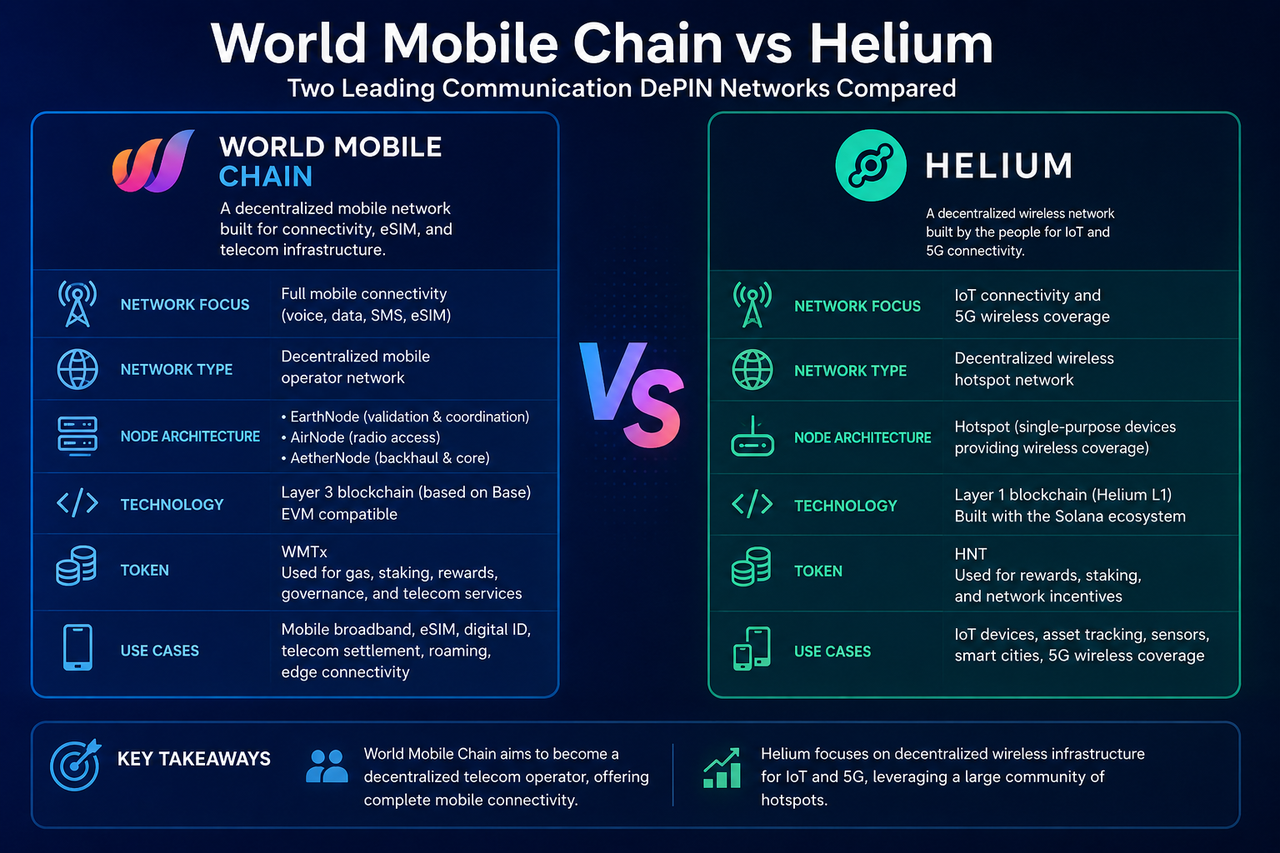
Vị trí cốt lõi: World Mobile Chain khác Helium như thế nào?
Dù cùng thuộc danh mục DePIN truyền thông, vị trí cốt lõi của chúng khác nhau đáng kể.
World Mobile Chain ưu tiên xây dựng một hệ sinh thái truyền thông di động hoàn chỉnh, bao gồm:
- Xác minh danh tính người dùng
- Dịch vụ eSIM
- Thanh toán truyền thông
- Quản trị mạng
- Hệ thống kinh tế dựa trên node
Mục tiêu của nó gần giống một nhà khai thác phi tập trung.
Ngược lại, Helium xoay quanh mạng Hotspot và kết nối IoT, hoạt động như một nền tảng vùng phủ sóng mở.
Đối tượng mục tiêu cũng khác nhau:
| Dự án |
Người dùng mục tiêu chính |
Mục tiêu mạng |
| World Mobile Chain |
Người dùng truyền thông di động |
Nhà khai thác phi tập trung |
| Helium |
Thiết bị IoT và không dây |
Mạng Hotspot |
Nói tóm lại, World Mobile Chain nghiêng về cơ sở hạ tầng truyền thông toàn diện, còn Helium tập trung vào mạng truy cập không dây.
Kiến trúc mạng và mô hình node: So sánh như thế nào?
World Mobile Chain và Helium có thiết kế node rất khác nhau.
World Mobile Chain áp dụng cấu trúc node phân lớp:
| Loại node |
Chức năng |
| EarthNode |
Xác minh và điều phối trên chuỗi |
| AirNode |
Vùng phủ sóng không dây cục bộ |
| AetherNode |
Kết nối Internet |
Kiến trúc này mô phỏng sát các mạng nhà khai thác truyền thông trong thực tế.
Helium, trái lại, chủ yếu dựa vào node Hotspot. Mỗi Hotspot đảm nhận cả vùng phủ sóng và truyền dữ liệu, tạo cấu trúc đơn giản hơn.
Hơn nữa, World Mobile Chain nhấn mạnh khả năng blockchain Lớp 3, trong khi Helium ưu tiên vùng phủ sóng không dây. Dù cùng dựa vào node cộng đồng, độ phức tạp node và phân cấp mạng của chúng khác biệt rõ.
Công nghệ truyền thông và trường hợp sử dụng: Khác nhau ở điểm nào?
Helium được xây dựng trên mạng LoRaWAN, xuất sắc trong truyền dữ liệu IoT năng lượng thấp, tầm xa. Nhờ đó, nó phù hợp với cảm biến thông minh, thiết bị theo dõi GPS, IoT công nghiệp và thiết bị thành phố thông minh.
Trong khi đó, World Mobile Chain tập trung vào truyền thông di động và truy cập internet, bao gồm dịch vụ eSIM, mạng dữ liệu di động, xác minh danh tính kỹ thuật số và mạng truyền thông biên. Về bản chất, Helium giống mạng IoT, còn World Mobile Chain hoạt động như mạng truyền thông di động.
Sự khác biệt này định hình nhu cầu thị trường và quỹ đạo phát triển riêng của mỗi dự án.
Tokenomics: Mô hình kinh tế khác nhau ra sao?
Helium dùng HNT làm token cốt lõi, phân phối phần thưởng dựa trên mức độ đóng góp vùng phủ Hotspot. Mô hình kinh tế của nó xoay quanh triển khai hotspot và truyền dữ liệu.
World Mobile Chain dùng WMTx làm token mạng, phục vụ các mục đích như Gas mạng, thanh toán dịch vụ truyền thông, staking node, quản trị và phần thưởng mạng.
So với Helium, token của World Mobile Chain thâm nhập sâu hơn vào hoạt động truyền thông và khung kinh tế trên chuỗi. Ngoài ra, vì World Mobile Chain có lớp xác minh như EarthNode, mô hình token của nó có một số điểm tương đồng với mạng blockchain truyền thống.
Thách thức chung: Cả hai gặp trở ngại gì?
Dù theo hướng khác nhau, các mạng DePIN truyền thông đều đối mặt với rào cản chung.
Thứ nhất, ngành viễn thông có rào cản pháp lý cao. Các quốc gia yêu cầu nghiêm ngặt về mạng không dây, sử dụng phổ tần và giấy phép hoạt động.
Thứ hai, triển khai cơ sở hạ tầng vật lý phức tạp hơn nhiều so với chạy giao thức trên chuỗi thuần túy. Dù triển khai hotspot hay xây mạng di động, đầu tư phần cứng liên tục là điều bắt buộc.
Thứ ba, tính bền vững của mô hình khuyến khích node phụ thuộc vào mức độ chấp nhận của người dùng. Nếu mạng ít được sử dụng, lợi nhuận node có thể giảm.
Do đó, thách thức cốt lõi của các dự án DePIN truyền thông không chỉ đến từ công nghệ blockchain mà còn từ thực tế của ngành viễn thông.
World Mobile Chain so với Helium: Mô hình nào phù hợp cho mạng truyền thông tương lai?
Hiện tại, Helium và World Mobile Chain đại diện cho hai hướng đi DePIN truyền thông riêng.
Helium phù hợp hơn với IoT năng lượng thấp và mạng Hotspot không dây. Mô hình nhẹ của nó cho phép mở rộng node cộng đồng nhanh.
World Mobile Chain, trái lại, nhấn mạnh hệ thống truyền thông toàn diện với khả năng vận hành trên chuỗi. Mục tiêu phức tạp hơn, nhưng thị trường tiềm năng cũng lớn hơn.
Nhìn vào xu hướng dài hạn, mạng truyền thông đang chuyển dần sang kiến trúc mở, do phần mềm điều khiển và hợp tác cộng đồng. DePIN mang đến khung khuyến khích mới cho phát triển cơ sở hạ tầng.
Tuy nhiên, mô hình nào bền vững hơn cuối cùng phụ thuộc vào quy mô người dùng, điều kiện pháp lý và khả năng triển khai mạng trong thực tế.
Tóm tắt
Cả World Mobile Chain và Helium đều thuộc danh mục DePIN truyền thông, nhưng vị trí cốt lõi khác biệt. Helium tập trung vào IoT và vùng phủ Hotspot không dây, còn World Mobile Chain đề cao hệ thống truyền thông di động hoàn chỉnh với mô hình nhà khai thác phi tập trung.
Về kiến trúc kỹ thuật, World Mobile Chain dùng cấu trúc đa node Lớp 3 tích hợp DID, eSIM và thanh toán trên chuỗi. Helium thì xoay quanh Hotspot và vùng phủ không dây.
Câu hỏi thường gặp
Sự khác biệt lớn nhất giữa World Mobile Chain và Helium là gì?
World Mobile Chain hướng đến một hệ thống vận hành truyền thông di động hoàn chỉnh, trong khi Helium tập trung vào IoT và mạng Hotspot không dây.
Helium có phải là DePIN không?
Có. Helium là một trong những dự án DePIN truyền thông tiêu biểu nhất.
World Mobile Chain có hỗ trợ dịch vụ truyền thông di động không?
Có. Một trong những mục tiêu chính của World Mobile Chain là cung cấp truyền thông di động phi tập trung và dịch vụ eSIM.
Tại sao Helium chủ yếu được sử dụng cho IoT?
Helium được thiết kế ban đầu trên mạng LoRaWAN, lý tưởng cho kết nối thiết bị IoT năng lượng thấp.
Tại sao World Mobile Chain sử dụng Lớp 3?
Kiến trúc Lớp 3 phù hợp hơn cho các kịch bản truyền thông thông lượng cao và hỗ trợ các chức năng dành riêng cho mạng truyền thông.