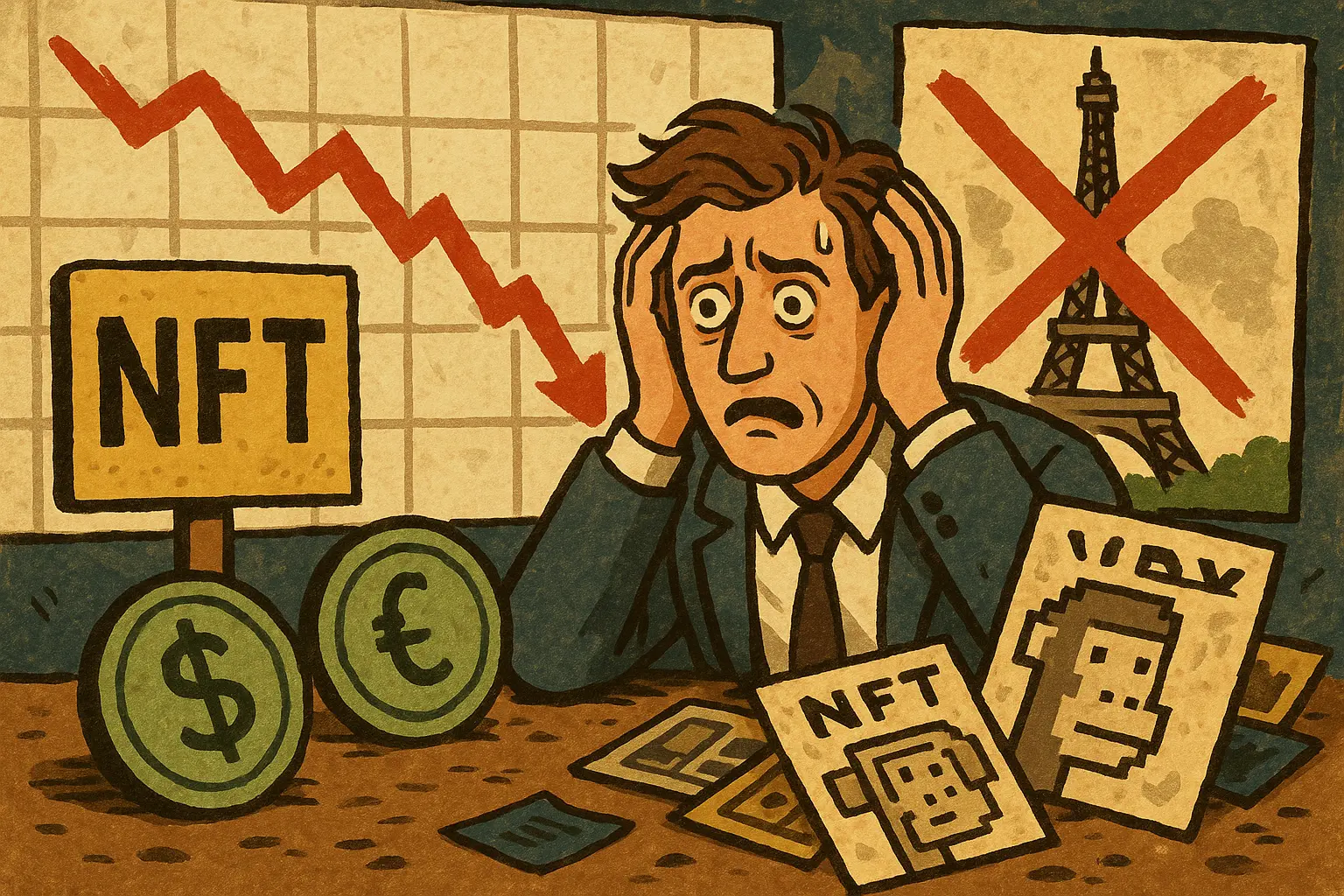
Ursprünglich im Februar geplante NFT Paris wurde abgesagt, die Veranstalter gaben zu, dass „der Marktcrash zu schwerwiegend ist“. Der Gesamtwert des NFT-Marktes fiel von 9 Milliarden US-Dollar im Januar 2025 auf 2,7 Milliarden US-Dollar, ein Rückgang von 68 %. Die Branchenkrise zwingt Plattformen zur Umorientierung: OpenSea setzt auf „Handel mit allem“, X2Y2 schließt und wechselt zu KI.
NFT Paris abgesagt – Hintergründe des Branchenzusammenbruchs
Am Montag veröffentlichte der offizielle X-Account von NFT Paris die Nachricht, dass die für Februar geplante NFT Paris und RWA Paris nicht wie geplant 2026 stattfinden werden. Obwohl die Veranstalter nicht explizit ausschließen, dass solche Events in Zukunft nicht wieder stattfinden, deutet die Mitteilung an die Teilnehmer an, dass sie „diese Kapitel“ der Veranstaltungsreihe „beenden“.
Der Beitrag schrieb: „Der Marktcrash hat uns stark getroffen. Trotz erheblicher Kostensenkungen und monatelanger Bemühungen konnten wir dieses Jahr keinen Erfolg verzeichnen.“ Diese offene Offenbarung ist bei Veranstaltern äußerst selten; üblicherweise werden vage Gründe wie „strategische Anpassungen“ oder „Ortsprobleme“ genannt. NFT Paris gibt jedoch direkt zu, dass Marktbedingungen die Ursache sind, was die ernste Lage der Branche deutlich macht.
Einige Sponsoren der Veranstaltung konnten keine Rückerstattung erhalten, was zu Kontroversen führte. NFT Paris kündigte jedoch an, alle bereits gekauften Tickets innerhalb von 15 Tagen zu erstatten. Diese unterschiedliche Behandlung (keine Rückerstattung für Sponsoren, Rückzahlung für Tickets) könnte die finanziellen Engpässe der Veranstalter widerspiegeln: Sponsoring-Gelder wurden bereits für Vorbereitungen verwendet, Ticket-Einnahmen sind noch nicht vollständig verbraucht, sodass Rückerstattungen möglich sind.
Das Aus von NFT Paris ist kein Einzelfall, sondern spiegelt die winterliche Phase der NFT-Industrie wider. Als eine der größten NFT-Konferenzen Europas zogen NFT Paris 2023 und 2024 Tausende Teilnehmer und Hunderte Aussteller an. Die Absage zeigt, dass selbst das relativ risikoarme Geschäftsmodell von Konferenzen unter den aktuellen Marktbedingungen nicht mehr tragbar ist – ein deutlicher Hinweis auf die Schwere der Krise.
Marktkapitalisierung schmilzt um 63 Milliarden US-Dollar – eine blutige Bilanz
2025 erlebte der NFT-Markt einen deutlichen Rückgang: Im November sanken die Verkaufszahlen auf etwa 320 Millionen US-Dollar, im Dezember sogar noch niedriger. Laut CoinGecko-Daten lag die Gesamtmarktkapitalisierung am Montag bei etwa 2,7 Milliarden US-Dollar, ein Rückgang von 68 % im Jahresvergleich. Das bedeutet, dass von etwa 9 Milliarden US-Dollar im Januar 2025 eine Marktkapitalisierung von 6,3 Milliarden US-Dollar verloren ging.
Diese Geschwindigkeit des Zusammenbruchs ist in der Geschichte der Kryptowährungen selten. Im Vergleich fiel Bitcoin während des Bärenmarktes 2018 von seinem Hoch um etwa 83 %, allerdings über einen Zeitraum von 12 Monaten. Der NFT-Markt verlor innerhalb von 12 Monaten 68 % seines Wertes, ohne Anzeichen einer Erholung – was auf eine deutlich größere Blase hindeutet als die ICO-Welle damals.
Das anhaltende monatliche Umsatzminus ist besorgniserregend. Mit 320 Millionen US-Dollar im Monat liegt der Umsatz deutlich unter den Milliardenbeträgen während des Höhepunkts im Bullenmarkt 2021. Das bedeutet, dass nicht nur Investoren aussteigen, sondern auch die grundlegende Handelsaktivität zum Erliegen kommt. Bei mangelnder Liquidität ist es selbst für Verkäufer schwierig, Käufer zu finden, was die Preise weiter drückt.
Vier strukturelle Gründe für den Zusammenbruch des NFT-Marktes
Platzen der Spekulationsblase: Die hohen Transaktionspreise 2021 waren meist Spekulation, ohne echte Anwendungsbasis. Nach dem Platzen der Blase kehrte die Marktstimmung zur Rationalität zurück.
Liquiditätsmangel: Viele NFTs sind zu „digitalem Müll“ geworden, Käufer verschwinden, Verkäufer können nicht mehr verkaufen.
Hohe Plattformgebühren: Gas-Gebühren auf Ethereum lagen im Bullenmarkt bei mehreren Dutzend US-Dollar, kleine Transaktionen waren unrentabel.
Fehlender praktischer Nutzen: Die meisten NFTs sind nur Bilder, ohne Mehrwert oder Erträge, der Besitz verliert an Bedeutung.
Drei Plattformen im Wandel – Spiegel des Branchenwinters
OpenSea war im April führend im NFT-Markt, doch CEO Devin Finzer kündigte im Oktober an, die Plattform werde „sich transformieren, vom ‚NFT-Marktplatz‘ zum ‚Handel mit allem‘“. Finzer sagte Cointelegraph damals, dass diese Maßnahme es OpenSea-Nutzern ermöglichen werde, „Token, Sammlerstücke, Kulturgüter, digitale und physische Produkte zu handeln“.
Diese Transformation bedeutet, dass OpenSea seine Position als „NFT-spezialisierte Plattform“ aufgibt und sich zu einer breit aufgestellten Handelsplattform wandelt. Wenn die weltweit größte NFT-Börse sich nicht mehr als NFT-Plattform positioniert, zeigt das den Niedergang der Branche. Die Entscheidung ist wirtschaftlich nachvollziehbar, markiert aber auch das Scheitern des Konzepts, NFTs als eigenständige Asset-Kategorie zu etablieren.
Ein weiterer wichtiger Akteur, X2Y2, kündigte im März an, den Betrieb einzustellen und sich auf KI zu konzentrieren. X2Y2 war einst ein bedeutender Konkurrent zu OpenSea, doch sein Ende zeigt, dass selbst Top-Plattformen im aktuellen Marktumfeld kaum überleben können. Der Wechsel in den KI-Bereich spiegelt den Trend wider, Kapital von NFTs in populärere Sektoren umzuleiten.
Auch Rarible, eine bedeutende Plattform, stellte im September ein neues Modell vor, das Token an aktive NFT-Händler verteilt und erklärte, „das alte Design sei nicht nachhaltig“. Rarible offenbart damit die grundlegenden Probleme der Branche: Das frühe Token-Ökosystem basierte auf Wachstumsannahmen, die bei Stagnation der Nutzerbasis zum Kollaps führen.
Hat die NFT-Industrie noch eine Zukunft?
Trotz des schlechten Marktumfelds glauben einige Beobachter, dass NFTs nicht vollständig tot sind, sondern sich vom Spekulationsblase hin zu einem praktischen Wert entwickeln. Anwendungsfälle wie Konzerttickets, Mitgliedsausweise und digitale Identitäten werden erforscht, doch das Marktvolumen dieser Szenarien ist deutlich kleiner als bei spekulativen NFT-Sammlerstücken.
Das Aus von NFT Paris ist die jüngste Bestätigung des Wintermodus der Branche. Wenn selbst Europas größte NFT-Konferenz nicht mehr überleben kann, muss die gesamte Branche ihre Wertorientierung neu überdenken. Vielleicht werden NFTs künftig in bestimmten Anwendungsfällen dezenter existieren, anstatt wie 2021 im Mittelpunkt globaler Spekulation zu stehen.
Disclaimer: The information on this page may come from third parties and does not represent the views or opinions of Gate. The content displayed on this page is for reference only and does not constitute any financial, investment, or legal advice. Gate does not guarantee the accuracy or completeness of the information and shall not be liable for any losses arising from the use of this information. Virtual asset investments carry high risks and are subject to significant price volatility. You may lose all of your invested principal. Please fully understand the relevant risks and make prudent decisions based on your own financial situation and risk tolerance. For details, please refer to
Disclaimer.


