


Polymarket verzeichnet steigende Wetten auf einen möglichen US-Angriff auf den Iran, während der Pentagon Pizza Index um 1250% steigt
Vorhersagemärkte und Open-Source-Intelligence-Signale nähern sich erneut einem sensiblen geopolitischen Brennpunkt. Am 6. Januar 2026 meldete das On-Chain-Überwachungstool PolyBeats einen Anstieg um 1250 % des sogenannten „Pentagon Pizza Index“ in den letzten 24 Stunden—ein Indikator, der historisch mit erhöhter US-Militäraktivität in Verbindung gebracht wird.
Gleichzeitig setzten mehrere neu erstellte Wallets Wetten auf Polymarket, spekulierend, dass die Vereinigten Staaten vor Monatsende einen Militärschlag gegen den Iran durchführen könnten. Zum Zeitpunkt der Veröffentlichung liegt die Wahrscheinlichkeit für einen US-Angriff auf den Iran bei Polymarket bei etwa 13 %, doch die ungewöhnliche Übereinstimmung öffentlicher Signale und finanzieller Wetten hat verstärktes Interesse auf sich gezogen.
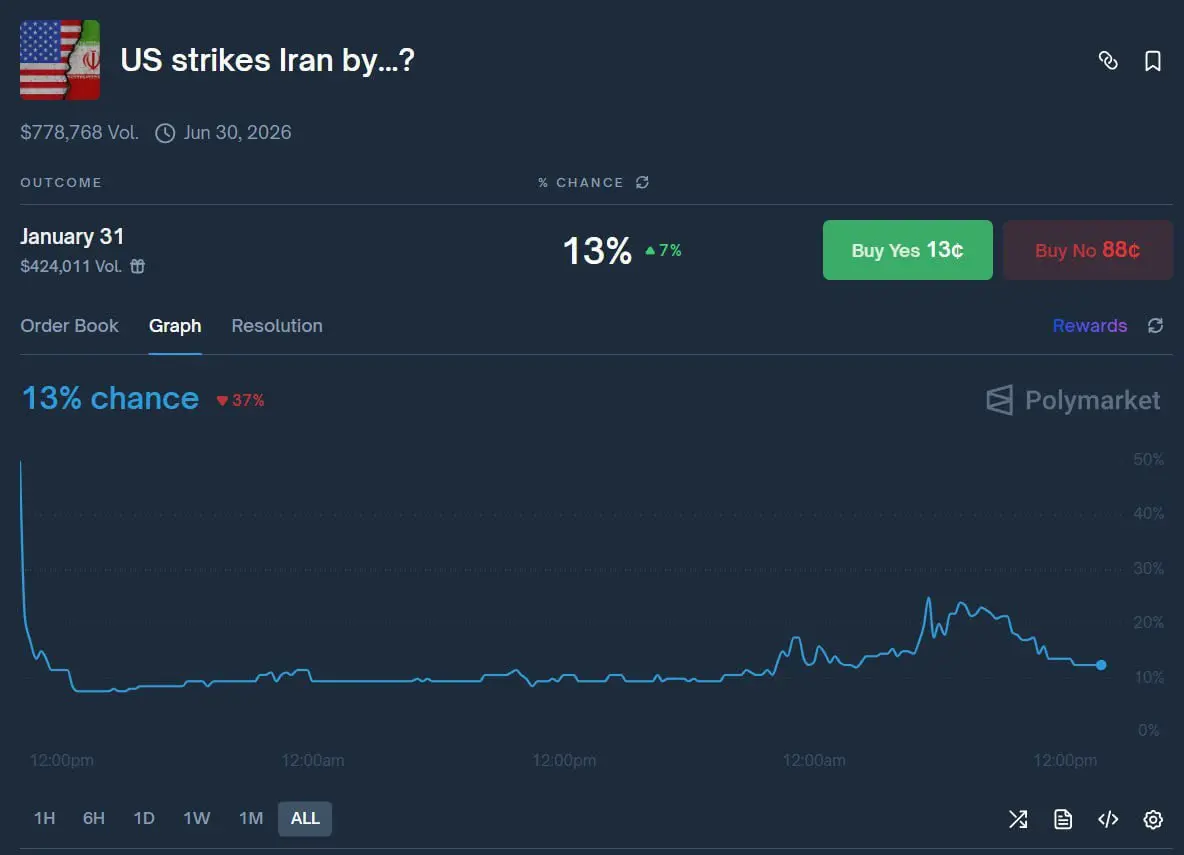
(Quellen: Polymarket)
Die Entwicklungen folgten einer Erklärung des US-Präsidenten Donald Trump am 3. Januar, der in sozialen Medien warnte, dass die Vereinigten Staaten eingreifen würden, falls der Iran inländische Proteste gewaltsam unterdrücke, und hinzufügte, dass „Ziele festgelegt und bereit sind.“ Während offizielle militärische Maßnahmen noch nicht bestätigt wurden, hat die Kombination aus Rhetorik, Verhaltensindikatoren und Aktivitäten auf Vorhersagemärkten die Debatte darüber neu entfacht, ob dezentrale Märkte frühzeitig geopolitische Risiken erkennen können.
Was ist der Pentagon Pizza Index?
Der Pentagon Pizza Index ist ein informeller, aber weithin diskutierter Open-Source-Indikator, der die nächtliche Essenslieferaktivität in der Nähe von US-Verteidigungs- und Geheimdienstanlagen verfolgt. Seine Ursprünge reichen bis in den Kalten Krieg zurück, als Analysten glaubten, dass Spitzen bei Pizzalieferungen zum Pentagon mit verlängerten Planungssitzungen vor militärischen Einsätzen zusammenfielen.
In den letzten Jahren hat sich das Konzept zu einem datengetriebenen Werkzeug entwickelt. Plattformen wie PenPizzaReport und andere Open-Source-Dashboards verwenden heute Google Maps-Verkehrsdaten und Liefer-App-Aktivitäten, um ungewöhnliche Anstiege rund um militärische Knotenpunkte zu schätzen. Obwohl es keine offizielle Geheimdienstquelle ist, hat der Index aufgrund mehrerer bemerkenswerter Korrelationen an Glaubwürdigkeit gewonnen.
Laut öffentlich verfügbaren Daten wurden ähnliche Pizzaliefer-Spitzen kurz vor folgenden Ereignissen beobachtet:
- Israels Luftangriffe auf iranische Ziele im Juni 2025
- US-Angriffe auf iranische Nuklearanlagen im selben Monat
- Eine US-Operation in Venezuela im Januar 2026, die Stunden nach der Erkennung ungewöhnlicher Aktivitäten angekündigt wurde
Diese Präzedenzfälle haben dazu geführt, dass Analysten den Pizza-Index als ergänzendes Signal und nicht als eigenständigen Prädiktor betrachten.
Polymarket und die Preisgestaltung geopolitischer Risiken
Polymarket ist zunehmend zu einer Plattform für Händler geworden, die ihre Ansichten zu geopolitischen Ergebnissen mit echtem Kapital ausdrücken möchten. Im Gegensatz zu Meinungsumfragen oder Social-Media-Stimmungen erfordern Vorhersagemärkte, dass Teilnehmer ihre Überzeugungen mit finanziellen Einsätzen untermauern, was viele Analysten als ein disziplinierteres Wahrscheinlichkeitsignal ansehen.
Im aktuellen Iran-bezogenen Markt zeigt die Blockchain-Daten, dass vier Wallets—erstellt im vergangenen Monat—Wetten auf die Wahrscheinlichkeit eines US-Angriffs vor Monatsende platziert haben. Während das insgesamt eingesetzte Kapital noch moderat ist, spiegelt die Timing-Ähnlichkeit frühere Fälle wider, in denen neue Wallets geopolitische Ereignisse korrekt vorhergesehen haben, einschließlich der Venezuela-Operation zu Beginn dieses Jahres.
Polymarket überprüft keine Insiderinformationen, und es gibt keine Hinweise darauf, dass diese Wallets über nicht-öffentliche Geheimdienstinformationen verfügen. Marktteilnehmer aggregieren jedoch häufig öffentliche Signale—offizielle Erklärungen, Logistikdaten, Satellitenbilder und Verhaltensindikatoren—zu handelbaren Wahrscheinlichkeiten.
Von klassifizierten Geheimdiensten zu Open-Source-Signalen
Die zunehmende Relevanz von Indikatoren wie dem Pentagon Pizza Index unterstreicht einen breiteren Wandel in der geopolitischen Prognose. Fortschritte in der Open-Source-Intelligenz (OSINT) bedeuten, dass Aktivitäten, die einst nur von Staatsakteuren beobachtet werden konnten, jetzt anhand öffentlicher Daten wie Verkehrsströmen, Schiffsbewegungen und Online-Verhalten abgeleitet werden können.
Vorhersagemärkte fungieren als eine finanzielle Koordinationsschicht für diese Informationen, indem sie verstreute Signale in eine einzige, kontinuierlich aktualisierte Wahrscheinlichkeit übersetzen. Einige Analysten argumentieren, dass dieser Mechanismus in bestimmten Fällen aufkommende Risiken schneller sichtbar machen kann als traditionelle Medien oder institutionelle Berichte.
Marktausblick und Perspektiven
Bisher haben die breiteren Finanzmärkte nur begrenzt reagiert. Kryptowährungsmärkte bleiben relativ stabil, was Skepsis gegenüber kurzfristigen Eskalationsszenarien widerspiegelt. Die niedrige Wahrscheinlichkeit von 13 % auf Polymarket deutet darauf hin, dass Händler einen US-Angriff auf den Iran im Moment noch für unwahrscheinlich halten.
Dennoch zeigt die Situation, wie Plattformen wie Polymarket zunehmend genutzt werden, um geopolitische Risiken in Echtzeit zu überwachen. Wenn sich diplomatische Spannungen verschärfen oder weitere Open-Source-Indikatoren auftauchen, könnten sich die Wahrscheinlichkeiten rasch verschieben.
Obwohl der Pentagon Pizza Index kein definitiver Prädiktor für militärische Maßnahmen ist, veranschaulicht seine Übereinstimmung mit Aktivitäten auf Vorhersagemärkten, wie dezentrale Daten und finanzielle Anreize die Art und Weise verändern, wie globale Ereignisse im Jahr 2026 vorhergesehen werden.