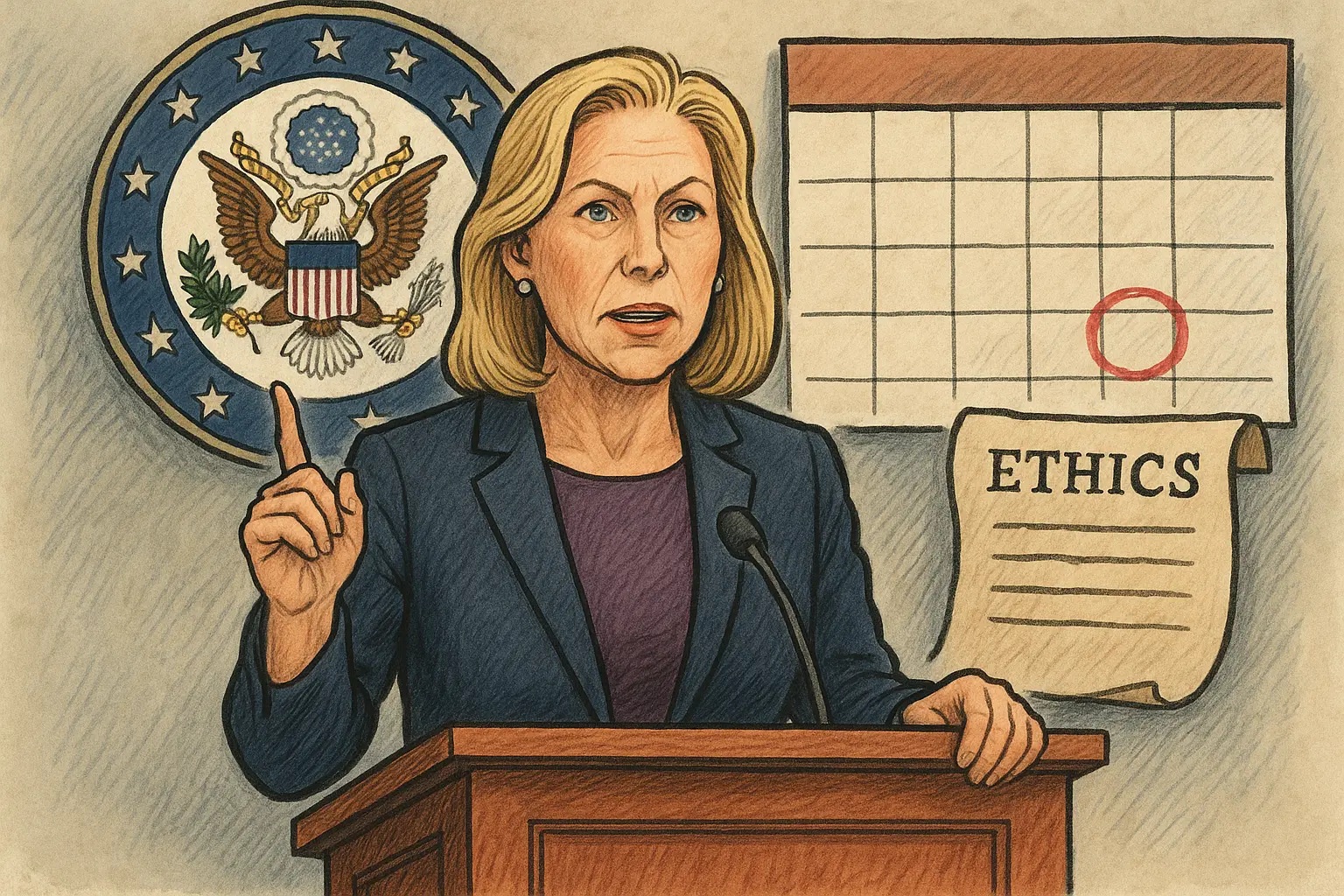
U.S. Senator Kirsten Gillibrand said at Consensus 2026 on May 6 that if the CLARITY Act reaches agreement on consumer protection, illegal finance regulation, and ethical standards, and if the market structure bill draft can be merged with the version from the Senate Agriculture Committee, while ensuring that ethical standards provisions are included, the Senate could vote on it by August 10.
Gillibrand Lists Three Precondition Requirements
According to Cointelegraph, Gillibrand explicitly demanded in her Consensus 2026 speech that the following three issues must be resolved before any vote:
Consumer protection: Ensure investors’ fundamental rights in the digital asset market
Illegal finance regulation: Strengthen anti-money laundering and anti-terror financing mechanisms
Ethical standards provisions: Clearly prohibit members of Congress, senior government officials, and public officials such as the president and vice president from profiting through their official positions from the crypto-related industry
In her remarks, Gillibrand said directly: “If we don’t add ethical provisions, no one will vote yes on this bill. We can’t allow members of Congress, senior government officials, the president, or the vice president to profit from these industries using their insider relationships. This is the worst kind of rights trading.”
Current Legislative Status of the CLARITY Act and Senate Committee Progress
According to Cointelegraph, as of May 7, 2026, the Senate Banking Committee has not yet rescheduled consideration of the CLARITY Act; the prior plan had already been delayed in January 2026.
In January 2026, Coinbase CEO Brian Armstrong said the exchange could not support the bill’s current version. Since then, multiple cryptocurrency companies and advocates have also publicly opposed provisions related to decentralized finance (DeFi), stablecoins, and tokenized stocks.
In late April 2026, the Senate Banking Committee announced an agreement on the issue of stablecoin yield, but that agreement does not involve conflicts of interest for public officials.
Industry Response and Prediction Market Data
According to Cointelegraph, on May 6, 2026, Ripple CEO Brad Garlinghouse said at Consensus 2026 that lawmakers must consider the CLARITY Act within the next two weeks to prevent the bill from being delayed due to the schedule of midterm elections.
On the same day, Summer Mersinger, former CFTC commissioner and CEO of the Blockchain Association, said during a Consensus 2026 market-structure panel discussion: “There’s always a window of opportunity to take action, but unexpected events during the August recess could also bring the issue back into focus.”
As of May 7, 2026, data from prediction market platform Polymarket shows that traders assign a 65% probability to the CLARITY Act being completed legislatively by the end of 2026. Kalshi platform data shows a 49% probability of completion before August 2026.
Frequently Asked Questions
What precondition requirements did Gillibrand propose for a vote on the CLARITY Act?
According to Cointelegraph’s coverage of the Consensus 2026 conference, Gillibrand said on May 6, 2026 that before a Senate vote, three issues must be addressed: consumer protection, illegal finance regulation, and ethical standards. Among these, the ethical standards provisions must clearly prohibit public officials from profiting through their official positions from crypto-related industries.
What is the current progress of the CLARITY Act in the Senate?
According to Cointelegraph, as of May 7, 2026, the Senate Banking Committee has not yet rescheduled consideration of the CLARITY Act. The earlier plan was delayed in January 2026, with the main disagreements involving provisions related to DeFi, stablecoins, and tokenized stocks.
How do prediction markets assess the legislative odds of the CLARITY Act?
As of May 7, 2026, Polymarket traders assign a 65% probability that the CLARITY Act will be completed legislatively by the end of 2026; on Kalshi, the probability of completion before August is 49%.


