Martin Yeza รองประธานสภาผู้แทนราษฎรคนใหม่ กล่าวว่า stablecoins อาจมีบทบาทสำคัญใหม่ในโครงสร้างการชำระเงินของประเทศ เขาเห็นว่าการอนุญาตให้ธนาคารกลางถือครองสกุลเงินดิจิทัลและให้บริษัทของรัฐทำเหมืองคริปโตจะเป็นสิ่งที่ดี นักวิเคราะห์ในท้องถิ่นก็สนับสนุนแนวคิด “tetherization” ทางเศรษฐกิจที่เรียกว่า
สภาผู้แทนราษฎรใหม่ของอาร์เจนตินาอาจผลักดันคริปโตในปี 2026
สภาผู้แทนราษฎรอาร์เจนตินาใหม่จะต้องรับมือกับประเด็นสำคัญหลายประเด็นที่เกี่ยวข้องกับคริปโตและ stablecoin ในปีใหม่นี้
ตามคำกล่าวของรองประธาน Martin Yeza รัฐบาลจะประเมินสูตรสำหรับการดอลลาร์ไรเซชันใหม่เพื่อเสถียรภาพทางเศรษฐกิจในปีนี้ โดยรวม stablecoins และคริปโตเข้าเป็นตัวแทนดอลลาร์
ในการพูดคุยกับ Iproup เขากล่าวว่า:
หากมีการดำเนินการปฏิรูปหลายประการ เราจะเผชิญกับการต่อต้านอย่างมาก และการประชุมในลักษณะนี้จะไม่เป็นที่ต้อนรับในสภาแน่นอน
อย่างไรก็ตาม หนึ่งในการเปลี่ยนแปลงที่เขาต้องการเห็นคือการนำ stablecoins มาใช้เป็นกลไกการชำระเงิน เขายังเห็นว่าการอนุญาตให้ธนาคารกลางถือครองและทำเหมืองคริปโตผ่านบริษัทของรัฐ เช่น YPF ถึงแม้รัฐบาลจะไม่ใช้ประโยชน์จากความเป็นไปได้เหล่านี้ในทันที
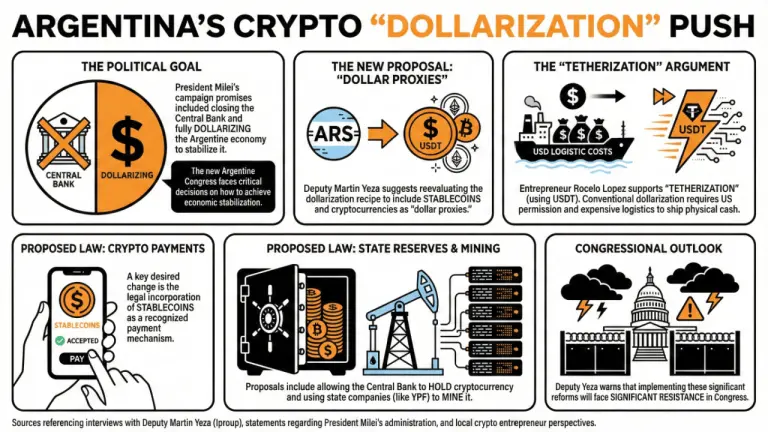
หนึ่งในคำมั่นสัญญาในการหาเสียงของประธานาธิบดี Milei คือการปิดธนาคารกลางและดอลลาร์ไรเซชันเศรษฐกิจเพื่อให้ตัวเลขเงินเฟ้อลดลง
Rocelo Lopez นักธุรกิจคริปโตในท้องถิ่นสนับสนุนแนวคิด “tetherization” ของเศรษฐกิจอาร์เจนตินา โดยอ้างอิงถึง Tether ผู้ออก USDT ซึ่งเป็น stablecoin ที่มีมูลค่าตามตลาดสูงสุด
สำหรับการดอลลาร์ไรเซชันแบบดั้งเดิมของเศรษฐกิจอาร์เจนตินา สหรัฐฯ จะต้องอนุมัติ และต้องพิจารณาค่าใช้จ่ายในการขนส่งและโลจิสติกส์ที่เกี่ยวข้องในการนำเงินสดสหรัฐฯ เข้าสู่ประเทศอาร์เจนตินา
“tetherization” จะให้ประโยชน์เมื่อเทียบกับกระบวนการดอลลาร์ไรเซชันแบบปกติ โดยไม่ต้องเกี่ยวข้องกับรัฐบาลสหรัฐฯ การดำเนินการจะสามารถติดตามได้และมีธุรกรรมที่ต้นทุนต่ำ Lopez เน้นย้ำ
รายงานล่าสุดเปิดเผยว่า ธนาคารในอาร์เจนตินาพร้อมที่จะให้บริการคริปโตแก่ลูกค้า และธนาคารกลางกำลังร่างมาตรการพิเศษเพื่อเปิดตลาดคริปโตให้กับธนาคารเอกชน
อ่านเพิ่มเติม: ธนาคารกลางอาร์เจนตินาพิจารณาอนุญาตให้ธนาคารให้บริการคริปโต
คำถามที่พบบ่อย
- สภาผู้แทนราษฎรอาร์เจนตินาใหม่จะรับมือกับประเด็นสำคัญอะไรเกี่ยวกับคริปโต?
สภาจะประเมินการใช้ stablecoins และคริปโต เป็นตัวแทนดอลลาร์เพื่อช่วยเสถียรภาพทางเศรษฐกิจในปี 2026
- รองประธาน Martin Yeza สนับสนุนการปฏิรูปอะไรเพื่อการนำคริปโตมาใช้?
Yeza สนับสนุนการนำ stablecoins มาใช้เป็น กลไกการชำระเงิน และอนุญาตให้ธนาคารกลางถือครองและทำเหมืองคริปโตผ่านบริษัทของรัฐ
- Rocelo Lopez มองอย่างไรเกี่ยวกับแนวคิด “tetherization” สำหรับอาร์เจนตินา?
Lopez สนับสนุน “tetherization” เป็นทางเลือกที่ยืดหยุ่นต่อการดอลลาร์ไรเซชันแบบดั้งเดิม โดยให้ประโยชน์เช่น การติดตามได้และธุรกรรมต้นทุนต่ำโดยไม่ต้องได้รับอนุญาตจากสหรัฐฯ
- ความคืบหน้าเกี่ยวกับธนาคารในอาร์เจนตินาเกี่ยวกับคริปโตเป็นอย่างไร?
รายงานระบุว่า ธนาคารในอาร์เจนตินากำลังเตรียมที่จะให้บริการ คริปโต และธนาคารกลางกำลังดำเนินมาตรการเพื่อเปิดตลาดคริปโตให้กับธนาคารเอกชน


