In the global financial market, the competition between Bitcoin and gold is no longer limited to the store of value function but extends to the fundamental differences in asset liquidity and ease of use. Bitcoin's exceptional portability not only makes it “digital gold” but also allows it to develop into a vibrant currency network and innovative platform, an advantage that traditional gold can never achieve. With the development of Layer 2 solutions like BOB, Bitcoin is transforming from a static asset into a dynamic financial infrastructure, fundamentally redefining the concepts of store of value and transfer.
Bitcoin vs Gold: The Fundamental Difference in Portability
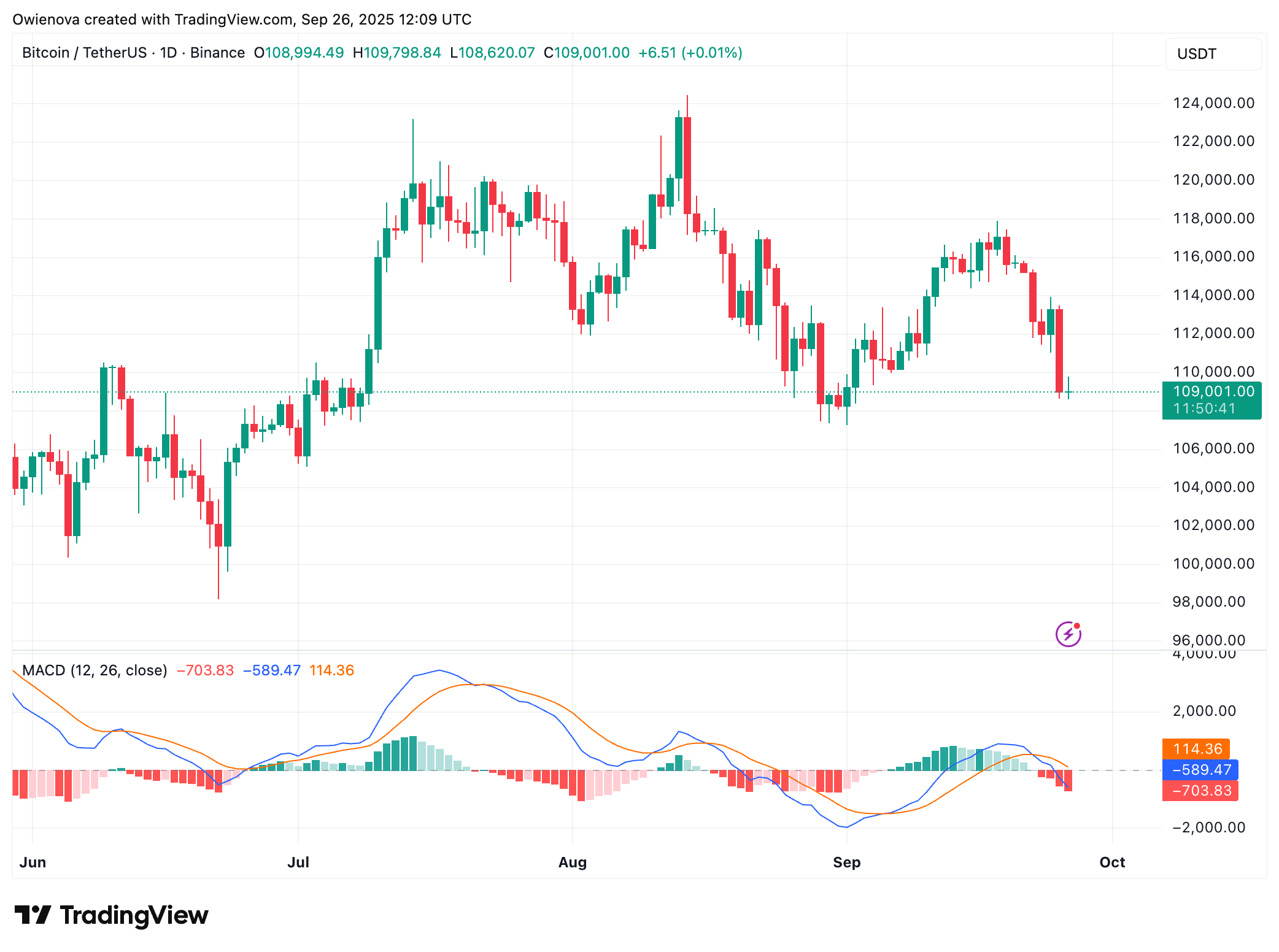
(Source: Trading View)
In the digital mobile era, the portability of assets has become a key indicator for assessing their practicality. Bitcoin and gold, as two major means of store of value, have shown a stark contrast in this regard.
· Physical limitations of gold
Gold, as a physical asset, faces many inherent limitations:
Weight and Volume: Gold is extremely heavy, with just 1 kilogram valued at over 60,000 USD, making it inconvenient to carry.
Security risks: The transportation of physical gold requires strict security measures and is easily targeted for theft.
Difficulty in Segmentation: Unable to easily and accurately segment for small transactions.
Cross-border restrictions: International shipping is subject to strict regulation, requires declaration, and may be taxed.
Storage costs: Secure storage requires a professional vault, incurring ongoing custody fees.
These limitations make gold's role in the modern financial system increasingly passive, primarily serving as a static store of value rather than an active medium of exchange.
· The Digital Advantages of Bitcoin
In contrast, Bitcoin, as a purely digital asset, offers unprecedented portability:
No weight limit: Regardless of value, Bitcoin can be stored in a small hardware wallet or even on a piece of paper.
Instant Transfer: You can send any amount of Bitcoin to any corner of the world within minutes.
Perfect division: can be precisely divided up to eight decimal places (1 Satoshi = 0.00000001 BTC)
Borderless liquidity: Cross-border transfers are not directly controlled by governments and do not require permission.
Low storage cost: Holding Bitcoin requires almost no additional cost.
As cryptocurrency analyst mhar_leeck pointed out on the X platform, “The true evolution of BTC lies in its ability to serve as an innovative, mobile, developmental, and even educational platform. Unlike locked gold, this narrative restricts the asset to a passive role.”
Layer 2 Solutions: Unlocking the True Potential of Bitcoin
The portability advantage of Bitcoin is not only reflected in its basic transfer functionality but also in its ability to support more complex financial applications as a foundational layer. Layer 2 solutions based on Bitcoin, especially BOB (Bitcoin on Bitcoin), are turning this potential into reality.
· BOB: Function Expansion of Bitcoin
BOB, as a Layer 2 solution built on Bitcoin, transforms the concept of programmable Bitcoin from theory into practice by creating a more expressive layer. This technology architecture, known as “hybrid L2”, enables developers to:
Building decentralized applications: Achieving more complex functions while maintaining the security of Bitcoin.
Real-time Experiment: From Reading DeFi Knowledge to Instant Testing and Creation
No need for wrapped tokens: use native Bitcoin directly to avoid cross-chain risks.
Crypto Sinan, an active member of the BOB community, stated: “BTC promises to run across DeFi with just one click, highlighting BOB's emphasis on user experience, and there are no questionable bridges that involve wrapped tokens or introduce new trust assumptions.”
· From static store of value to productive asset
The emergence of BOB and Layer 2 solutions marks a transition of Bitcoin from a purely store of value to a productive asset. This transition has far-reaching implications:
Liquidity mining: holders can convert static Bitcoin into yield-generating assets.
Multi-chain Earnings: Native Bitcoin can earn yields across different ecosystems.
Minimizing Risk: Avoiding the risks of wrapped tokens in traditional cross-chain solutions.
“If you still think that BTC is just a static store of value, then perhaps BOB is the place where you will ultimately witness digital gold transform into productive gold,” Crypto Sinan added.
Market Dynamics: The Actual Impact of Bitcoin Liquidity
The portability and liquidity of Bitcoin are not just theoretical advantages, but are also reflected in actual market behavior. Recent data shows that the behavior patterns of long-term holders (LTH) of Bitcoin are undergoing interesting changes.
· Record-breaking profit realization
Tedlabsio co-founder Niels recently revealed that the cash-out volume of long-term Bitcoin holders has reached a historical high:
“In this cycle, long-term holders of BTC have realized record profits, totaling up to 3.4 million BTC, surpassing any previous bull market profits.”
This data highlights the advantages of Bitcoin as a liquidity asset—holders can easily liquidate their holdings at the right moment without facing the various obstacles associated with liquidating gold.
· Enhancement of Market Elasticity
It is worth noting that while long-term holders have realized significant profits, the market seems to exhibit unprecedented resilience:
“In the past cycle, the selling pressure has had almost no impact on the price structure, which means that although experienced investors have achieved record profits, the potential demand is absorbing all the profits.”
This phenomenon indicates that the depth and liquidity of the Bitcoin market have reached a new level, capable of absorbing large-scale selling pressure without causing a price collapse. This is an important sign of Bitcoin as a mature financial asset and another advantage of it relative to gold.
The Future of Bitcoin: From Digital Gold to Financial Infrastructure
As the Bitcoin ecosystem continues to evolve, its role is expanding from a simple “digital gold” to a complete financial infrastructure. This transformation will further enhance its advantages over traditional gold.
· Improvement of Financial Inclusion
The portability and divisibility of Bitcoin make it an ideal tool for enhancing global financial inclusion:
Low barrier to entry: Anyone with a smartphone can hold Bitcoin without needing a bank account.
Micro-trading possibilities: It allows for very small transactions to meet the needs of developing countries.
Hedge against inflation: Provide residents of high-inflation countries with a store of value option.
In contrast, the high barriers to entry for gold (such as the cost of the minimum purchase unit, storage requirements, etc.) make it difficult to serve the globally unbanked population.
· Acceleration of Technological Innovation
The development of Layer 2 solutions is just the beginning of technological innovation for Bitcoin. More innovations may emerge in the future:
Enhanced smart contract functionality: Expanding Bitcoin's programmability through sidechains and Layer 2 solutions.
Privacy protection technology: The development of technologies to enhance transaction privacy.
Lightning Network Expansion: Further Enhance the Efficiency and Scalability of Small Payments
These innovations will continue to expand the functional gap between Bitcoin and traditional gold, making the latter increasingly appear outdated.
Conclusion: The portability advantage of Bitcoin is irreversible
The portability advantage of Bitcoin represents a fundamental paradigm shift rather than a simple technological improvement. This advantage is reflected not only in the convenience of asset transfer but also in its potential as an innovative platform.
As mhar_leeck pointed out, “The most exciting next chapter for BTC is not just holding the asset, but actively building on it.” This perspective reveals the fundamental difference between Bitcoin and gold — Bitcoin is not just an asset, but a constantly developing ecosystem.
In a world where digitization is constantly increasing, the portability and programmability of assets will become increasingly important. The advantages of Bitcoin in these areas not only allow it to compete with traditional gold as “digital gold,” but also enable it to develop into a financial infrastructure that traditional gold can never reach.
For investors, understanding this fundamental difference is crucial. Bitcoin is not just a digital form of gold, but a completely new asset class with potential far exceeding traditional stores of value. As Layer 2 solutions mature and adoption rates increase, Bitcoin's portability advantage will further expand, solidifying its position as a core component of the future financial system.


