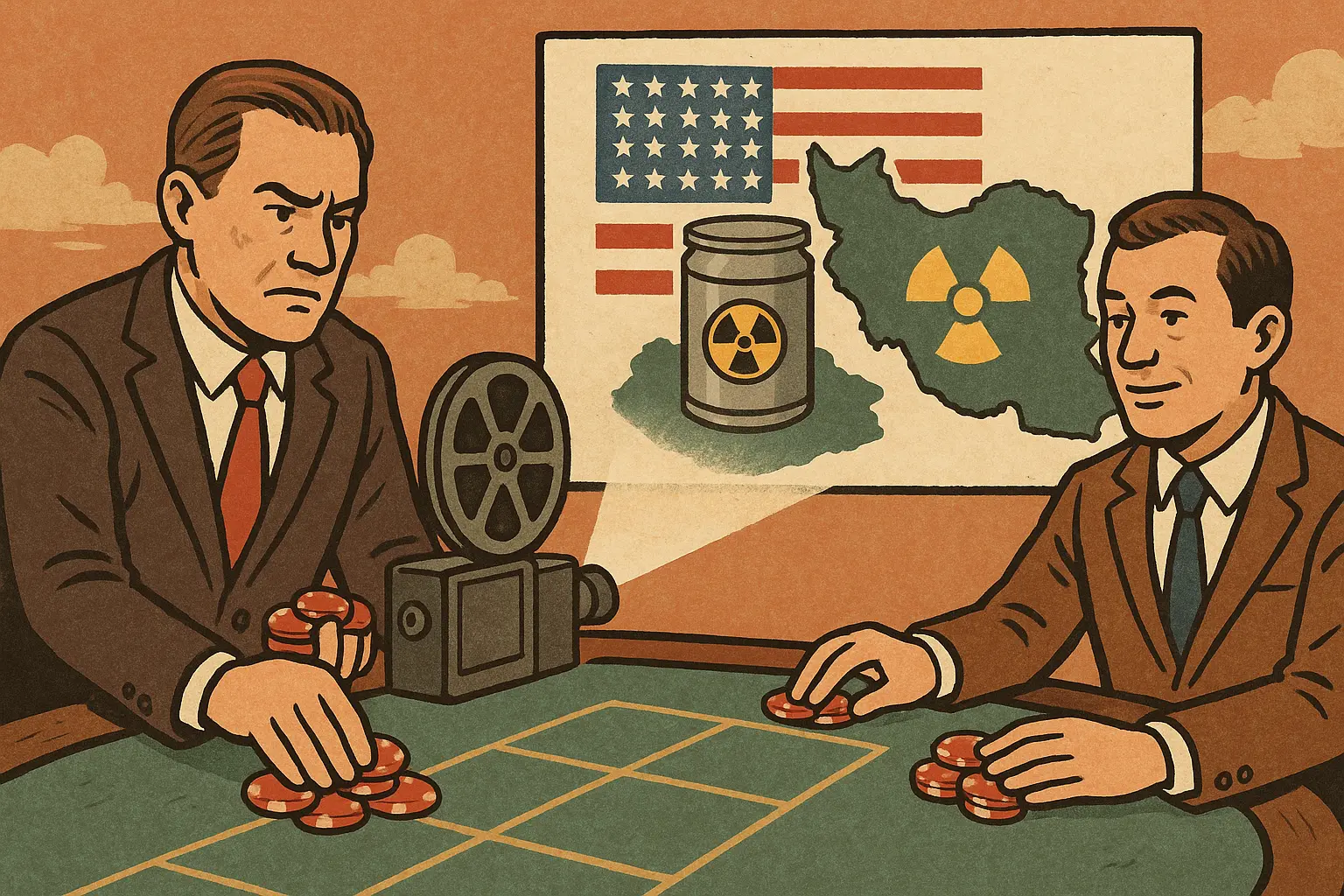
On decentralized prediction market platform Polymarket, two accounts with strong historical win rates in the Iran segment recently collectively staked $5,900 on the outcome “The United States obtains Iran’s highly enriched uranium before June,” which came out to “Yes,” with the highest win rate reaching 81%. The timing of the entry by the two accounts closely matches the military scheme to seize nearly 1,000 pounds of highly enriched uranium, as disclosed by The Washington Post on April 1.
Polymarket: Background of the Two Accounts—Betting Logic and Historical Performance
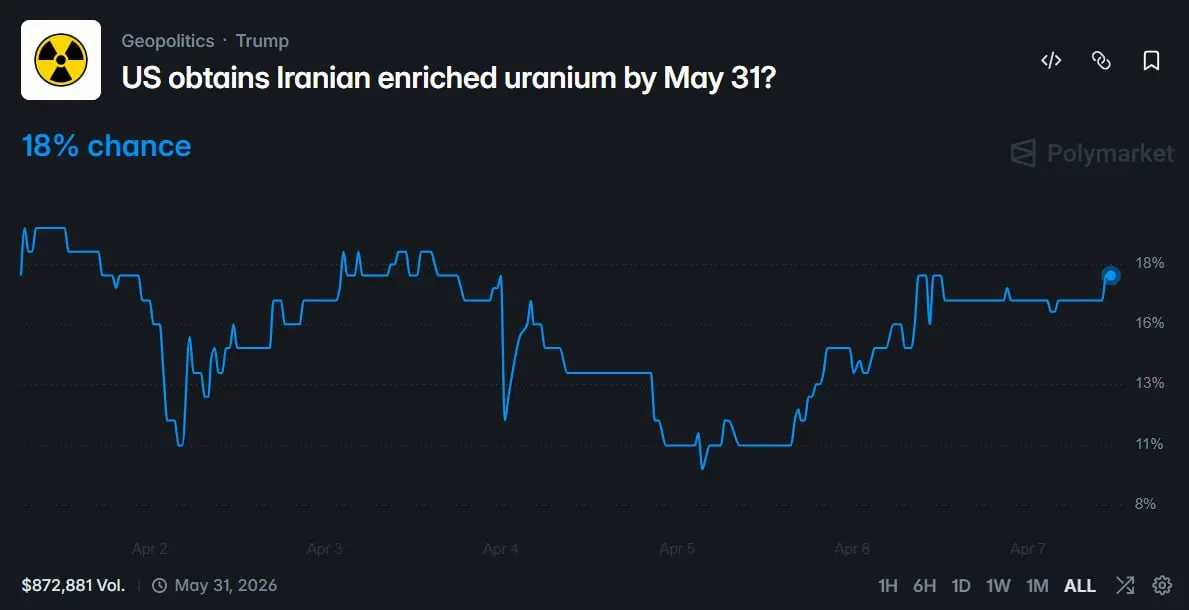 (Source: Polymarket)
The two accounts involved in this bet both have quantifiable historical performance records in Polymarket’s Iran-related segment.
Account 0x83e994ba has a historical win rate of 81% in the Iran segment, with cumulative total profits of $3,000; account 0x38692cea has a historical win rate of 72% in the Iran segment, with cumulative total profits of $103k. Both accounts chose to enter the market at a low valuation level implied by the current market probability of just 17.5%, showing a typical contrarian positioning strategy.
It is worth noting that, based on their past trading profiles, the operational logic of these two accounts is not simply a bet on whether the event truly occurs, but may involve taking profit or cutting losses at specific points in time—this is a common professional short-term trading strategy in prediction markets, and is fundamentally different from “believing the event will inevitably happen.”
The Core Military Plan: Nearly 1,000 Pounds of Highly Enriched Uranium and Ground Forces
In its April 1 report, The Washington Post said the U.S. military has briefed the president on an action plan to deploy ground forces into Iran, with the core goal of seizing nearly 1,000 pounds of highly enriched uranium. The plan’s specific implementation details include transporting mining equipment to the target location and building a temporary cargo aircraft takeoff-and-landing runway to extract the relevant radioactive materials.
Current Troop Deployment Around the Pentagon
U.S. Marines: More than 5,000 Marines have completed forward-area pre-positioning around the region
Amphibious Ready Group: Amphibious operational forces with rapid cross-sea deployment capability have entered a state of readiness
82nd Airborne Division: Rapid-response airborne forces have completed positioning at the front, providing airborne support for a cross-border operation
A Dual Perspective: Legal Constraints and Market Probabilities
Even though military deployments are already in place, if the U.S. executive branch launches a cross-border ground operation without formal authorization from Congress, it still faces legal constraints under frameworks such as the War Powers Resolution, which is one of the background factors some analysts cite for why the “Yes” probability remains at the low 17.5% level.
From the perspective of interpreting prediction-market signals, the contrarian entry by a high-win-rate account has some reference value, but the combined position size of $5,900 by the two accounts is not enough to significantly move Polymarket’s overall market probability. When investors interpret signals like “smart money entering,” they should distinguish the fundamental difference between “the bettors’ directional bias” and “an increase in certainty that the event will occur.”
Frequently Asked Questions
How does Polymarket calculate the probability of the U.S. seizing Iran’s highly enriched uranium?
Polymarket is a decentralized prediction market platform based on Ethereum. Users bet on real-world events with USDC, and the probability of the question is calculated based on the funding weighted by all participants. The current “Yes” probability of 17.5% reflects the market’s overall low level of confidence in this event.
Does the two accounts’ high historical win rate mean the event probability is higher?
A high historical win rate indicates that the account has better past prediction records in similar segments, but it does not directly equate to an increase in event probability. In addition, based on analysis of the accounts’ trading profiles, some of the betting behavior belongs to a short-term take-profit strategy rather than a pure judgment about the event’s outcome.
What legal obstacles does the U.S. plan to seize Iran’s highly enriched uranium face?
Under the U.S. War Powers Resolution, if the president deploys combat forces beyond a certain period without giving Congress prior notice, it faces compliance and legal risks. Without formal authorization from Congress, launching a cross-border ground operation to seize material still faces significant domestic legal constraints.
Disclaimer: The information on this page may come from third parties and does not represent the views or opinions of Gate. The content displayed on this page is for reference only and does not constitute any financial, investment, or legal advice. Gate does not guarantee the accuracy or completeness of the information and shall not be liable for any losses arising from the use of this information. Virtual asset investments carry high risks and are subject to significant price volatility. You may lose all of your invested principal. Please fully understand the relevant risks and make prudent decisions based on your own financial situation and risk tolerance. For details, please refer to
Disclaimer.


