
A DeFi protocol, Rhea Finance, suffered a major security vulnerability on April 16, and blockchain security firm CertiK estimates losses of approximately $7.6 million. The attacker succeeded in extracting funds by creating a fraudulent token contract and injecting funds into a newly created liquidity pool, misleading the protocol’s oracle and verification mechanisms. CertiK has identified the involved on-chain addresses, and the investigation is ongoing.
Attack Mechanism: A Combined Scam of Fake Token Contracts and Liquidity Pools
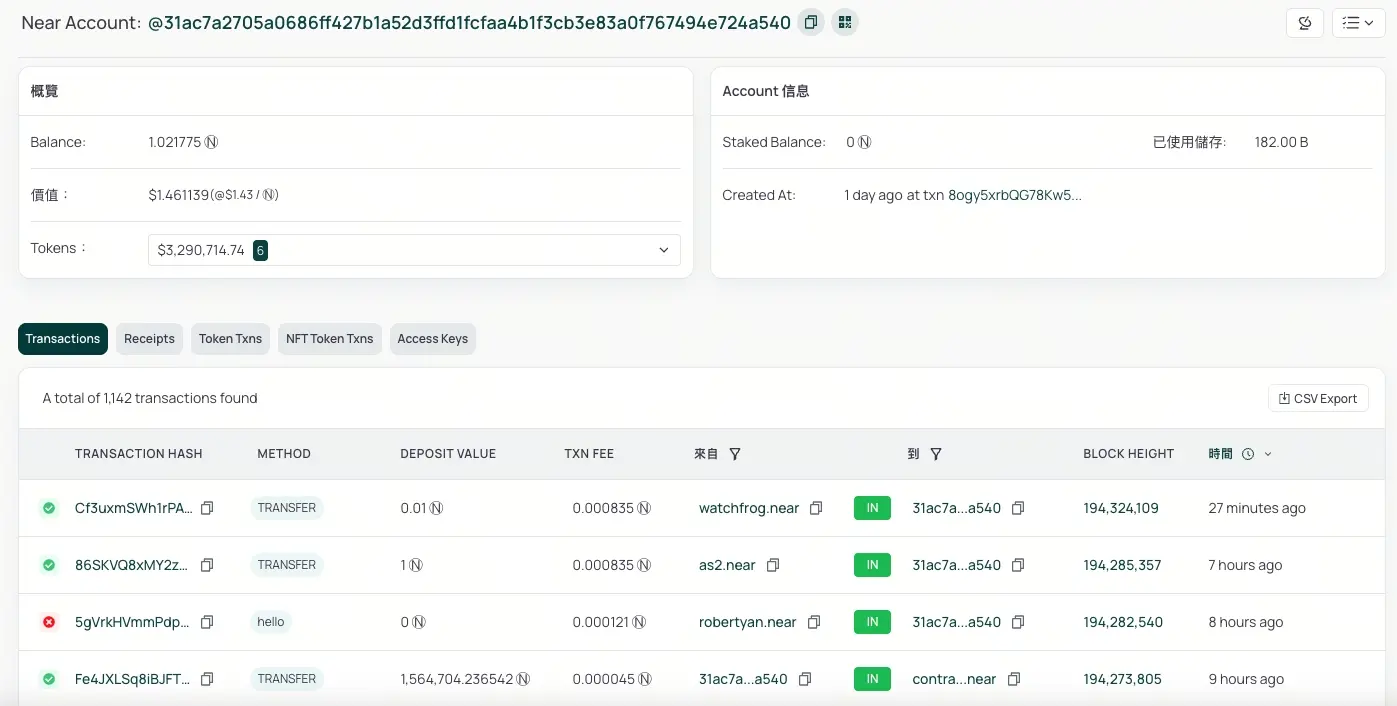 (Source: NearBlocks)
According to CertiK’s preliminary analysis, the technical path of this attack involves two key steps. First, the attacker deploys a fraudulent token contract, and then injects funds into a newly created liquidity pool to create the illusion of “normal trading activity.” This operation misleads the oracle and verification layer that Rhea Finance relies on, causing it to incorrectly assess the value of assets—allowing the attacker to exploit the gap between the protocol’s perceived value and the actual value to extract funds.
Such oracle manipulation attacks are recurring security threats in the DeFi ecosystem. The core mechanism is to distort the protocol’s assessment of an asset’s state by artificially creating liquidity signals or fake price data, triggering trading logic that should not be executed.
Loss Magnitude: $7.6M, Nearly 6% of Rhea Finance TVL
CertiK estimates the loss to be approximately $7.6 million, but as on-chain analysis deepens, the figure may still be adjusted. According to DefiLlama data, Rhea Finance currently holds total value locked (TVL) of about $128 million, meaning the loss from this vulnerability is roughly 6% of the platform’s total liquidity—an event of moderate to somewhat serious severity for a single security incident.
After stealing the funds, the attacker routed the assets through multiple on-chain addresses—an approach commonly used to confuse tracing and facilitate freezing of funds after DeFi attacks.
Large On-Chain Fund Movements on the Same Day
On the same day as the Rhea Finance incident, on-chain records showed two other large BTC transfers worth noting:
U.S. Government: Deposited 8.2 BTC (about $606K) to Coinbase Prime; these assets came from seized assets associated with the Bitfinex hacker incident
Abraxas Capital: Deposited 1,993 BTC (about $148M) to Kraken, continuing the large-scale Bitcoin trading pattern that began in mid-March
Frequently Asked Questions
What is an oracle manipulation attack, and how does it affect DeFi protocols?
An oracle is the intermediary through which DeFi protocols obtain off-chain or on-chain price data. When attackers input distorted data into an oracle via artificially controlled liquidity pools or fraudulent token contracts, the protocol may miscalculate the value of assets and then execute lending, liquidation, or arbitrage operations based on the deviated price—allowing the attacker to extract the difference without risk. This is one of the most common and persistent attack methods in DeFi history.
How serious is the loss relative to Rhea Finance’s TVL?
A $7.6 million loss is about 5.9% of Rhea Finance’s approximate $128 million TVL, making it a moderately severe security incident. If the attacker has not completed all fund transfers, the actual loss may be higher than CertiK’s initial estimate. The platform is still operating, but there is potential ongoing risk.
Rhea Finance has not responded so far—how should users holding assets respond?
Until the protocol team issues an official response or confirms that the system has securely patched the vulnerability, users holding Rhea Finance assets should assess whether to withdraw liquidity to reduce risk. They should continue to track the latest on-chain developments of the incident through third-party security platforms such as CertiK, and avoid depositing new funds until the vulnerability is fully confirmed to be fixed.
Disclaimer: The information on this page may come from third parties and does not represent the views or opinions of Gate. The content displayed on this page is for reference only and does not constitute any financial, investment, or legal advice. Gate does not guarantee the accuracy or completeness of the information and shall not be liable for any losses arising from the use of this information. Virtual asset investments carry high risks and are subject to significant price volatility. You may lose all of your invested principal. Please fully understand the relevant risks and make prudent decisions based on your own financial situation and risk tolerance. For details, please refer to
Disclaimer.
Related Articles
KelpDAO's Liquid Staking Token Faces Over $100M Exploitation
Gate News message, according to onchain data, KelpDAO's liquid staking token has been exploited for over $100 million. The incident involves KelpDAO's liquid staking token infrastructure.
GateNews1h ago
Chainalysis Details 'Shadow Crypto Economy' Exposure as Grinex Suspends Operations
Grinex’s shutdown is intensifying scrutiny of crypto laundering tactics, as fund movements suggest behavior inconsistent with typical enforcement actions. Chainalysis analysis highlights patterns that raise questions about whether the activity aligns with a conventional external hack or
Coinpedia3h ago
Rhea Finance Suffers a $18.4 Million Loss After an Oracle Attack: ZachXBT Warns, Tether Freezes 4.34 Million USDT, and the Attacker Returns Some Funds
Rhea Finance suffered an oracle manipulation attack on the NEAR Protocol, with losses reaching $18.4 million—double the initial estimate. The attacker manipulated the pricing of a fake token, causing collateral valuations to be incorrect. Tether froze about $4.34 million in USDT; the attacker returned roughly $3.5 million. To date, more than $7.8 million has been recovered, highlighting the importance of oracle security.
ChainNewsAbmedia12h ago
eth.limo DNS Under Attack, Vitalik Urges Users to Pause Access and Switch to IPFS
Vitalik Buterin warned on April 18 about an attack on the DNS registrar for eth.limo, urging users to avoid accessing vitalik.eth.limo and related pages. He recommended using IPFS as an alternative until the issue is resolved.
GateNews12h ago
Sanctioned Exchange Grinex Hit by $13.7M Hack; Blames Foreign Intelligence Services
Grinex, a sanctioned crypto-ruble exchange, has halted operations due to a cyberattack that stole over $13.74 million in USDT. The attack is believed to involve state-level actors aiming to destabilize Russia's financial system. Grinex is cooperating with law enforcement but has no timeline for resuming services.
Coinpedia20h ago
Figure Faces Short Seller Accusations Over Blockchain Integration Claims; FIGR Stock Down 53% From January Peak
Figure Technology Solutions faced allegations from Morpheus Research of overstating its blockchain technology use, resulting in a significant drop in share prices. Figure defended its operations, highlighting its digital asset features and strong performance metrics.
GateNews04-17 17:11


