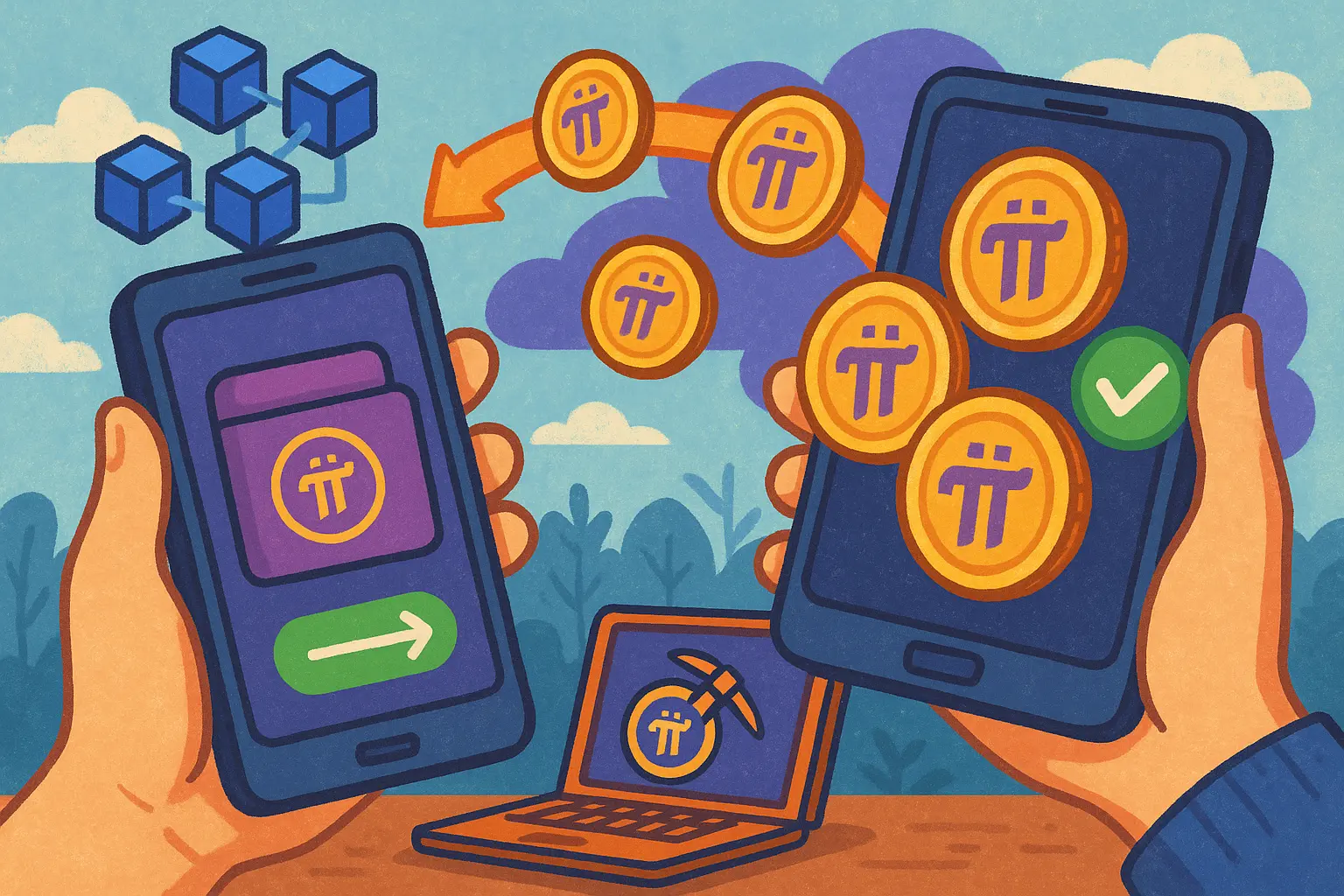
Pi Network has launched the second phase of the mainnet migration, gradually progressing since early March. The most anticipated core change in this update is the inclusion of reward tokens for referrals into the migration scope for the first time—previously, these balances existed outside the platform’s internal system and had not officially entered the mainnet blockchain. According to early reports, the first batch of migrated tokens has transferred tens of thousands of Pi tokens, and some pioneers have confirmed receiving updated mainnet balances.
The Significance of On-Chain Referral Rewards: From Platform Points to True On-Chain Assets
One of Pi Network’s core growth mechanisms is encouraging users to invite others through a referral system, where invited users’ mining activities can earn additional Pi tokens for the inviter. However, these referral rewards have long only existed within Pi Network’s internal ledger system and have not officially entered the mainnet blockchain—meaning they are not technically “real” blockchain assets.
The most important breakthrough in the second phase of migration is the formal transfer of these previously “suspended” referral rewards onto the mainnet. Once successfully transferred, these tokens will become “on-chain assets” as described by the Ethereum community—verifiable, transferable, and circulating as tokens with real functionality within the Pi ecosystem.
KYC Verification: The Key Threshold for Migration Eligibility
KYC (Know Your Customer) verification is a crucial prerequisite for this migration. Pi Network requires users to complete identity verification before they can transfer their balances to the mainnet. This design aims to prevent duplicate accounts from fraudulently claiming tokens and to ensure fair distribution among genuine users.
However, the KYC process also brings common user pain points:
- Long Waiting Queues: Many users’ KYC applications are still under review and have not been verified yet.
- Partial Transfers: Some pioneers who have passed KYC report that only part of their account balance has been transferred to the blockchain, not the full amount.
- Transfer Delays: Some users experience processing delays and do not receive updated balances immediately after completing KYC.
- Batch Processing: To maintain network stability, the migration is conducted in batches rather than a full, one-time transfer.
Although these challenges have caused some dissatisfaction within the community, most Pi Network observers believe that a cautious, phased migration is necessary to maintain network security when dealing with millions of accounts.
Long-term Significance: Moving Toward a Complete Ecosystem Utility
The broader significance of this second round of migration is that it accelerates Pi’s transition from a “mining points system” to a “fully operational blockchain ecosystem.” As more tokens officially enter the mainnet, the total circulating Pi tokens on-chain will continue to grow, laying the foundation for future ecosystem functionalities.
Supporters believe that once enough user balances have migrated, the Pi ecosystem will be capable of supporting wider applications, including merchant payment integrations, decentralized applications (DApps), and community marketplace transactions.
Frequently Asked Questions
How can I tell if my Pi referral rewards have been migrated to the mainnet?
You can check your account balance status through the official Pi Network app. If you have completed KYC verification, you should see records of the mainnet balance update within the app. If your balance has not yet updated, it may mean your account is still in the current batch queue awaiting processing, or your KYC verification is still under review.
Can users who haven’t completed KYC still migrate tokens?
Yes, but KYC is a necessary prerequisite. Pi Network is still processing KYC applications, and users who haven’t completed verification need to finish the KYC process first to qualify for mainnet migration. Due to the large backlog, review times vary; it’s recommended to regularly check your verification status in the app.
After the second migration is complete, will Pi tokens be listed on mainstream exchanges?
Currently, the migration mainly involves transferring user balances onto the mainnet blockchain, which is a technical foundation step. Exchange listing decisions are independent business choices made by each platform based on liquidity, regulatory compliance, and market conditions. The Pi Network’s closed mainnet architecture currently imposes certain restrictions on free circulation of tokens. As the migration progresses and the ecosystem matures, related policies may gradually evolve.
Disclaimer: The information on this page may come from third parties and does not represent the views or opinions of Gate. The content displayed on this page is for reference only and does not constitute any financial, investment, or legal advice. Gate does not guarantee the accuracy or completeness of the information and shall not be liable for any losses arising from the use of this information. Virtual asset investments carry high risks and are subject to significant price volatility. You may lose all of your invested principal. Please fully understand the relevant risks and make prudent decisions based on your own financial situation and risk tolerance. For details, please refer to
Disclaimer.
Related Articles
Pi Network 18 million users complete KYC, and 26.5 million PI are issued to verifiers
Pi Network distributes 26.5 million PI tokens to more than 1 million community members who have completed KYC verification, to accelerate user identity verification and strengthen the decentralized model. 18 million already-verified users have laid the groundwork for the ecosystem’s development, but the key lies in how to convert these users into active participants. With the protocol upgrade, Pi Network is moving toward the open network phase, and smart contract support signals richer application scenarios.
MarketWhisper10h ago
Pi Network price hits a new 7-week low as a wave of 60 million token unlocks comes in
Pi Network's native token PI fell to $0.165 in April, hitting a 7-week low and leaving market sentiment weak. The unlock peak will release more than 60 million PI, adding downward pressure. Despite the core team recently publishing technical updates, it failed to improve market confidence and instead drew community criticism due to KYC access issues and the ongoing slide in price. Increased future supply could further drive prices lower.
MarketWhisper12h ago
Pi Network Distributes 26.5M PI to 1M KYC Validators
Pi Network has taken another step forward in building its ecosystem. The project recently distributed 26.5 million PI tokens to more than 1 million KYC validators.
These rewards were given to users who helped verify identities on the network. This process is important. Because it ensures that
Coinfomania04-13 13:30
Pi Network PIRC baseline protection mechanism sparks controversy, implying a “quasi-stablecoin” logic
Pi Network member Daniel F raised a logical contradiction in the PIRC token design, noting that if it has a 23.8% floor protection, it would need to behave like a stablecoin, which conflicts with its high volatility on CEX. This floor is based on Pi’s price calculations; if Pi itself fluctuates significantly, it will be unable to effectively protect holders. Daniel emphasized the importance of transparency, but the project team did not respond to it, leading the community to continue speculating about the reasons for its silence.
MarketWhisper04-13 02:23
Pi Network Major Transformation: 210 Ecosystem Applications Deployed, 23k Developers Ready
The Pi Network ecosystem is accelerating its transition, with more than 210 active applications and 23,000 developers actively participating in Pi Studio, spanning multiple areas such as payments, community engagement, education, and gaming. The ecosystem’s diversity shows indicators of healthy development, and developers’ engagement is driving ongoing application optimization. In the future, improving the usefulness of the mainnet will be a key challenge, including issues that need to be urgently addressed such as scalability, security, and user adoption rates.
MarketWhisper04-13 02:06


