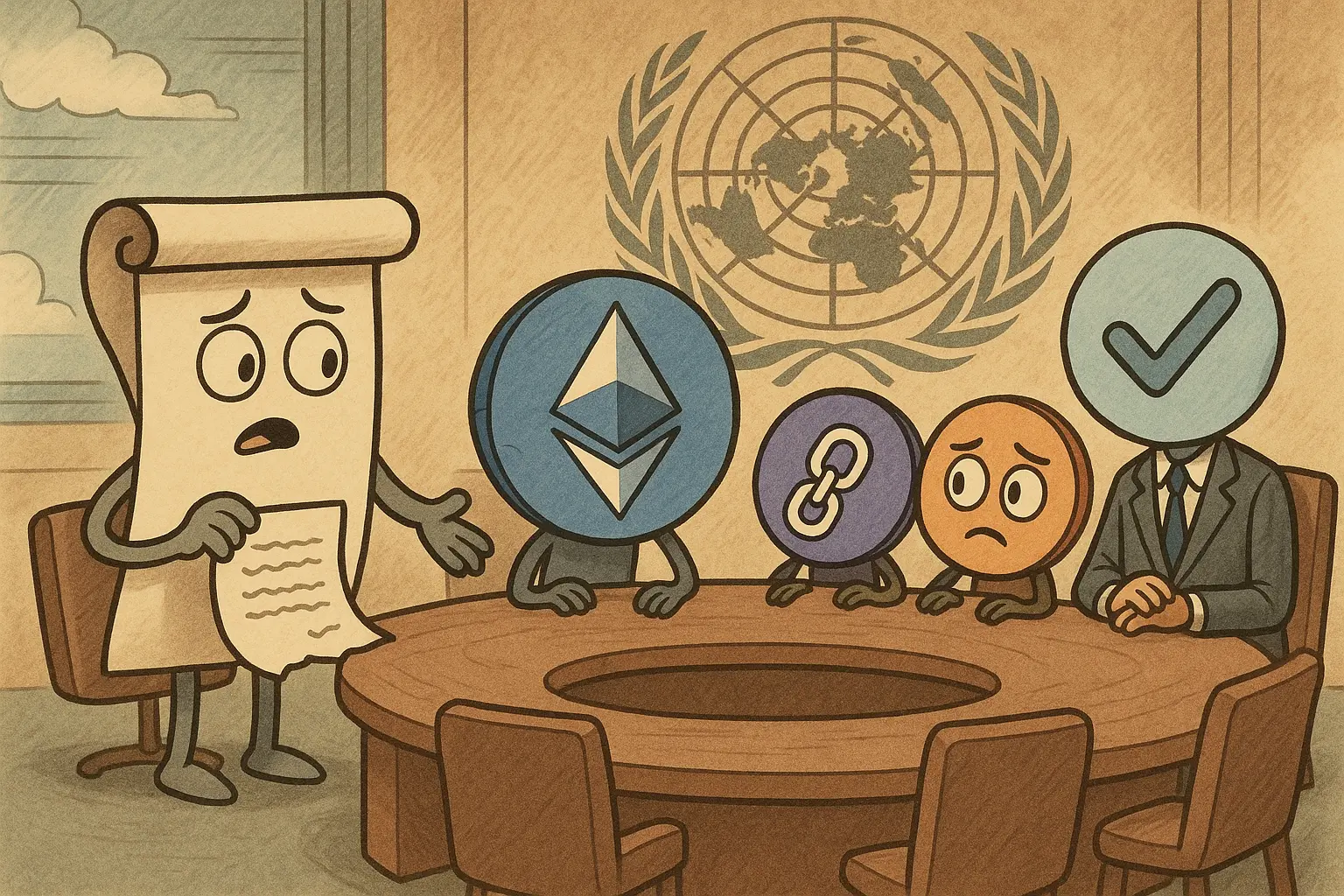
Scroll Foundation announced a major governance proposal on April 14, recommending the dissolution of the current Security Council and the transfer of operational management control to Scroll Admin’s multi-signature address, with the transition expected to be completed within the next ten days. The core rationale is that the Security Council’s operating costs are no longer reasonable relative to the actual usage in recent quarters, and the related resources should be redeployed to product development and business growth.
Dissolution Rationale and Transition Plan: Cost-Benefit-Driven Architecture Restructuring
In the proposal, the Scroll Foundation clearly states that, in recent quarters, the actual call frequency to the Security Council has been insufficient to justify its ongoing operating costs. After conducting a comprehensive assessment of security impact, the Foundation determines that reallocating those resources to the core development of the protocol is the most responsible resource allocation choice at this stage.
The proposal requires the Security Council members’ support in order to be implemented; the ten-day transition period depends on the coordination progress of the relevant members. Scroll emphasizes that the protocol infrastructure is already quite mature, has passed comprehensive audits, and is actively maintained by the original engineering team, providing a solid security basis for this architecture change.
Scroll also states that dissolving the Security Council is not abandoning this oversight mechanism, but rather taking a step toward establishing a new architecture better suited to the current scale and operating cadence. The specific form will be determined together with major stakeholders going forward.
Technical Details of the Transfer of Management Control
New multi-signature address: 0xcca54B0916Cee2186b47E9709BEdcb7041A8F761 (Scroll Admin multi-signature)
ScrollOwner contract: The protocol core control contract, transferring admin permissions to the new multi-signature address
AgoraGovernor contract: The DAO governance contract, synchronizing the transfer of control
TimeLock contract: A timelock mechanism contract that ensures sensitive operations retain a delayed buffer
Execution method: All contract changes will be executed on-chain in a transparent and verifiable manner, so anyone can independently verify
It is worth noting that the multi-signature address architecture is not a fully decentralized DAO governance model; rather, it is an intermediary structure where multiple holders jointly hold the admin key management, commonly used for governance arrangements during a mature protocol transition period. In terms of decentralization, it is usually lower than the fully structured Security Council architecture.
Adjustments to DAO Contributor Roles: Four Positions Terminate on April 30
Along with the Security Council restructuring, Scroll DAO contributor roles will be synchronously reduced in scope. After sufficient communication with the Operating Committee and the Accountability Committee, the following positions are confirmed to end on April 30, 2026: market operations, project coordination, the accountability lead, and the accountability operator.
The coordinator role for SEED LATAM will continue through the second quarter of 2026, continuing to represent operations, drive governance agenda progression, and manage the DAO’s allocated budget. The overall size of the operating and accountability committees will be correspondingly reduced to match the current level of activity, but the existing structure will remain unchanged and can gradually recover as the volume of business grows.
The Scroll Foundation recognizes and approves all changes, emphasizing that this is an adaptive adjustment by the DAO to align with the Foundation’s current priorities, rather than a relinquishment of governance responsibilities. The delegate structure, governance framework, and allocation process for the DAO have all been put into operation and are functioning properly; they will continue to advance DCP proposals.
Frequently Asked Questions
Does dissolving the Scroll Security Council mean that the protocol’s security standards will be lowered?
In the proposal, Scroll clearly states that the protocol infrastructure has passed comprehensive audits and is actively maintained by the original engineering team, and will continue to operate under the highest security standards. Dissolution is a governance architecture adjustment driven by cost-benefit evaluation, not a security compromise. At the same time, Scroll commits to establishing a new type of Security Council architecture better suited to the current scale going forward.
Is the Scroll Admin multi-signature address sufficient to replace the oversight function of the Security Council?
The multi-signature architecture requires multiple holders to co-sign in order to execute sensitive operations, providing a risk-distribution function. However, its decentralization level is typically lower than that of a fully formed Security Council structure. Scroll states that this is a transition arrangement; it will be designed together with stakeholders for a long-term new Security architecture, ensuring that the oversight function continues.
How does this governance adjustment affect the day-to-day operations of the Scroll DAO?
The DAO’s basic architecture remains unchanged; the delegate framework, governance process, and allocation mechanism have all been established and are operating normally. The main changes are that some contributor roles are expiring, and the size of the operating and accountability committees is being reduced. Scroll Foundation emphasizes that this is an adjustment to align with current priorities. As the Scroll App and broader product suite continue to develop, governance activities are expected to increase accordingly.
Disclaimer: The information on this page may come from third parties and does not represent the views or opinions of Gate. The content displayed on this page is for reference only and does not constitute any financial, investment, or legal advice. Gate does not guarantee the accuracy or completeness of the information and shall not be liable for any losses arising from the use of this information. Virtual asset investments carry high risks and are subject to significant price volatility. You may lose all of your invested principal. Please fully understand the relevant risks and make prudent decisions based on your own financial situation and risk tolerance. For details, please refer to
Disclaimer.
Related Articles
Polygon Launches sPOL to Unlock $3.6B in Staked POL and Boost Staker Rewards
Polygon has launched sPOL, a liquid staking token, enabling greater liquidity for staked POL tokens. Audited for security, sPOL allows stakers to earn rewards while using assets in DeFi, with initial liquidity from the treasury and live pools on Uniswap V4.
GateNews38m ago
Cardano Founder Says Crypto Parties Won’t Boost ADA Price – Here’s Why
Charles Hoskinson just dropped a reality check on the Cardano community. His message is simple. Crypto parties and big conference events are not going to move the ADA price. Instead, he wants to take the funds that would have been spent on flashy gatherings and put them into permanent global co
CaptainAltcoin2h ago
ETHGas and ether.fi Announce $3B Deal to Build Institutional Blockspace Markets on Ethereum
ETHGas and ether.fi have entered a $3 billion agreement to enhance Ethereum blockspace markets. ether.fi will allocate 40% of its ETH holdings to ETHGas’ High Performance Staking Service, enabling future block inclusion rights trading and new yield opportunities.
GateNews2h ago
Bitcoin Proposal BIP-361 to Freeze Quantum-Vulnerable Addresses Sparks Community Debate
Experts, led by Jameson Lopp, proposed BIP-361 to freeze quantum-vulnerable Bitcoin addresses to protect 1.7 million BTC from future quantum threats. The plan includes phases to enhance security but faces criticism for contradicting Bitcoin's decentralization.
GateNews3h ago
Ethereum Foundation Launches $1M Audit Fund to Boost Blockchain Security
The Ethereum Foundation launched the Ethereum Security Subsidy Program, committing $1 million to subsidize smart contract audit costs for mainnet builders. Over 20 audit firms are involved, aiming to enhance security within the developer ecosystem.
GateNews3h ago
Lattice Announces Shutdown: Redstone Will Close on May 16, Users Must Withdraw by the Deadline
Gaming infrastructure developer Lattice announced it will shut down on May 15 and reminded users to withdraw their funds. After the shutdown, contract funds cannot be withdrawn through L1 contracts; only funds in personal wallets can be recovered. Over the past five years, Lattice has failed to realize its business model and ultimately decided to close, but its MUD framework and DUST game will continue to run.
MarketWhisper4h ago


