

Trade
Basic
Futures
Futures
Hundreds of contracts settled in USDT or BTC
Options
HOT
Trade European-style vanilla options
Unified Account
Maximize your capital efficiency
Demo Trading
Futures Kickoff
Get prepared for your futures trading
Futures Events
Participate in events to win generous rewards
Demo Trading
Use virtual funds to experience risk-free trading
Earn
Launch
CandyDrop
Collect candies to earn airdrops
Launchpool
Quick staking, earn potential new tokens
HODLer Airdrop
Hold GT and get massive airdrops for free
Launchpad
Be early to the next big token project
Alpha Points
NEW
Trade on-chain assets and enjoy airdrop rewards!
Futures Points
NEW
Earn futures points and claim airdrop rewards
Investment
Simple Earn
Earn interests with idle tokens
Auto-Invest
Auto-invest on a regular basis
Dual Investment
Buy low and sell high to take profits from price fluctuations
Soft Staking
Earn rewards with flexible staking
Crypto Loan
0 Fees
Pledge one crypto to borrow another
Lending Center
One-stop lending hub
VIP Wealth Hub
Customized wealth management empowers your assets growth
Private Wealth Management
Customized asset management to grow your digital assets
Quant Fund
Top asset management team helps you profit without hassle
Staking
Stake cryptos to earn in PoS products
Smart Leverage
NEW
No forced liquidation before maturity, worry-free leveraged gains
GUSD Minting
Use USDT/USDC to mint GUSD for treasury-level yields

More

Trending Topics
View More43.88K Popularity
79.45K Popularity
25.63K Popularity
18.23K Popularity
41.9K Popularity



Pin
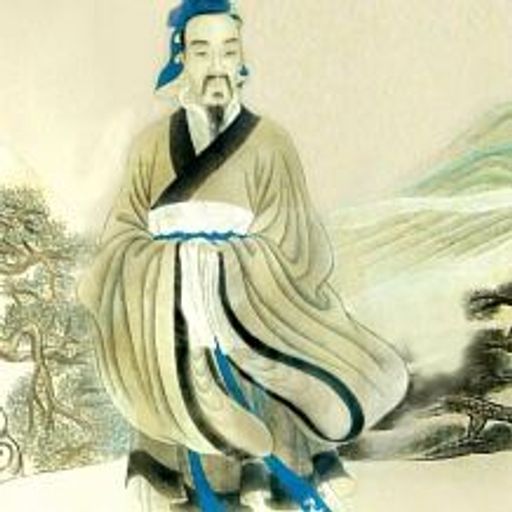
Master Hongyi said: After the utmost suffering, comes great enlightenment.
Master Hongyi said: After extreme hardship comes great enlightenment; after great enlightenment comes fearlessness; after fearlessness comes thriving; and after thriving comes extraordinary happiness.
The aphorism of Master Hongyi encapsulates the trajectory of suffering that tempers the soul, showcasing the path of nirvana validated by countless people through their blood and tears.
When the heavy hammer of life crushes you to the bottom, when trust collapses and hope vanishes, that excruciating pain is not a punishment, but the harshest and deepest questioning of fate. It forces you to confront your innermost fears and obsessions, shattering the illusory support you once relied on for survival. It is precisely on this desperate ruin that true reflection can take root — why has it come to this? What am I clinging to? What have I mistakenly trusted?
After enduring the heart-wrenching darkness, when the tears have dried and the spirit is exhausted, a clear voice often emerges in the silence. You finally see through: gains and losses are not predetermined, success and failure are not the end; external things cannot be relied upon, only your own heart can be depended on; what crushes you is merely the resistance to impermanence and the attachment to illusions.
Once this thought is understood, it is like the clouds parting to reveal the sun—every kind of bondage is created by the mind; if the mind is at peace, the bonds will naturally dissolve.
Life is everything as you say it is, and not as I wish it to be, that's all.
In the world of adults, the biting cold wind and long nights make the soul float and sink. The teeth you grind in exhaustion are just weak remnants in the mouths of others. The curled-up figure in your despair is merely a clip of scenery material in the lenses of passersby. Just like Schopenhauer said: We play like lambs in the fields under the butcher's gaze, and it is precisely because misfortune has not yet arrived that we mistakenly believe fate is particularly kind. But aren’t they just sharpening their knives to a bright sheen because they smell your silent mutton scent?
To me, adult farewells never require a ceremony; we can silently withdraw from someone's realm on an ordinary afternoon.
Psychology refers to this phenomenon as emotional evaporation, but those water droplets that dissipate into the air have actually long seeped into the creases of each other's lives.
The sharpest loss is not abrupt, but rather a process like tea cooling down. You clearly see the steam dissipating, yet you cannot pinpoint the exact moment it completely loses its warmth.
I want to say that regret has never truly disappeared; it has just been blown into footnotes of the story by the wind raised when you turn the page.
Those years you ran with clenched fists, what slipped through your fingers might have been opportunities, a certain person, or another version of yourself. You repeatedly review a moment, as if in the rain you are wiping a rusty pocket watch, forgetting that time has already flowed along your wrist, ticking away towards a more distant river.
But have you ever thought that those who keep you tossing and turning are already peacefully asleep elsewhere, and those memories you cherish like treasures are merely dust brushed away by others? The obsession is a prison built for oneself, with the key hanging on the lintel of time.
I once thought that loss was the brutal subtraction of fate, but later I understood that it is the exquisite exchange of life.
Mu Xin said: The so-called bottomless abyss, going down is also a journey of ten thousand miles. I want to say that the sleepless nights will let the moonlight seep in, and the core of the pecked fruit hides new plants. Those regrets that burst the dam late at night, like the soil after a heavy rain, instead allow certain roots to grow deeper.
In my youth, I thought that losing the one I loved was like the sky collapsing and the earth shattering; later I understood that true loss is like a silent landslide.
Like one day when you were sorting through old books, a dry leaf suddenly fell from the title page, with the sound of a cicada from some summer still curled up in its veins.
And you remain in a daze for a long time, unable to recall which year and month this memory was casually inserted by someone.
Marquez wrote in "One Hundred Years of Solitude": We walk on this ancient journey of life, running through hardships and being reborn in setbacks. Growth has never been a neatly trimmed rose garden, but a primeval forest filled with broken branches and humus, full of the decay of the human heart.
I want to say that letting go is not forgetting, but rather not allowing memories to hurt oneself. Those betrayals that weigh heavily on the mind are like thorns stuck in the palm; pulling them out will cause bleeding, and clenching them will cause pain. Only by allowing them to scab and fall off can one regain the right to grasp the sunlight.
The obsession that cannot be let go always follows like a shadow, with unfulfilled ideals and unrequited love.