

Trade
Basic
Futures
Futures
Hundreds of contracts settled in USDT or BTC
Options
HOT
Trade European-style vanilla options
Unified Account
Maximize your capital efficiency
Demo Trading
Futures Kickoff
Get prepared for your futures trading
Futures Events
Participate in events to win generous rewards
Demo Trading
Use virtual funds to experience risk-free trading
Earn
Launch
CandyDrop
Collect candies to earn airdrops
Launchpool
Quick staking, earn potential new tokens
HODLer Airdrop
Hold GT and get massive airdrops for free
Launchpad
Be early to the next big token project
Alpha Points
NEW
Trade on-chain assets and enjoy airdrop rewards!
Futures Points
NEW
Earn futures points and claim airdrop rewards
Investment
Simple Earn
Earn interests with idle tokens
Auto-Invest
Auto-invest on a regular basis
Dual Investment
Buy low and sell high to take profits from price fluctuations
Soft Staking
Earn rewards with flexible staking
Crypto Loan
0 Fees
Pledge one crypto to borrow another
Lending Center
One-stop lending hub
VIP Wealth Hub
Customized wealth management empowers your assets growth
Private Wealth Management
Customized asset management to grow your digital assets
Quant Fund
Top asset management team helps you profit without hassle
Staking
Stake cryptos to earn in PoS products
Smart Leverage
NEW
No forced liquidation before maturity, worry-free leveraged gains
GUSD Minting
Use USDT/USDC to mint GUSD for treasury-level yields

More





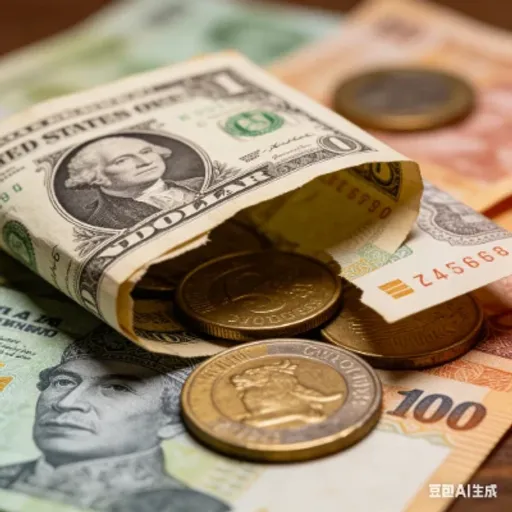
Christmas holiday global markets take a break, precious metals hit new highs, RMB appreciation accelerates
Global major exchanges are in holiday mode due to Christmas and Boxing Day, with trading activity significantly shrinking. The US stock market was closed all day on December 25th and resumed trading on the 26th; Hong Kong stocks also closed for two days; European exchanges such as London, Frankfurt, and Paris suspended operations; in the Asia-Pacific region, Australia and Singapore also observed their usual holidays. Against this backdrop, market focus shifted to fluctuations in commodities and forex markets.
Gold and Silver Break Through New Highs
Amid the sluggish trading during the Christmas holiday, precious metals remained unusually active. On Friday, gold broke through the $4,500 mark, reaching a new high of $4,504 intraday; silver surged to $73.67, again setting a record. This rally continued the recent strong performance of precious metals, reflecting investors’ ongoing pursuit of safe-haven assets amid geopolitical uncertainties and expectations of rate cuts.
Offshore RMB Breaks 7-Integer Barrier, Strong Year-End Settlement Momentum
This Thursday, offshore RMB appreciated sharply against the US dollar. The USD/CNH fell to 6.9965, a new low since September 2024; USD/CNY also dropped to 7.0051, a new low since May 2023. This marked the first time RMB broke through the psychological 7 level. Market participants noted that year-end settlement demands from enterprises and individuals remained strong, and external dollar support was lacking, accelerating RMB appreciation.
A trader at a Chinese bank stated that market settlement transactions are active, and the dollar remains weak, with most market participants bullish on RMB. In the short term, RMB is expected to continue approaching the 7 level, but the pace of appreciation will depend on the policy stance of major state-owned banks.
Goldman Sachs’ latest analysis indicates that over the past few months, the People’s Bank of China (PBOC) has alternated between emphasizing “resilience” and “flexibility,” suggesting a tendency for the RMB to strengthen, but also a desire to avoid rapid appreciation. Goldman economist Xinquan Chen pointed out that the September monetary policy committee meeting minutes emphasized “enhancing exchange rate resilience,” and the November report shifted to “maintaining exchange rate flexibility.” The latest Q4 minutes again touched on resilience, indicating the central bank’s intention to slow the pace of appreciation. The bank forecasts USD/CNY to reach 6.95, 6.90, and 6.85 after three, six, and twelve months respectively.
Notably, the RMB’s appreciation trend has also influenced the euro’s exchange rate against RMB, overall boosting RMB’s performance against major currencies.
Fed Policy Expectations Shift, Global Interest Rate Environment Adjusts
Bank of America predicts that the Federal Reserve will cut rates twice in June and July 2026. The institution expects the 10-year US Treasury yield to fall back to the 4%-4.25% range by year-end, with potential for further decline. This implies a slightly looser global borrowing environment compared to 2024-2025, but far from the ultra-low interest rate era that previously stimulated housing and stock markets.
Goldman Sachs expects the People’s Bank of China to lower reserve requirements by 50 basis points and cut interest rates by 10 basis points in Q1, followed by another 10 basis points rate cut in Q3, gradually releasing policy space.
Bank of Japan Maintains Hawkish Stance, Continues Rate Hike Path
Bank of Japan Governor Ueda Kazuo recently emphasized that Japan’s core inflation is steadily approaching the 2% target, and unless there is a major economic shock, the labor market will remain tight. He pointed out that structural changes in the market (such as declining working-age population) are irreversible, and companies are accelerating the pass-through of rising labor and raw material costs in food and other goods and services, forming a mechanism where wages and inflation rise in tandem. In this context, the central bank will continue to raise interest rates. Given that real interest rates are still low, as long as the baseline scenario materializes, the BOJ intends to gradually increase rates.
Japanese Prime Minister Sanae Sato announced that the budget for fiscal year 2026 will total approximately 122.3 trillion yen, a 6.3% increase from this fiscal year, reaching a record high. However, new government bond issuance will be limited to 29.6 trillion yen, the second consecutive year below 30 trillion yen, and debt dependence will decrease from 24.9% to 24.2%, falling below 30% for the first time in 27 years. This reflects the government’s balancing act between maintaining fiscal discipline and promoting strong economic growth. Following this news, the yield on 40-year Japanese government bonds fell by 7 basis points to 3.62%.
Semiconductor Industry Outlook Improves, Leading Companies Dominate Funding
Bank of America analyst Vivek Arya pointed out that the AI industry remains in the mid-stage of a decade-long structural transformation, with upward industry trends led by leading companies with clear competitive advantages. He predicts global semiconductor sales will grow 30% by 2026, surpassing $1 trillion for the first time. Companies with high margins and solid market positions will continue to attract investment. The six stocks favored by Bank of America are NVIDIA, Broadcom, Lam Research, KLA, AMD, and Cadence Design Systems.
CFRA Chief Investment Strategist Sam Stovall offers a more cautious outlook. He believes the US stock market is unlikely to achieve double-digit gains again, setting the S&P 500 target at 7,400 by the end of 2026, about 7% higher than current levels, significantly lagging behind 2024’s performance. While there is still room for upside, increasing headwinds make it unlikely to replicate 2024’s boom.
NVIDIA and Groq Announce Technical Partnership, Competition in Inference Field Heats Up
Chip giant NVIDIA has reached a licensing agreement with AI chip startup Groq. Although reports suggest the deal is worth $20 billion, NVIDIA denied this, emphasizing it is a technology licensing agreement, not an acquisition. Under the agreement, NVIDIA is authorized to use Groq’s chip technology and will hire its CEO Simon Edwards; Groq will continue to operate as an independent company, with its cloud business also remaining independent. Groq founders Jonathan Ross, President Sunny Madra, and engineering team members will join NVIDIA.
Groq completed a $750 million funding round in September, valuing the company at $6.9 billion, more than doubling from $2.8 billion in August last year. The company focuses on the “inference” domain, i.e., responding to user requests with trained AI models. Although NVIDIA dominates in AI model training, it faces more challenges in inference competition. The partnership with Groq may strengthen NVIDIA’s capabilities in this area.