
 :
:
 :
:
#StablecoinDebateHeatsUp
THE STABLECOIN MARKET IS QUIETLY UNDERGOING A STRUCTURAL RESET THAT MOST TRADERS ARE NOT PREPARED FOR
The majority of participants still treat stablecoins as neutral tools, simple dollar equivalents used for trading, liquidity, and storage. That assumption is becoming increasingly dangerous. What is happening now is not a surface-level regulatory adjustment. It is a foundational redesign of how stablecoins operate, who controls them, and how liquidity flows through the crypto ecosystem.
At present, the stablecoin market exceeds $300 billion in total capitalization. Two issuers dominate the entire system. USDT holds the majority share, acting as the primary liquidity engine across global exchanges, particularly in offshore environments. USDC operates as the institutional bridge, deeply integrated with regulated financial infrastructure and increasingly aligned with traditional banking systems. Together, they form the backbone of nearly every trading pair, derivatives position, and DeFi strategy currently active in the market.
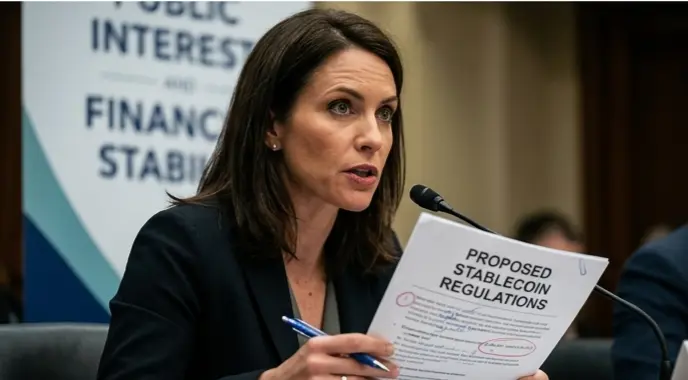
This concentration of power is precisely why regulatory focus has intensified. Governments are no longer observing stablecoins as an external innovation. They are now actively integrating them into national financial strategy. The result is a new framework that is not designed to restrict growth, but to control and standardize it under enforceable rules.
The new legal direction introduces strict reserve requirements. Stablecoins must now maintain full backing with highly liquid, low-risk assets such as short-term government securities and cash equivalents. This eliminates the possibility of riskier reserve compositions that previously allowed issuers to enhance profitability through corporate debt or other yield-generating instruments. At the same time, rehypothecation is being restricted, meaning reserve assets cannot be reused as collateral for additional leverage. This effectively removes hidden layers of systemic risk that existed beneath the surface of stablecoin operations.
Transparency requirements are also being elevated to a level that fundamentally changes the industry. Regular public disclosures, standardized reporting formats, and audited financial statements are becoming mandatory for large issuers. The era of selective transparency and loosely verified reserve attestations is ending. Stablecoin issuers are transitioning into entities that resemble regulated financial institutions rather than flexible crypto-native organizations.
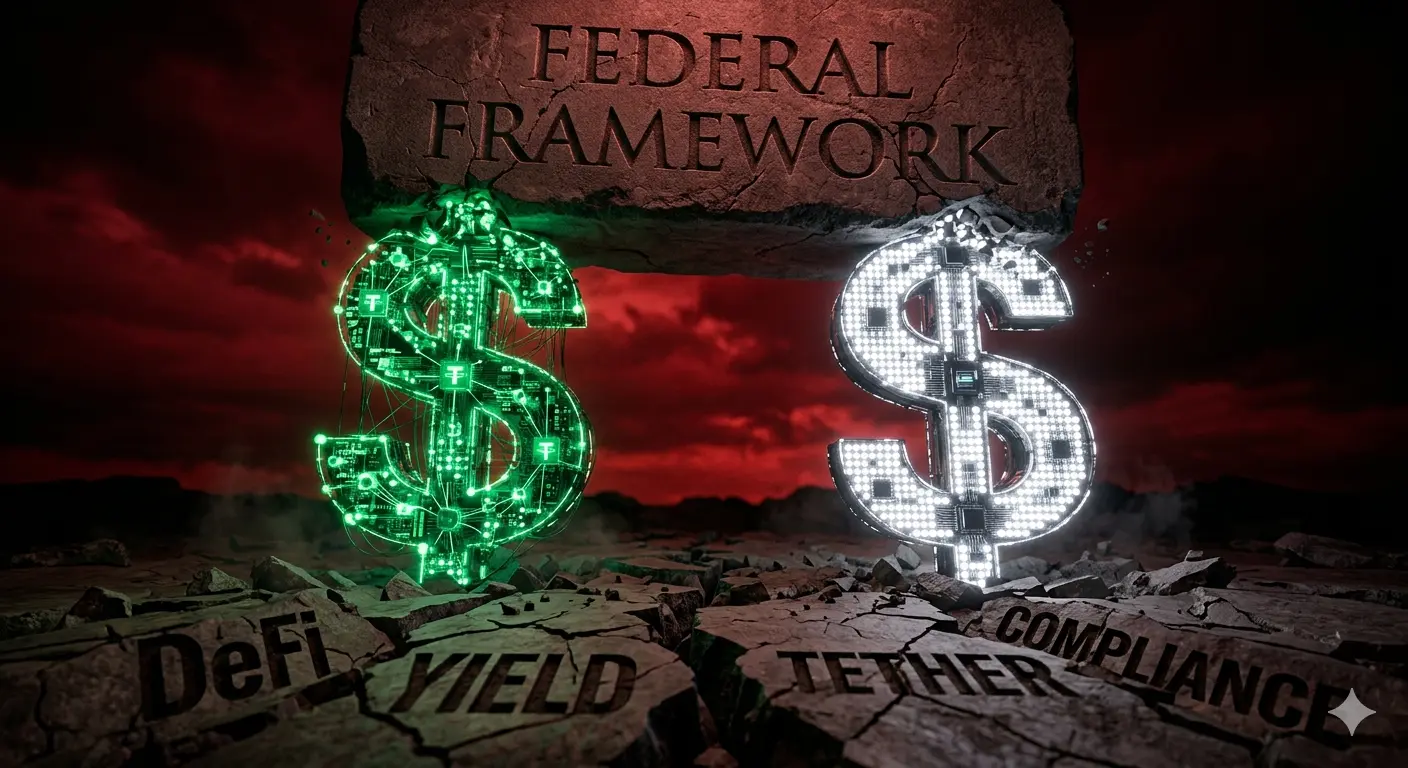
One of the most critical elements of this shift is the restriction on yield distribution. Stablecoin holders will not be able to receive interest simply for holding a dollar-pegged asset. This is a direct attempt to prevent stablecoins from functioning as unregulated deposit substitutes that compete with traditional banks. While this rule appears narrow, its implications are far-reaching. A significant portion of DeFi yield structures indirectly depend on stablecoin reserve dynamics. As these constraints tighten, the flow of yield across the ecosystem will inevitably change.
For traders, this introduces a new layer of complexity. Yield is no longer a uniform concept. It must now be analyzed based on its source. Returns generated from protocol activity, such as lending or trading fees, remain structurally different from returns linked to underlying reserve interest. The latter is where regulatory pressure is being applied, and it is likely to be repriced as frameworks become fully enforced.
The most immediate pressure point lies with USDT. Its dominance is undeniable, but its regulatory positioning is less clear. Operating outside direct U.S. jurisdiction, it faces a structural challenge if it intends to maintain access to regulated markets. Compliance would require significant operational transformation, including alignment with strict reserve rules, enhanced transparency, and integration into a regulatory system that it has historically operated independently from. If this transition does not occur in a defined timeframe, access restrictions could emerge, particularly on platforms that interact with regulated financial institutions.
USDC, on the other hand, is structurally aligned with the direction regulation is moving toward. Its reserves are already composed of cash and short-term government instruments, and its reporting standards exceed many of the upcoming requirements. However, this does not make it risk-free. Its business model includes revenue-sharing mechanisms with distribution partners, which may come under scrutiny depending on how regulators interpret indirect yield flows. This creates a different type of uncertainty, one rooted not in compliance failure but in regulatory interpretation.
Beyond individual issuers, the broader market impact is a gradual but inevitable bifurcation of liquidity. On one side, regulated capital will concentrate around compliant stablecoins, integrated with banks, custodians, and institutional-grade infrastructure. This environment will prioritize stability, transparency, and legal clarity, but may offer reduced yield potential and stricter operational constraints. On the other side, permissionless capital will continue to operate in less regulated environments, maintaining flexibility and higher yield opportunities, but carrying increased counterparty and regulatory risk.
This division is not theoretical. It represents a structural evolution of the market. Traders will need to decide where their capital operates and understand the trade-offs involved. The assumption that all stablecoin liquidity is interchangeable will no longer hold under these conditions.
Another critical aspect often overlooked is the geopolitical dimension of this transformation. Stablecoins are becoming instruments of monetary influence. By requiring reserves to be held in government-backed securities, regulatory frameworks effectively tie stablecoin growth to national debt markets. As adoption increases, so does demand for these underlying instruments, reinforcing the position of the issuing country’s currency in global financial systems. This is not just about crypto regulation. It is about extending monetary reach through digital infrastructure.
From a trading perspective, this environment creates both risk and opportunity. Monitoring stablecoin dominance, liquidity distribution, and exchange support becomes as important as tracking price action. Deviations between stablecoin pegs, even minor ones, may begin to reflect deeper structural shifts rather than temporary inefficiencies. These movements can evolve into tradeable signals for those who understand their underlying causes.
Preparation is not optional. Traders should conduct a full assessment of their stablecoin exposure, identifying which assets they rely on and the regulatory trajectory of each issuer. Yield sources should be analyzed and categorized based on their sustainability under the emerging framework. Market developments, particularly those related to institutional adoption and regulatory clarification, should be treated as leading indicators of future liquidity flows.
The timeline for these changes is not indefinite. Implementation phases are already in motion, and enforcement mechanisms are being defined. As clarity increases, market behavior will adjust rapidly. Liquidity does not wait for consensus. It moves where conditions are most favorable, often before the majority recognizes the shift.
The key takeaway is simple but critical. Stablecoins are no longer passive instruments within the crypto ecosystem. They are becoming controlled financial infrastructure with direct connections to global monetary systems. Ignoring this transition is equivalent to trading without understanding the underlying market structure.
The next phase of crypto will not be defined solely by innovation at the application layer. It will be shaped by the infrastructure that supports value transfer, liquidity distribution, and institutional participation. Stablecoins sit at the center of that infrastructure, and their transformation will influence every segment of the market.
Traders who recognize this early will position themselves ahead of structural change. Those who do not will experience it only after its effects are reflected in price, liquidity, and access.
The market is not waiting. It is already adapting.
#Stablecoins #GateSquareAprilPostingChallenge #CreatorLeaderboard
THE STABLECOIN MARKET IS QUIETLY UNDERGOING A STRUCTURAL RESET THAT MOST TRADERS ARE NOT PREPARED FOR
The majority of participants still treat stablecoins as neutral tools, simple dollar equivalents used for trading, liquidity, and storage. That assumption is becoming increasingly dangerous. What is happening now is not a surface-level regulatory adjustment. It is a foundational redesign of how stablecoins operate, who controls them, and how liquidity flows through the crypto ecosystem.
At present, the stablecoin market exceeds $300 billion in total capitalization. Two issuers dominate the entire system. USDT holds the majority share, acting as the primary liquidity engine across global exchanges, particularly in offshore environments. USDC operates as the institutional bridge, deeply integrated with regulated financial infrastructure and increasingly aligned with traditional banking systems. Together, they form the backbone of nearly every trading pair, derivatives position, and DeFi strategy currently active in the market.
This concentration of power is precisely why regulatory focus has intensified. Governments are no longer observing stablecoins as an external innovation. They are now actively integrating them into national financial strategy. The result is a new framework that is not designed to restrict growth, but to control and standardize it under enforceable rules.
The new legal direction introduces strict reserve requirements. Stablecoins must now maintain full backing with highly liquid, low-risk assets such as short-term government securities and cash equivalents. This eliminates the possibility of riskier reserve compositions that previously allowed issuers to enhance profitability through corporate debt or other yield-generating instruments. At the same time, rehypothecation is being restricted, meaning reserve assets cannot be reused as collateral for additional leverage. This effectively removes hidden layers of systemic risk that existed beneath the surface of stablecoin operations.
Transparency requirements are also being elevated to a level that fundamentally changes the industry. Regular public disclosures, standardized reporting formats, and audited financial statements are becoming mandatory for large issuers. The era of selective transparency and loosely verified reserve attestations is ending. Stablecoin issuers are transitioning into entities that resemble regulated financial institutions rather than flexible crypto-native organizations.
One of the most critical elements of this shift is the restriction on yield distribution. Stablecoin holders will not be able to receive interest simply for holding a dollar-pegged asset. This is a direct attempt to prevent stablecoins from functioning as unregulated deposit substitutes that compete with traditional banks. While this rule appears narrow, its implications are far-reaching. A significant portion of DeFi yield structures indirectly depend on stablecoin reserve dynamics. As these constraints tighten, the flow of yield across the ecosystem will inevitably change.
For traders, this introduces a new layer of complexity. Yield is no longer a uniform concept. It must now be analyzed based on its source. Returns generated from protocol activity, such as lending or trading fees, remain structurally different from returns linked to underlying reserve interest. The latter is where regulatory pressure is being applied, and it is likely to be repriced as frameworks become fully enforced.
The most immediate pressure point lies with USDT. Its dominance is undeniable, but its regulatory positioning is less clear. Operating outside direct U.S. jurisdiction, it faces a structural challenge if it intends to maintain access to regulated markets. Compliance would require significant operational transformation, including alignment with strict reserve rules, enhanced transparency, and integration into a regulatory system that it has historically operated independently from. If this transition does not occur in a defined timeframe, access restrictions could emerge, particularly on platforms that interact with regulated financial institutions.
USDC, on the other hand, is structurally aligned with the direction regulation is moving toward. Its reserves are already composed of cash and short-term government instruments, and its reporting standards exceed many of the upcoming requirements. However, this does not make it risk-free. Its business model includes revenue-sharing mechanisms with distribution partners, which may come under scrutiny depending on how regulators interpret indirect yield flows. This creates a different type of uncertainty, one rooted not in compliance failure but in regulatory interpretation.
Beyond individual issuers, the broader market impact is a gradual but inevitable bifurcation of liquidity. On one side, regulated capital will concentrate around compliant stablecoins, integrated with banks, custodians, and institutional-grade infrastructure. This environment will prioritize stability, transparency, and legal clarity, but may offer reduced yield potential and stricter operational constraints. On the other side, permissionless capital will continue to operate in less regulated environments, maintaining flexibility and higher yield opportunities, but carrying increased counterparty and regulatory risk.
This division is not theoretical. It represents a structural evolution of the market. Traders will need to decide where their capital operates and understand the trade-offs involved. The assumption that all stablecoin liquidity is interchangeable will no longer hold under these conditions.
Another critical aspect often overlooked is the geopolitical dimension of this transformation. Stablecoins are becoming instruments of monetary influence. By requiring reserves to be held in government-backed securities, regulatory frameworks effectively tie stablecoin growth to national debt markets. As adoption increases, so does demand for these underlying instruments, reinforcing the position of the issuing country’s currency in global financial systems. This is not just about crypto regulation. It is about extending monetary reach through digital infrastructure.
From a trading perspective, this environment creates both risk and opportunity. Monitoring stablecoin dominance, liquidity distribution, and exchange support becomes as important as tracking price action. Deviations between stablecoin pegs, even minor ones, may begin to reflect deeper structural shifts rather than temporary inefficiencies. These movements can evolve into tradeable signals for those who understand their underlying causes.
Preparation is not optional. Traders should conduct a full assessment of their stablecoin exposure, identifying which assets they rely on and the regulatory trajectory of each issuer. Yield sources should be analyzed and categorized based on their sustainability under the emerging framework. Market developments, particularly those related to institutional adoption and regulatory clarification, should be treated as leading indicators of future liquidity flows.
The timeline for these changes is not indefinite. Implementation phases are already in motion, and enforcement mechanisms are being defined. As clarity increases, market behavior will adjust rapidly. Liquidity does not wait for consensus. It moves where conditions are most favorable, often before the majority recognizes the shift.
The key takeaway is simple but critical. Stablecoins are no longer passive instruments within the crypto ecosystem. They are becoming controlled financial infrastructure with direct connections to global monetary systems. Ignoring this transition is equivalent to trading without understanding the underlying market structure.
The next phase of crypto will not be defined solely by innovation at the application layer. It will be shaped by the infrastructure that supports value transfer, liquidity distribution, and institutional participation. Stablecoins sit at the center of that infrastructure, and their transformation will influence every segment of the market.
Traders who recognize this early will position themselves ahead of structural change. Those who do not will experience it only after its effects are reflected in price, liquidity, and access.
The market is not waiting. It is already adapting.
#Stablecoins #GateSquareAprilPostingChallenge #CreatorLeaderboard