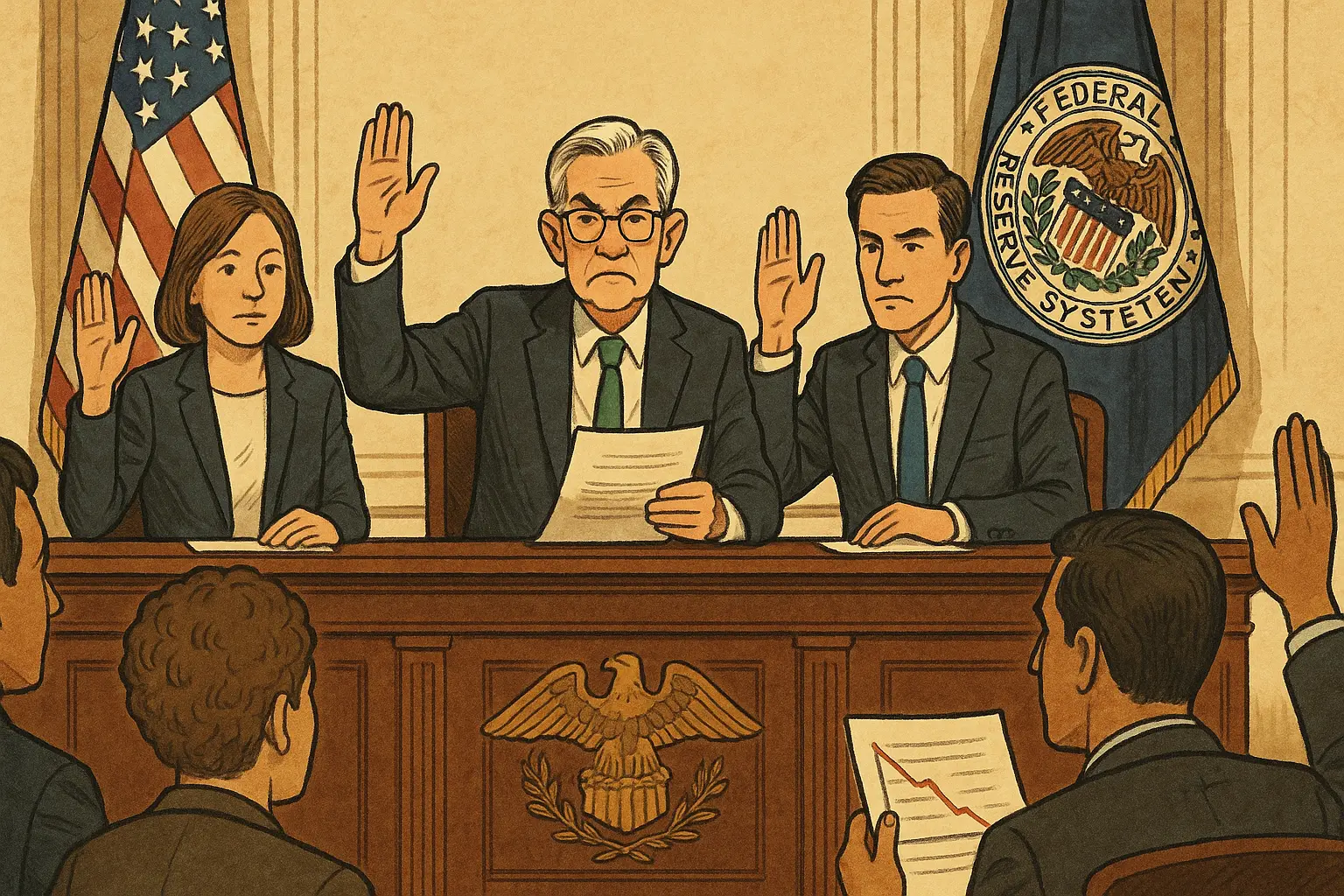
The Federal Reserve Board released the minutes of the discount rate meetings on February 9 and March 18, confirming that all 12 Federal Reserve Banks unanimously approved, in both meetings, to keep the main lending rate unchanged at 3.75%. At the joint meeting on March 18 with the Federal Open Market Committee (FOMC), the officials simultaneously maintained the target range for the federal funds rate at 3.5% to 3.75%, and the interest rate on reserve balances remained at 3.65%.
核心觀察:維持利率不變的依據
The regional reports of the Federal Reserve Banks reveal the specific reasons why officials held steady:
The four major bases for the Federal Reserve to maintain rates
The labor market is stable but there is structural divergence: Hiring remains constrained across most regions, staff turnover is low, and wage growth is moderate; however, hiring for specific professional positions such as healthcare remains difficult, indicating imbalance within the labor market
AI investment continues to expand, but its impact on employment is currently limited: Companies generally increase investment in technology and artificial intelligence, yet officials clearly state that the direct impact of AI on the labor market is still limited at present and is not sufficient to change the policy direction
Tariff-related pressure eases, but non-labor cost pressures continue to rise: Price pressures related to tariffs have eased compared with the previous assessment, but non-labor costs in healthcare and energy sectors are still increasing, indicating that structural inflation pressures remain
The credit-rate framework remains tightened: The secondary credit rate stays at 4.25%, which is 50 basis points higher than the main lending rate, and the overall credit environment has not loosened
Policy signals from meeting attendance and voting consistency
Director Christopher Waller and Steven Miran were absent from the February meeting, but both attended and participated in the March voting, with the result also being unanimous approval. Both meetings ended with 100% consistency; no member raised any意见 to adjust interest rates, sending the market a clear signal of highly stable policy and that there will be no unexpected shift in the near term.
Rate-cut outlook: the Federal Reserve is cautious, and the market awaits inflation data
Although the market generally expects the Federal Reserve to begin rate cuts in late 2026, the core message of this meeting’s minutes is that the Federal Reserve remains cautious about further easing of monetary policy. Policymakers’ concerns focus on the continued rise in non-labor costs such as healthcare and energy, as well as inflation pressures that have not fully dissipated—cutting rates too early carries risks.
Traders have shifted their focus to the inflation data expected to be released. If inflation continues to cool, the probability that the FOMC changes its stance at subsequent meetings will increase; if structural cost pressures persist, the scenario of keeping rates unchanged may continue for longer.
Frequently asked questions
Why does the Federal Reserve continue to keep rates unchanged in March 2026?
There are three core reasons: the overall labor market is stable and there are no signals indicating an urgent need for stimulus; non-labor costs in healthcare and energy sectors are still rising; and although tariff pressure has eased, uncertainty remains regarding structural inflation factors. Against this background, officials believe the risk of cutting rates too early cannot be ignored.
What does unanimous approval by all 12 Federal Reserve Banks mean?
Unanimity shows a high level of consensus within the Federal Reserve System on the current monetary policy stance, with no member提出 any objection to rate cuts. This generally conveys a clear signal of policy stability in the short term to the market, reducing uncertainty, but it also means that more clear evidence of inflation cooling is needed before any rate cut.
Why hasn’t rapid growth in AI investment prompted the Federal Reserve to cut rates?
In the minutes, Federal Reserve officials explicitly指出 that although companies’ AI investment continues to expand, its measurable impact on employment and overall productivity is currently still limited, and it has not yet reached the macroeconomic threshold needed to change the direction of monetary policy. Therefore, it does not constitute sufficient grounds for a rate cut.


