Crypto whale sues Coinbase, accusing it of freezing stolen DAI and then refusing to return it

Whale Sues Coinbase

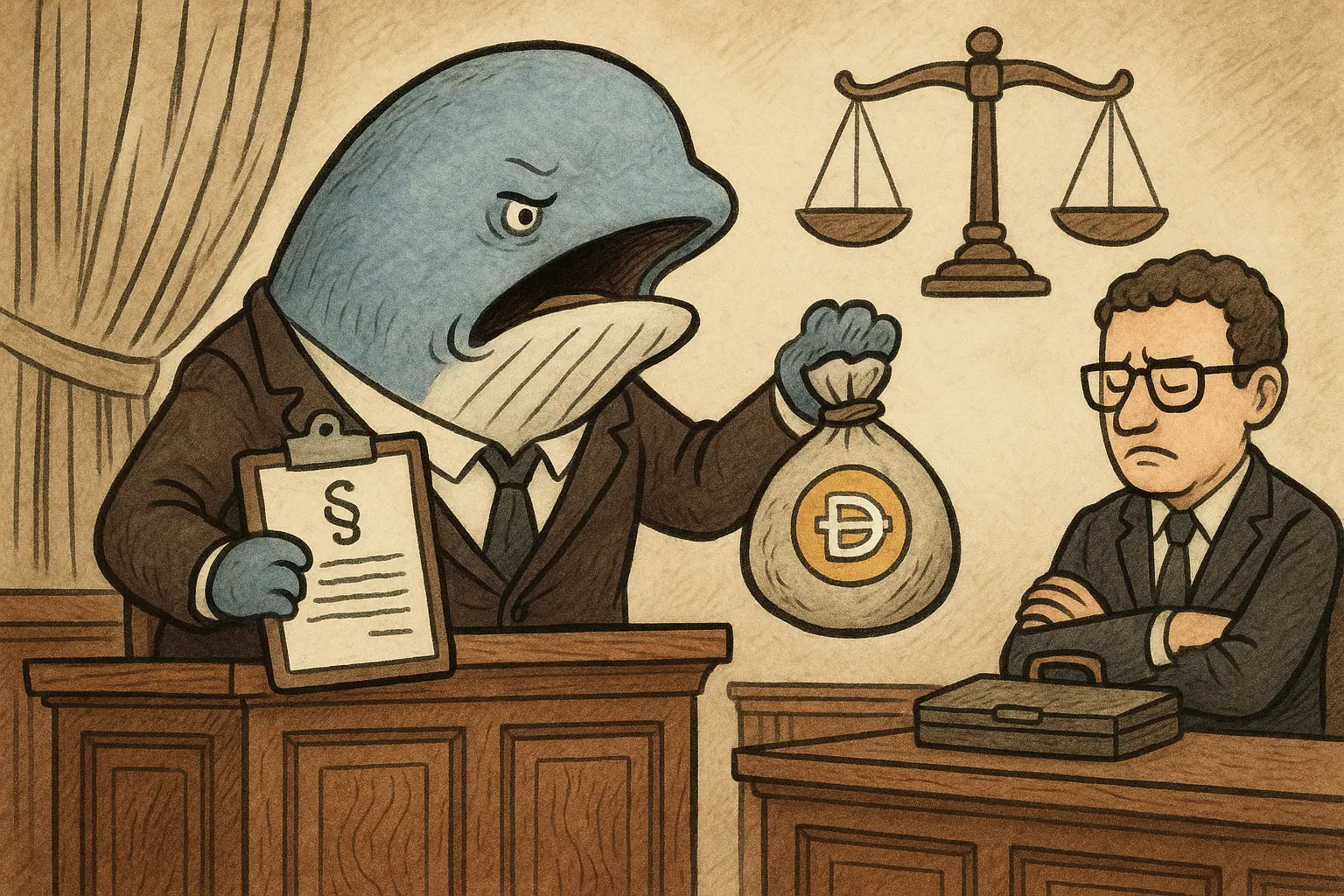
According to The Block’s report on May 6, an anonymous crypto whale identified by the pseudonym “DB” sued Coinbase and the alleged thief “John Doe” on Monday, accusing Coinbase of refusing to return frozen DAI funds tied to a 2024 crypto theft case even after Coinbase provided an affidavit proving it is the lawful owner.

Key allegations in the lawsuit and Coinbase’s position

Based on the complaint quoted by The Block, DB’s lawyer wrote in the filing: “While Coinbase’s practice of freezing the stolen crypto is reasonable, when the plaintiff provides an affidavit proving that he is the lawful owner, and Coinbase refuses to take action, Coinbase’s refusal to return the frozen funds to the plaintiff becomes unreasonable.”

According to the complaint, some of the stolen funds were traced to a Coinbase retail user account, with related information coming from blockchain security company Zero Shadow; the complaint did not disclose the exact amount of funds involved in the account.

According to the complaint, DB is asking the court to order Coinbase to return “traceable” stolen funds, and the lawyer stated in the filing: “The plaintiff claims that he is the confirmed lawful owner of the frozen crypto tied to the theft case, and that he is entitled to take immediate possession of the property.”

Timeline of the 2024 phishing attack

Based on the complaint quoted by The Block, DB suffered a phishing attack on August 20, 2024. After logging into the scam page, its wallet was attacked and DAI was stolen by the attacker using a crypto theft platform named “Inferno Drainer.”

According to The Block, although parts of the complaint were redacted, the disclosed details are highly similar to a crypto whale loss case in August 2024, in which the whale reportedly lost about $55 million in DAI.

Statistics on crypto fraud losses

According to a report released last month, crypto-related fraud losses hit a record $11.3 billion in 2024, accounting for more than half of the total $20.9 billion in internet crime losses tracked by the U.S. Federal Bureau of Investigation (FBI).

FAQ

What is the core allegation by the plaintiff “DB” against Coinbase?

According to the complaint quoted by The Block, “DB” accuses Coinbase of refusing to return frozen DAI funds related to the 2024 crypto theft case even after Coinbase provided an affidavit proving it is the lawful owner, and the complaint describes this conduct as “unreasonable.”

How were the funds traced to a Coinbase account confirmed?

According to the complaint, some of the stolen funds were traced to a Coinbase retail user account, with related information coming from blockchain security company Zero Shadow; the complaint did not disclose the exact amount of funds involved.

When did the attack involved in this case occur, and what theft tool was used?

According to the complaint quoted by The Block, DB suffered a phishing attack on August 20, 2024, and the attacker used a crypto theft platform named “Inferno Drainer” to steal the DAI held by DB.

Disclaimer: The information on this page may come from third parties and does not represent the views or opinions of Gate. The content displayed on this page is for reference only and does not constitute any financial, investment, or legal advice. Gate does not guarantee the accuracy or completeness of the information and shall not be liable for any losses arising from the use of this information. Virtual asset investments carry high risks and are subject to significant price volatility. You may lose all of your invested principal. Please fully understand the relevant risks and make prudent decisions based on your own financial situation and risk tolerance. For details, please refer to Disclaimer.

Related Articles

North Korea Terror Attack Verdict Holder Escalates Dispute for Control of $71 million in Aave Frozen Assets: Cites Anti-Terrorism Insurance Law

North Korea terror attack case escalates: $71 million in Aave frozen assets enter a third round. The plaintiffs now invoke the TRIA statute to claim that ETH is North Korea’s state property, stressing fraud rather than theft to get around the thief-not-possessor-of-stolen-goods defense, while also challenging Aave’s standing and governance status. DeFi United has raised more than $328 million, with sufficient funding to compensate affected users. The case could become a key precedent for DeFi legal principles and DAO governance.

ChainNewsAbmedia35m ago

South Korea's Financial Services Commission Partially Wins Appeal Against Crypto Exchange Over Unreturned User Assets on April 16

According to Seoul High Court's Administrative Division 4-3, on April 16, the Financial Services Commission (FSC) partially won its appeal against cryptocurrency exchange A's injunction request, with 3 of 4 administrative orders upheld. The exchange stopped operations on November 30, 2020, but

GateNews1h ago

North Korea Terror Victims File Motion to Seize $71M From Aave Hack, Reframe as Fraud

Attorneys for victims of three North Korea terrorism cases filed a 30-page response on Tuesday, reframing the April 18 Aave hack as fraud rather than theft. The distinction carries legal significance: characterizing the incident as fraud could grant the attackers legal title to the borrowed

GateNews2h ago

MOTHER token investors file a class-action lawsuit, alleging Iggy Azalea failed to fulfill commercial commitments

According to CoinTelegraph, on May 6, the plaintiff Kenneth Kolbrak filed a class action lawsuit in the Manhattan federal court in New York, on May 4. The defendants are rapper Iggy Azalea, and the suit alleges that she made false statements about the actual use and business integration of the meme coin Mother Iggy (MOTHER) based on the Solana blockchain.

MarketWhisper2h ago
Comment
0/400
No comments