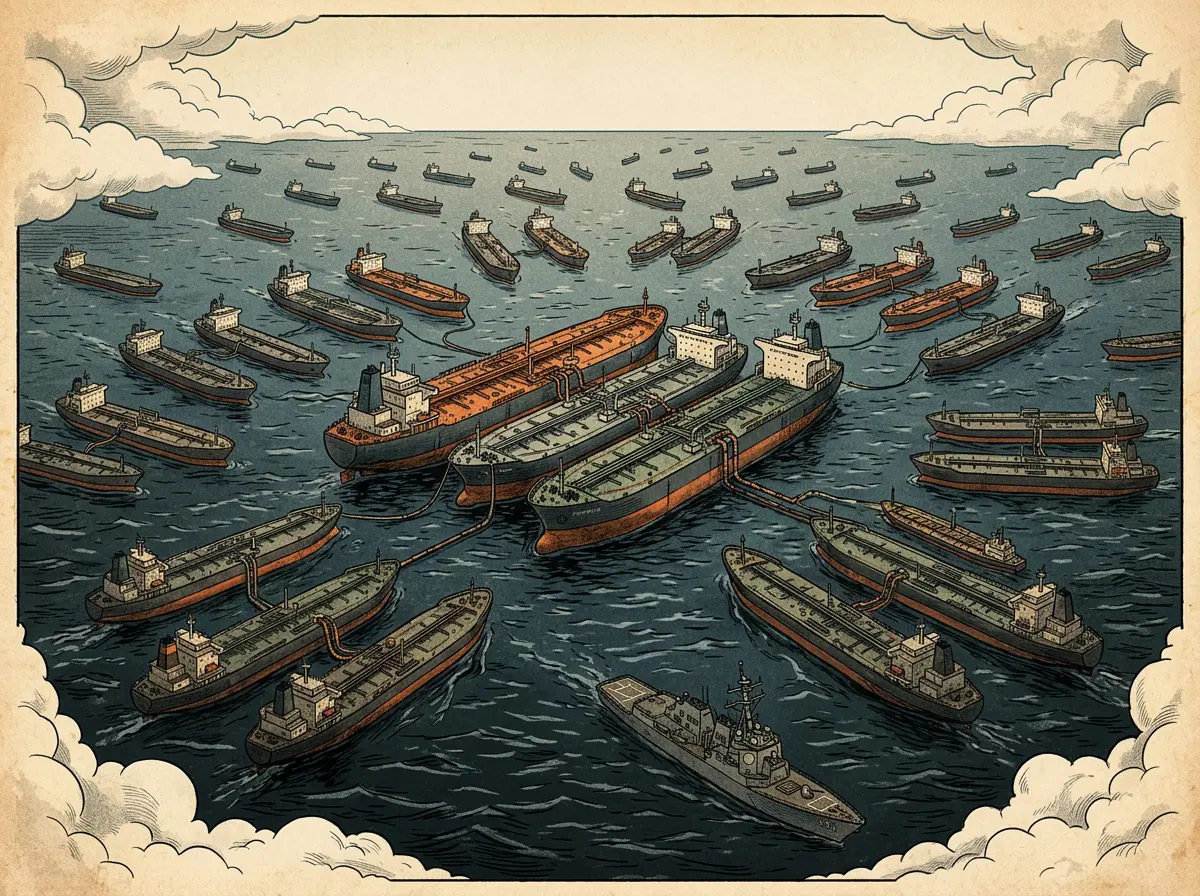
Reuters, on June 16, published an exclusive investigation, citing 11 people familiar with the operation, saying that since early May the U.S. military has been overseeing a large-scale secret ship-to-ship (STS) oil transfer operation located in the waters off Fujairah in the United Arab Emirates and near the port of Sohar in Oman, with at least 92 vessels involved. Satellite imagery and shipping data analysis show that since May, the crude oil and oil products transferred amounted to about 90 million barrels.
Reuters reveals operational details and the AH-64 helicopter
According to multiple insiders cited by Reuters, the tankers involved in the operation first go to a designated rendezvous point and then depart in sequence at intervals of between 3,000 and 4,000 meters. They typically shut off the AIS automatic identification system, turn off lights, and proceed according to pre-set waypoints while under U.S. military monitoring. After completing the Strait of Hormuz crossing, they rendezvous and dock with waiting ultra-large crude carriers (VLCCs) to conduct crude transfers continuously for 24 to 40 hours. The U.S. military is mainly responsible for aerial surveillance, compliance review, and route monitoring, rather than directly participating in oil loading and unloading.
Four sources confirmed that an American AH-64 “Apache” attack helicopter shot down by Iran on June 9 had been involved in the operation. Reuters found through satellite imagery that on the day the helicopter was shot down, in the waters near the port of Sohar there were at least six groups of tankers conducting ship-to-ship transfers.
Views confirmed by named analysts
Michael Froman (chairman of the U.S. Council on Foreign Relations, CFR) confirmed: As traditional rules gradually lose effectiveness, the United States is now borrowing the operating methods of Russia, North Korea, and even Iran’s so-called “shadow fleets,” and these technologies were originally developed to evade U.S. and United Nations sanctions.
Noam Raydan (a maritime risk expert at the Washington Institute) confirmed: “I don’t see how all of this can become a permanent solution. It’s just a temporary stopgap measure in special circumstances.” He pointed out that nobody knows when Iran will again use drones or speedboats to stop vessels from passing; the entire system is essentially a high-risk arrangement.
Frequently asked questions
How did Reuters confirm the scale and existence of this operation?
Reuters’ confirmation is based on: statements from 11 people familiar with the operation; satellite imagery Reuters reviewed (on June 11, confirming that two transfer points simultaneously showed 17 groups of tankers); and a combined analysis of satellite imagery and shipping data (estimating a transfer volume of about 90 million barrels). The U.S. Department of Defense confirmed that the U.S. Central Command was not directly involved in the transfers, but did not provide any further details.
What is the connection between the downing of the AH-64 Apache helicopter and the transfer operation?
Four sources confirmed that the AH-64 Apache attack helicopter shot down by Iran on June 9 was carrying out a task related to oil transfers at the time. Reuters confirmed through satellite imagery that on the day the helicopter was shot down, at least six groups of tankers were conducting ship-to-ship transfers in waters near the port of Sohar. The incident of the helicopter being shot down itself had already been confirmed in earlier media reports.
Why is this transfer model called “imitating Iran’s shadow-ship model”?
According to Reuters, the ship-to-ship transfer model has long been an important tool for Iran to evade international sanctions, enabling exports by hiding the origin of the crude oil. CFR chairman Froman confirmed that the U.S. is adopting a similar approach—only on a far larger scale than Iran’s past operations. The irony, he said, is that these technologies were originally developed to evade U.S. and United Nations sanctions.


