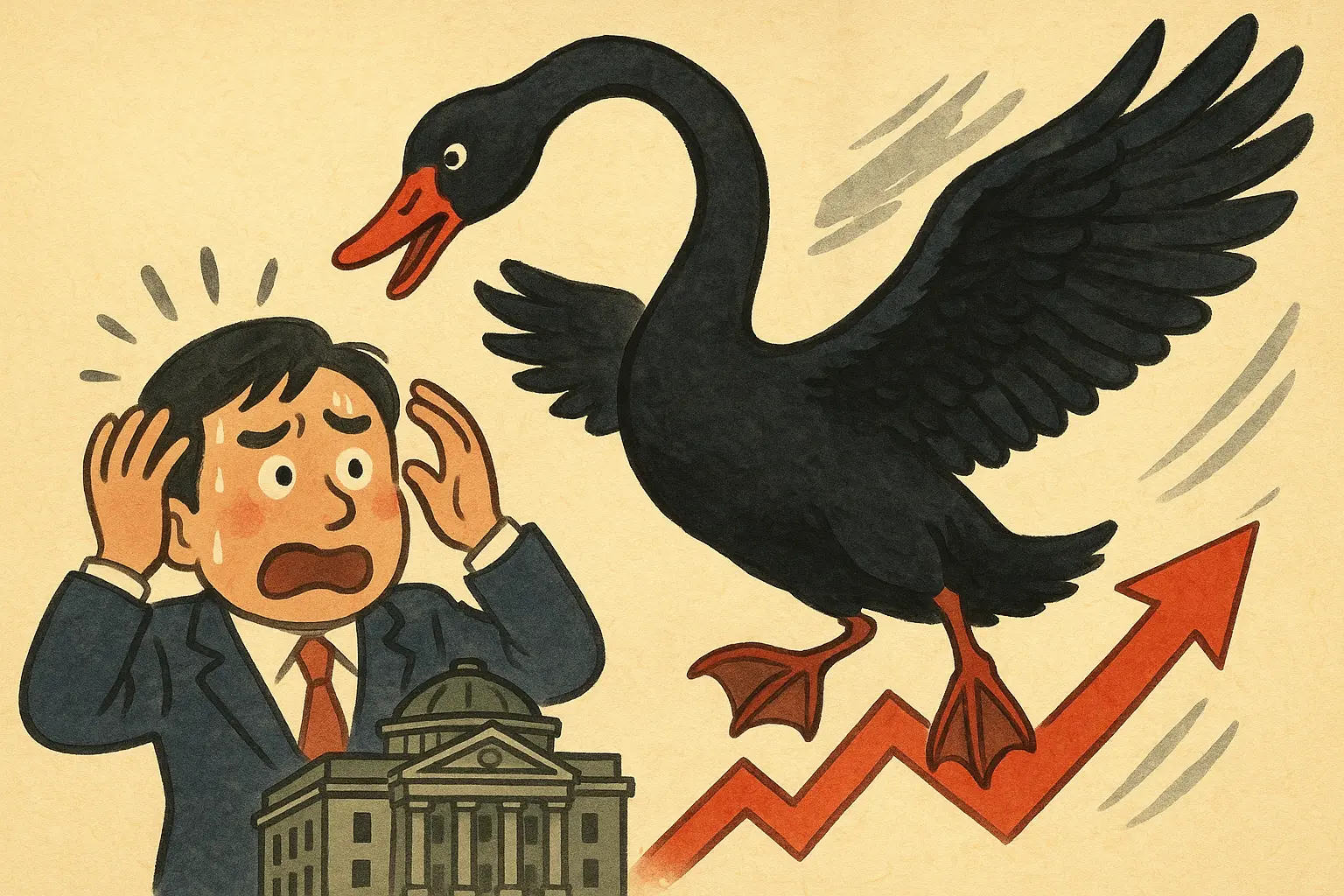
Reuters, on March 3, 2026, citing multiple sources, reported that the recent market volatility triggered by the US-Iran conflict has significantly increased the likelihood that the Bank of Japan will hold off on rate hikes at its March 18-19 meeting; after Nara Igami did not signal a hawkish stance, the probability of a rate hike in March dropped from about 10% to just around 5%. Several sources stated, “The BOJ is finding it increasingly difficult to raise rates.”
The Transmission Logic of the Middle East “Black Swan” to Japan’s Monetary Policy
Japan is one of the world’s major economies heavily dependent on imported fuel. The outbreak of Middle East conflict directly impacts in two ways: first, rising oil prices increase import costs, potentially driving overall inflation through energy price hikes; second, if the conflict persists, it will damage export prospects and suppress consumer investment, delaying economic recovery.
Several informed sources familiar with the BOJ’s decision-making told Reuters that policymakers need more time to assess the economic impact of this geopolitical crisis. One source noted that although rising oil prices could temporarily boost inflation expectations, if the conflict continues, its negative effects on the economy may outweigh the inflationary benefits, making rate hikes less justifiable.
The only factor currently likely to prompt the BOJ to act in March is a significant decline in the yen. After the US launched strikes on Iran, demand for safe-haven dollars surged, and the yen approached a critical psychological level of 160. Sources said that if the yen depreciates sharply, it could force the BOJ to raise interest rates to support the exchange rate and prevent further import inflation pressures.
Market Pricing and Analyst Interpretations
BOJ Vice Governor Nara Igami did not signal any imminent policy adjustments in a public speech on Monday. This silence has become an important reference point for the market—during previous tightening cycles, BOJ officials typically issued hawkish signals in advance to avoid surprising the market.
Senior strategist Katsutoshi Inadome of Sumitomo Mitsui Trust Asset Management said, “If the BOJ is considering a rate hike in March, Igami should have given some hints. He didn’t, which convinces me that the BOJ will forgo a rate increase this month.” He added that the next possible rate hike is most likely in April, especially if the yen continues to weaken.
Key Data on BOJ Rate Hike Expectations
- March Rate Hike Probability: Dropped to about 5% after Igami’s comments (previously around 10%)
- April Rate Hike Probability: About 60% of market participants see the meeting on April 27-28 as the more likely timing
- Reuters Survey: Most economists expect the BOJ to raise rates to 1% before the end of June 2026
- Key Yen Level: The yen is approaching 160 against the dollar; a sharp break could compel the BOJ to act
- Ueda Kuroda’s Position: In a February 26 interview with Yomiuri Shimbun, he left open the possibility of a March or April hike but emphasized that the decision depends on upcoming data
Frequently Asked Questions
What is the direct link between the BOJ’s pause in March rate hikes and the Middle East conflict?
The Middle East conflict influences Japan’s monetary policy through two pathways: rising oil prices and deteriorating economic outlook. Japan needs to balance inflation pressures with economic growth risks. When the situation is uncertain, it tends to adopt a wait-and-see approach, acting only after more data is available. Sources indicate that the impact of this crisis depends on how long the war continues.
Why could the yen approaching 160 actually prompt a rate hike in March?
A continued yen depreciation increases import costs (including energy and food), raising domestic inflation and threatening the effectiveness of previous inflation control measures. If the yen falls below key support levels like 160, the secondary inflationary pressures from currency depreciation could force the BOJ to raise rates early to support the exchange rate, even if the macro environment isn’t ideal.
How do changes in BOJ rate hike expectations affect the cryptocurrency market?
BOJ rate hikes usually lead to yen appreciation, which can trigger a “yen carry trade” unwinding—funds borrowed in low-interest yen to invest in higher-yield assets like Bitcoin are forced to be repaid, impacting crypto markets. If the BOJ pauses in March, this pressure may temporarily ease, helping to maintain liquidity in risk assets.
Disclaimer: The information on this page may come from third parties and does not represent the views or opinions of Gate. The content displayed on this page is for reference only and does not constitute any financial, investment, or legal advice. Gate does not guarantee the accuracy or completeness of the information and shall not be liable for any losses arising from the use of this information. Virtual asset investments carry high risks and are subject to significant price volatility. You may lose all of your invested principal. Please fully understand the relevant risks and make prudent decisions based on your own financial situation and risk tolerance. For details, please refer to
Disclaimer.
Related Articles
Bank of Japan: Estimates the natural interest rate to be between -0.9% and +0.5%, requiring a comprehensive assessment of the degree of monetary easing.
Gate News reports that on March 27, the Bank of Japan stated that, according to the latest data, Japan's estimated natural interest rate (the neutral rate that neither stimulates nor suppresses the economy) is between -0.9% and +0.5%. The Bank of Japan pointed out that, given the uncertainty in estimating the natural rate, it is necessary to comprehensively evaluate the degree of monetary easing, while carefully examining the trends in economic activity, prices, and financial developments.
GateNews20m ago
Bitunix Analyst: War Delay and Liquidity Contraction Resonance, BTC Stuck in 65K–72K Liquidation Zone
Global market performance looks stable on the surface, but internal imbalances remain. Geopolitical risks still exist. Countries are withdrawing liquidity and stabilizing their domestic currencies through different measures; the inflation logic has shifted somewhat, and a strengthening U.S. dollar reflects liquidity being withdrawn. In the crypto market, BTC is consolidating within a range-bound, choppy zone, with price volatility kept in check. In the short term, it’s necessary to watch for changes in the macro environment to find a trend breakout.
BlockBeatNews1h ago
Bitcoin ETF ends seven consecutive days of gains, Bitcoin price pressure reappears.
Recently, after experiencing a net inflow for seven consecutive trading days, the US Bitcoin spot ETF saw a significant outflow, with a net outflow of $163.5 million on the 18th and an additional outflow of $51.9 million on the 19th, indicating a simultaneous weakening of market funds and prices. The price of Bitcoin briefly dropped below $70,000, highlighting that the fund flows into the ETF can no longer support its rebound, and the deteriorating macro environment is putting pressure on risk assets, leading to a noticeable contraction in investor preferences. The testing of the $70,000 threshold has become a barometer for short-term market sentiment.
区块客1h ago
Former Governor of the People's Bank of China: It is possible to explore cryptocurrencies and blockchain technology, but the key is to adapt to user experience.
Zhou Xiaochuan emphasized at the Boao Forum for Asia that a good payment system needs to adapt to various technologies and regulations, especially in the areas of anti-money laundering and anti-fraud. He pointed out that while digital currencies have applications, they also bring risks of online fraud, calling for cautious treatment of stablecoins and crypto technology to enhance compliance.
BlockBeatNews3h ago
Former Governor of the People's Bank of China Zhou Xiaochuan: The key to payment systems is adaptability, and stablecoins bypassing compliance reviews should be approached with caution.
Zhou Xiaochuan emphasized at the Boao Forum that the key to payment systems lies in adaptability, rather than a single technology. He pointed out that while digital currencies are used by central banks, they also contribute to online fraud, and the ability to combat fraud urgently needs improvement. He mentioned that stablecoins bypass compliance issues and called for in-depth consideration rather than blindly following trends.
GateNews3h ago
Bank of Japan rate-hike expectations heat up in April, with economic data showing supply-and-demand resilience supporting policy normalization
On March 27, Gate News reported that the basis for the Bank of Japan to raise interest rates in April has become more robust, as the output gap and price trends indicate economic resilience. Kenji Yamamoto, an economist at Daiwa Securities, pointed out that although inflation may temporarily slow, the underlying price trend remains stable, supporting the normalization process of monetary policy.
GateNews4h ago


