As the US-Israel coalition escalates military actions against Iran, Tehran’s years-long “shadow economy” has once again become an international focus. This parallel system, combining Bitcoin mining and stablecoin trading, has become Iran’s last shield in seeking survival outside the battered banking system and dollar dominance.
Trading Bitcoin for Cheap Electricity
Iran legalized cryptocurrency mining as early as 2019, allowing licensed operators to use government-subsidized electricity for mining. The condition is that all mined Bitcoin must be sold to the Central Bank of Iran, becoming an important tool for paying for imports and settling foreign trade, thereby bypassing the dollar system and Western sanctions to some extent.
According to statistics, Iran’s Bitcoin mining hash rate accounts for about 2% to 5% of the global total, but much mining activity remains undisclosed, so the actual scale may be higher.
Blockchain analytics firm Chainalysis found that Iran’s crypto ecosystem had grown to a $7.8 billion scale by 2025, nearly equivalent to the GDP of Maldives or Liechtenstein. Notably, crypto activity tends to surge during military conflicts or domestic unrest, including during the 12-day conflict between Iran and Israel last year.
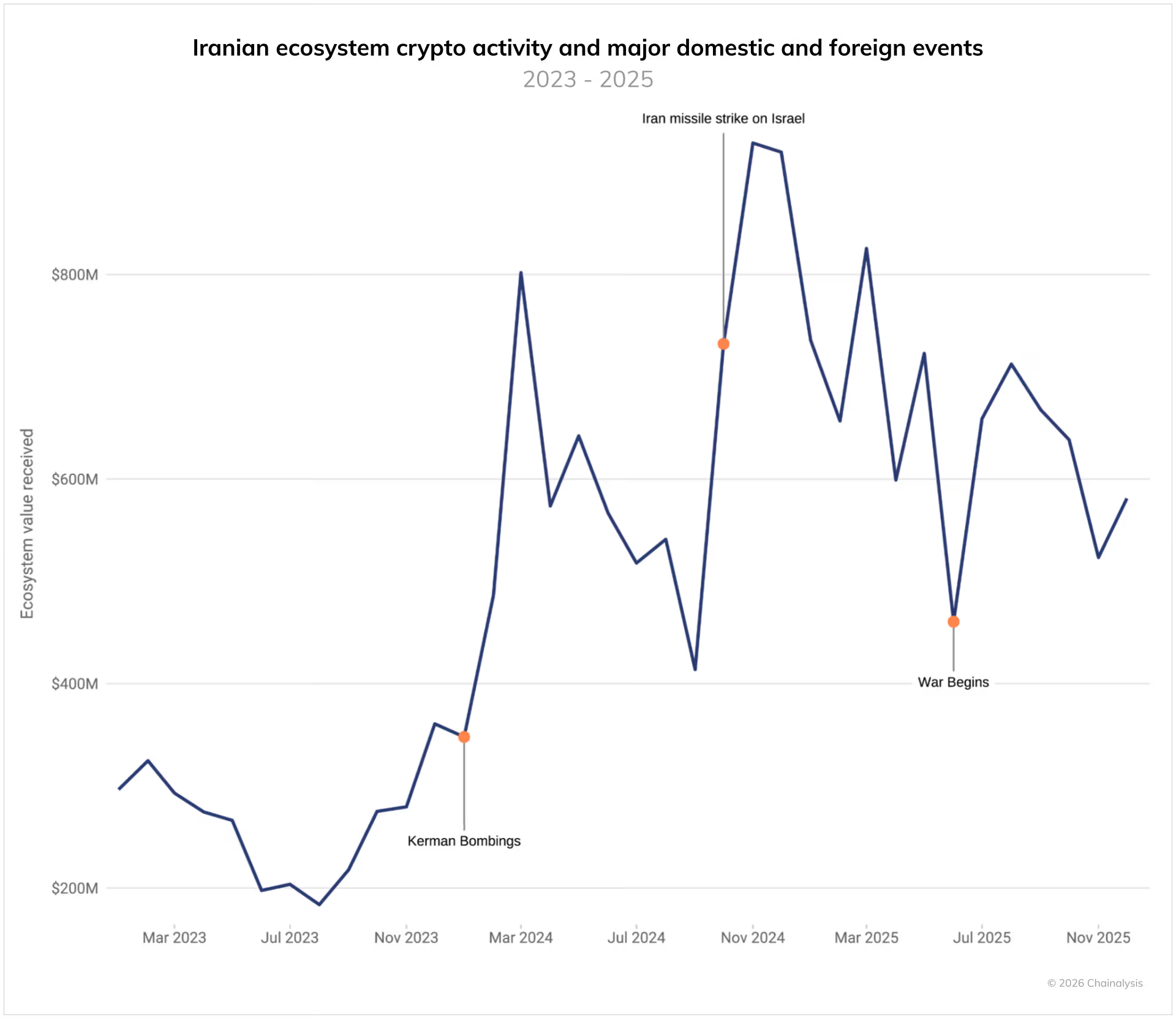
As Iran’s main military force, the Islamic Revolutionary Guard Corps (IRGC) has increasingly relied on cryptocurrencies in recent years. Chainalysis estimates that in Q4 2025, wallets associated with the IRGC accounted for over 50% of Iran’s total crypto inflows, receiving assets worth over $3 billion last year.
These figures only include publicly known wallet addresses directly linked to sanctions lists; the actual scale could be higher.
Rial Plunges 96%, USDT Becomes New Favorite for Trade Settlements
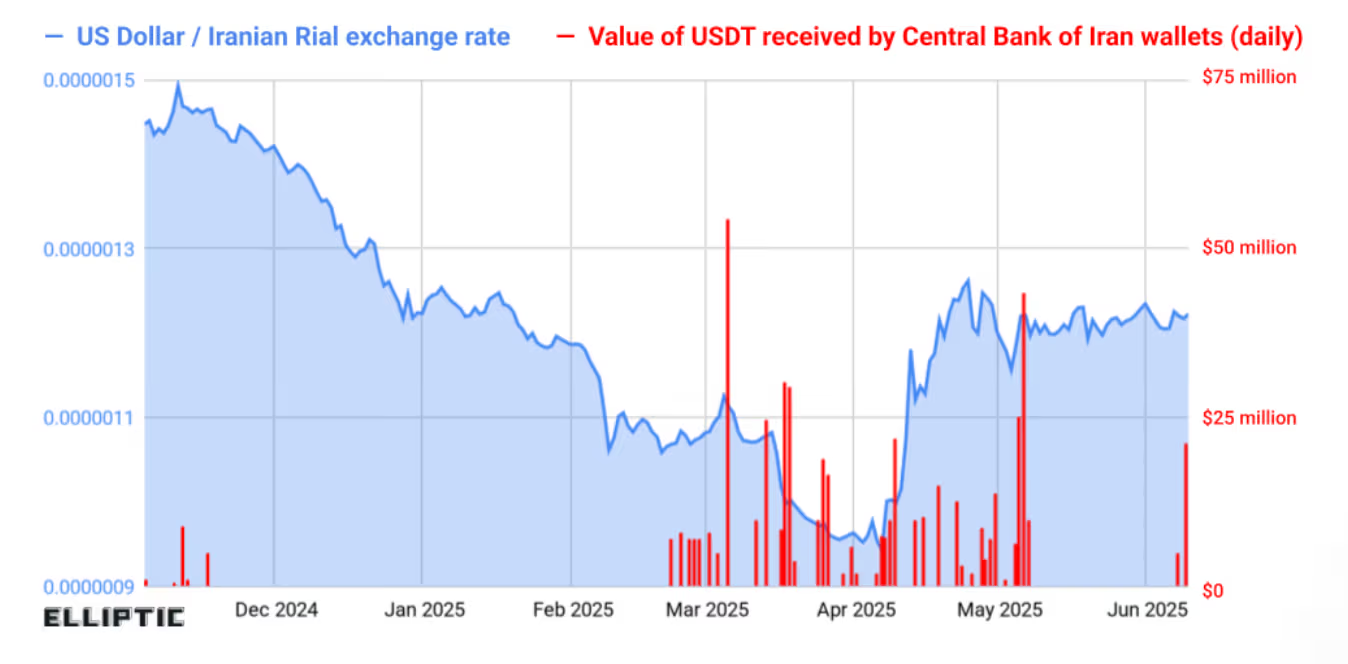
In addition to Bitcoin, stablecoins also play a key role. Elliptic, a blockchain analysis firm, indicated that by 2025, Iran’s central bank had accumulated at least $507 million in USDT, likely used to stabilize the Rial exchange rate and support foreign trade. However, this financial defense appears to have been largely ineffective. Data shows the Rial has depreciated over 96% against the US dollar.
Faced with deep-rooted hyperinflation and an economy on the brink of collapse, ordinary Iranians are also turning to Bitcoin. Data shows that during recent anti-government protests, the amount of Bitcoin withdrawn from centralized exchanges to personal wallets surged sharply, indicating locals’ efforts to keep assets in their own control.
Mining Costs Only About $1,300 per Bitcoin
External estimates suggest that the cost of mining one Bitcoin in Iran is approximately $1,300. Miners sell the mined Bitcoin to the central bank, which then transfers funds overseas to pay for equipment, fuel, or daily necessities.
Disclaimer: The information on this page may come from third parties and does not represent the views or opinions of Gate. The content displayed on this page is for reference only and does not constitute any financial, investment, or legal advice. Gate does not guarantee the accuracy or completeness of the information and shall not be liable for any losses arising from the use of this information. Virtual asset investments carry high risks and are subject to significant price volatility. You may lose all of your invested principal. Please fully understand the relevant risks and make prudent decisions based on your own financial situation and risk tolerance. For details, please refer to
Disclaimer.
Related Articles
Gate Daily Report (April 16): Tether may have purchased 951 BTC; Virginia enacts crypto property law
Bitcoin continues to rise, reaching $74,630. Tether uses its profits to buy 951 bitcoins. Virginia passes an unclaimed property law, requiring idle cryptocurrency to be transferred to the state government. U.S. stocks are driven by tech stocks, and the S&P 500 index hits a new high. Crypto market dynamics show that investors are paying attention to geopolitical conditions and U.S. monetary policy.
MarketWhisper19m ago
Bitcoin bull market index rises to 40 points; Bloomberg: the U.S. and Iran are considering extending the ceasefire agreement by two weeks
Bitcoin’s price as of April 16 is approaching $74,700. The Bullish Sentiment Index (BSI) has risen to 40 points, indicating a rebound in market sentiment. The United States and Iran are evaluating options to extend the current ceasefire agreement, and they are also discussing navigation issues in the Strait of Hormuz, as diplomatic negotiations continue.
MarketWhisper55m ago
Cantor Fitzgerald Donates $10M to Crypto-Friendly Super PAC Chaired by Tether Official
Cantor Fitzgerald donated $10 million to Fellowship PAC in January to support pro-cryptocurrency candidates, as revealed in recent Federal Election Commission filings. Jesse Spiro, from Tether, chairs the committee.
GateNews1h ago
CFTC Investigates Suspicious Oil Trades Before Trump Truth Social Posts
The CFTC is investigating unusual oil trades linked to President Trump's announcements on Truth Social, raising concerns of potential insider trading or market manipulation. Details on the trades and involved entities remain undisclosed.
GateNews1h ago
Bitcoin holds steady at 74K, and FOMO sentiment is heating up as U.S. stocks hit a record high
Benefiting from positive news about the U.S.-Iran peace agreement, the stock market surged sharply, with the Nasdaq index and the S&P 500 index reaching record highs. Bitcoin remained steady at 74K, market sentiment improved, and the Fear & Greed Index rose to 55. Investor FOMO toward the stock market intensified, and the total market capitalization in the crypto market increased overall, indicating genuine buy-side interest.
ChainNewsAbmedia2h ago
Pakistan Lifts an Eight-Year Ban: Central Bank Allows Banks to Serve Crypto Businesses, and the Virtual Assets Law Takes Effect
On April 14, 2026, the State Bank of Pakistan lifted its crypto-assets banking ban that has been in place since 2018, officially kicking off the Virtual Assets Act 2026. Banks may open accounts for licensed virtual asset service providers, but must establish a segregation-of-funds mechanism to ensure that customers’ funds are not affected. This policy change responds to domestic demand and demonstrates Pakistan’s growing role on the international stage.
ChainNewsAbmedia10h ago


