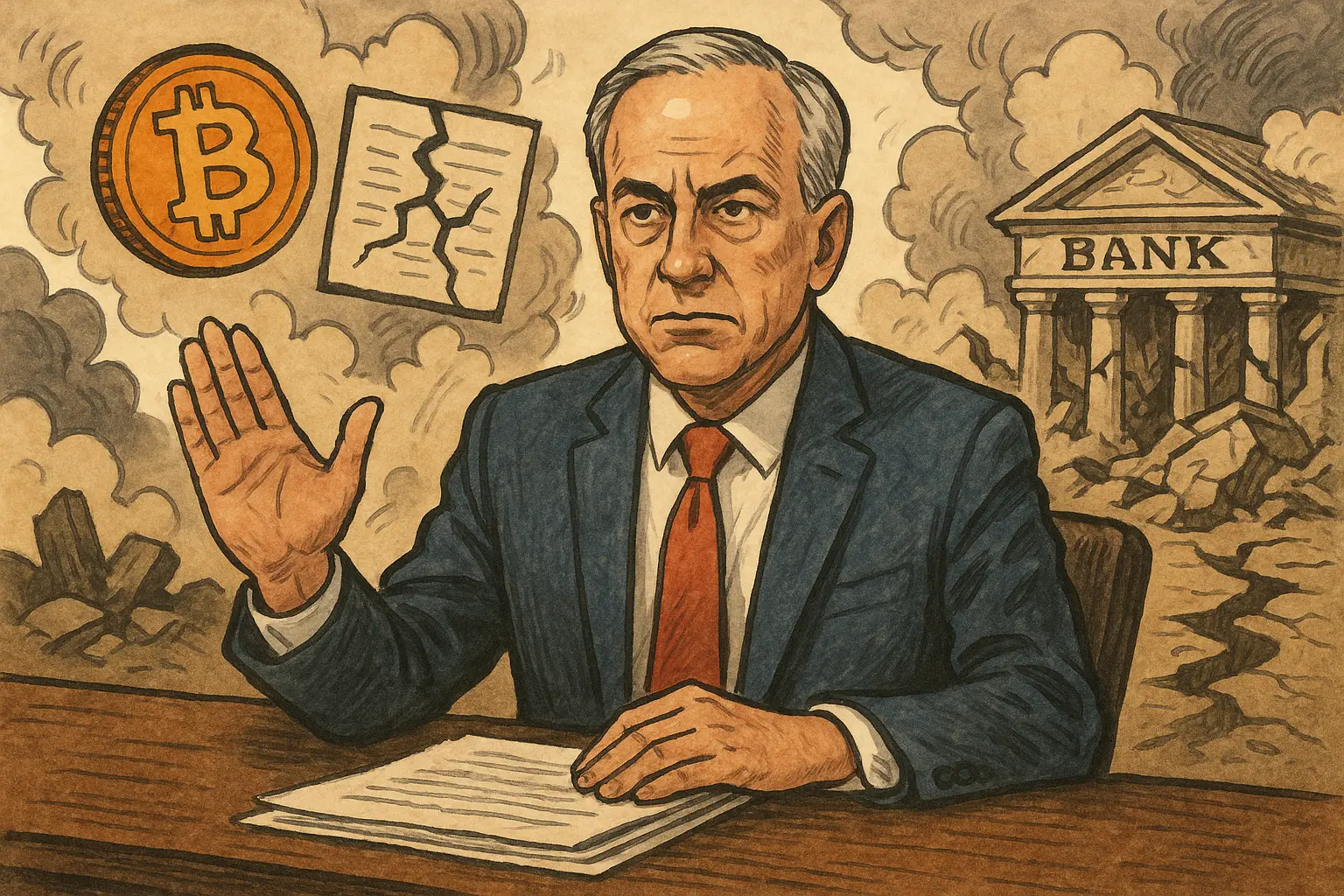
Former Chairman of the U.S. Commodity Futures Trading Commission (CFTC), Chris Giancarlo, pointed out on Scott Melker’s podcast that in the realm of cryptocurrency regulation, the damage inflicted on the U.S. banking sector far exceeds that on the crypto industry itself. He also warned that if the U.S. banking industry continues to delay the passage of the CLARITY Act, digital financial infrastructure in Asia and Europe will be established first, and the U.S. will face a structural lag.
Core Argument: Regulatory Certainty, Banks Need It More Than the Crypto Industry

(Source: YouTube)
Giancarlo’s argument is based on a counterintuitive premise—that the survival of the cryptocurrency industry does not depend on regulatory certainty, but that banks do. He pointed out that even under the harshest crackdown by former SEC Chairman Gary Gensler, the crypto industry continued to thrive; however, the decision-making logic of banks is entirely different: “The bank’s general counsel tells the board that unless there is regulatory certainty, they cannot invest billions of dollars in this area. Banks need this certainty more than crypto does.”
He emphasized that this is not merely a compliance issue but a strategic one: “Banks need this clarity because they must participate in building, stay at the forefront of innovation, rather than remain in the background.”
The Dilemma of the CLARITY Act and Plan B
The CLARITY Act was passed by the House of Representatives in July 2025 and forwarded to the Senate Banking, Housing, and Urban Affairs Committee for review, but it is currently stalled in the Senate. Key disputes include:
Stablecoin Yield Issue: Whether to allow stablecoin issuers to offer rewards to holders; the stance of banking groups and crypto companies is opposed.
Regulatory Jurisdiction Division: Which digital assets are regulated by the SEC and which by the CFTC; legislators have yet to reach consensus.
Major Players Withdrawing from the Coalition: Crypto firms like Coinbase have raised objections to certain provisions, weakening momentum.
If the CLARITY Act ultimately fails to pass or is not signed into law by the President, Giancarlo said that SEC Chairman Paul Atkins and CFTC Commissioner Mike Selig might fill the regulatory gap with guidance: “They will come up with some rules to make things temporarily workable. But this will lack legislative backing and can only last until the next presidential term.” This “regulatory patch” offers temporary certainty but does not provide the long-term legal framework that banks require.
If the U.S. Continues to Wait, Asia and Europe Will Lead Digital Financial Infrastructure
Giancarlo’s final warning points to geopolitical competition: “The digital infrastructure will be built. Then the U.S. banks will be shocked: ‘Wait, what’s going on?’ Our identity and information-based systems are no longer viable outside the U.S.—we need modernization. They will be caught off guard.”
In his vision, cryptocurrencies are not fringe technology but “the new architecture of finance and America.” As a dominant force in the global financial system, if U.S. banks fall behind in digital transformation, their global competitive position will be fundamentally challenged.
FAQs
Q: Why does regulatory uncertainty in cryptocurrencies harm banks more than the crypto industry?
Crypto companies often grow amid regulatory gaps, with flexibility to adapt to uncertainty; banks, however, are strictly constrained by shareholder accountability, compliance, and fiduciary duties. When the regulatory framework is unclear, bank legal advisors tend to recommend avoiding large investments, causing banks to miss opportunities in crypto, unlike native crypto firms that continue to expand.
Q: What are the core disputes of the CLARITY Act?
One of the biggest disputes is whether to allow stablecoin issuers to offer yield rewards to users. Banking groups oppose this clause, fearing deposit outflows; meanwhile, crypto companies like Coinbase believe this restriction hampers innovation and have withdrawn support, making it harder for the bill to advance in the Senate.
Q: If the CLARITY Act fails, can the SEC and CFTC provide enough regulatory certainty?
Giancarlo believes that guidance from regulators can offer “temporary feasible” clarity but cannot replace the long-term certainty provided by legislation. The key issue is the continuity of administrative rules—future presidents might overturn previous guidance, reintroducing uncertainty for banks, whereas legislative provisions are protected by higher legal standards.
Disclaimer: The information on this page may come from third parties and does not represent the views or opinions of Gate. The content displayed on this page is for reference only and does not constitute any financial, investment, or legal advice. Gate does not guarantee the accuracy or completeness of the information and shall not be liable for any losses arising from the use of this information. Virtual asset investments carry high risks and are subject to significant price volatility. You may lose all of your invested principal. Please fully understand the relevant risks and make prudent decisions based on your own financial situation and risk tolerance. For details, please refer to
Disclaimer.
Related Articles
UBS Expects Fed to Cut Rates 50 Basis Points by Year-End; 10-Year Treasury Yield Forecast at 3.75%
UBS analysts predict the Federal Reserve will cut interest rates by 50 basis points by 2026, despite rising energy prices. Fed Chairman Powell suggests limited tightening is needed, focusing on core inflation evidence before cuts. The forecast for Treasury yields indicates potential downward movement.
GateNews3h ago
Fed Likely to Hold Rates in April at 99.5% Probability, CME Data Shows
The Federal Reserve is highly likely to keep interest rates steady in April, with a 99.5% probability. Looking ahead to June, there's a 94.1% chance of maintaining rates, a 0.5% chance of an increase, and a 5.4% chance of a cut.
GateNews23h ago
Rate Swap Market Signals Dovish Shift, Pricing in 15 Basis Points of Fed Rate Cuts by December
Gate News message, April 17 — The rate swap market is signaling a dovish shift, with current pricing reflecting expectations for 15 basis points of Federal Reserve rate cuts by December.
GateNews04-17 13:01
Hong Kong Interbank Rates Rise Across All Tenors; One-Month HIBOR Climbs to 2.55%
On April 17, Hong Kong interbank offered rates (HIBOR) increased across all tenors, with the one-month rate rising to 2.55143% and overnight rates hitting the highest level since January at 3.36536%.
GateNews04-17 05:54
Bank of Japan Governor Ueda: Middle East Conflict Poses Dual Risk of Rising Inflation and Economic Slowdown
Bank of Japan Governor Kazuo Ueda highlighted the conflict in the Middle East as a source of inflation and economic slowdown risks. He confirmed that the Monetary Policy Committee will determine suitable measures to reach the 2% inflation target at the upcoming meeting.
GateNews04-17 01:15
Fed Holds Rates Steady in April With 99.5% Probability, CME Data Shows
The CME's Fed Watch tool indicates a 99.5% probability of the Federal Reserve keeping rates unchanged in April, with similar projections for June showing a 98% likelihood of steady rates and minimal chances for rate cuts or hikes.
GateNews04-16 23:21


