Author: HIBIKI, Crypto City
FATF: Stablecoins Become the Top Choice for Illegal Transactions
According to the latest 42-page report from the Financial Action Task Force (FATF), stablecoins are currently the most popular virtual assets used in illegal transactions (including sanctions evasion). Participants include countries like Iran and North Korea, prompting calls for stricter regulation of stablecoin issuers.
FATF previously stated in January that stablecoins account for the majority of on-chain illegal activity transaction volume. The organization estimates that in 2024, illegal stablecoin activities related to scams and fraud will total approximately $51 billion.
North Korea and Iran Love Using Stablecoins
FATF further explains that North Korea’s Lazarus Group and other organizations use stablecoins to purchase military equipment; Iran’s Islamic Revolutionary Guard Corps also relies on stablecoins to acquire drone parts; terrorist groups and drug trafficking organizations heavily depend on Tether ($USDT) and USDC for money transfers and money laundering.
On July 2, 2025, Tether, the issuer of USDT, conducted the largest-ever freeze of Iran-related funds, freezing 42 cryptocurrency wallet addresses, over half of which are heavily linked to the local exchange Nobitex.
As a global standard-setting body focused on anti-money laundering, FATF points out that stablecoins, with features like price stability and high liquidity, are attractive tools for criminals to transfer funds.
Non-Custodial Wallets Become Vulnerable, Illegal Stablecoin Receipts Hit Record Highs
FATF’s latest report in March 2026 again warns that dollar-pegged stablecoins have become key tools in illegal financial activities.
The organization cites a report from blockchain analysis firm Chainalysis, stating that in 2025, illegal virtual asset transactions totaled $154 billion, with stablecoins accounting for 84%, a stark contrast to the predominantly Bitcoin-based illegal transactions in 2020.
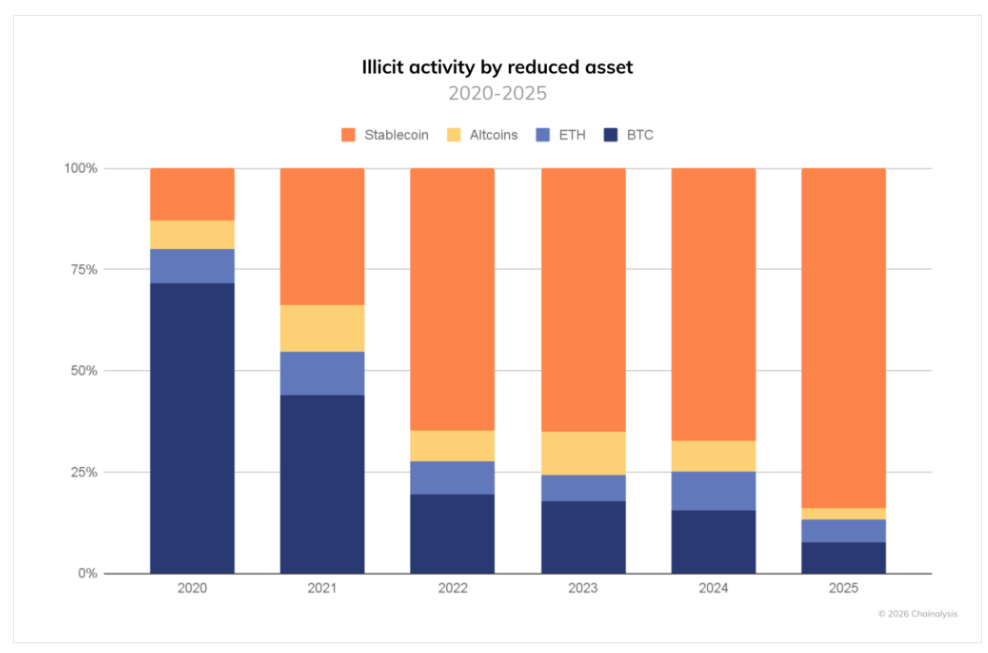
Source: Chainalysis | In 2025, illegal virtual asset transactions reached $154 billion, with stablecoins accounting for 84%
Additionally, according to a report released in mid-February by blockchain analysis firm TRM Labs, illegal entities received a total of $141 billion in stablecoins in 2025, setting a five-year high. The report notes that last year, overall stablecoin activity repeatedly exceeded $1 trillion per month, with activities related to sanctions accounting for 86% of illegal virtual asset flows.
The report emphasizes that malicious actors often hide their funds using cross-chain technology, decentralized exchanges, and OTC brokers. FATF points out that peer-to-peer transfers through non-custodial wallets are a critical vulnerability. These transactions occur in environments lacking anti-money laundering controls, making it difficult for regulators to track geographic locations and actual beneficiaries.
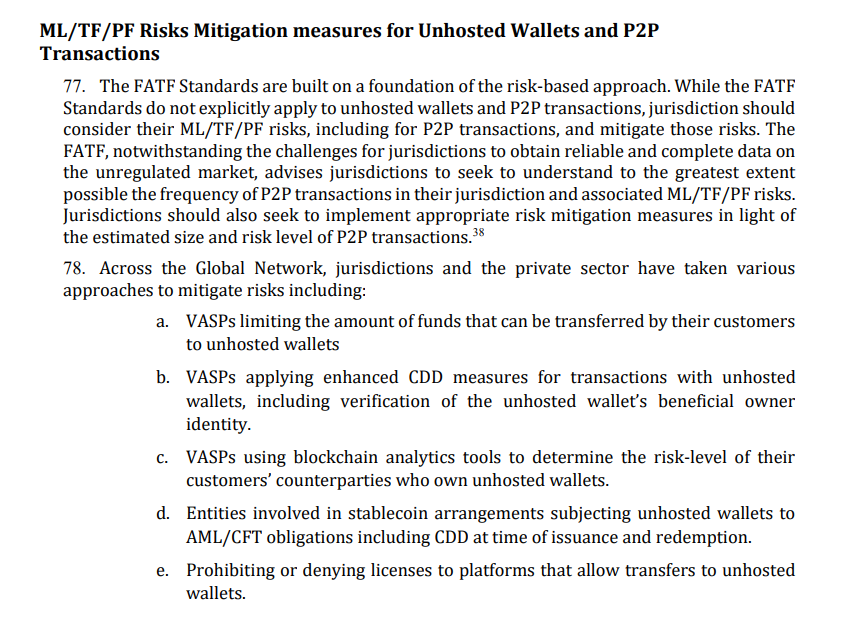
Source: FATF Report | FATF report highlights that peer-to-peer virtual asset transfers via non-custodial wallets are a key vulnerability
Stablecoin Market Cap Surpasses $300 Billion, Urgent Need for Regulation
It’s important to note that FATF does not call for a complete ban on stablecoins but strongly urges countries to impose anti-money laundering obligations on stablecoin issuers and intermediaries.
FATF recommends that stablecoin issuers utilize smart contract control features to establish whitelists and blacklists to restrict transactions with certain wallets. Issuers should have the technical capability to intercept, freeze, and destroy suspicious stablecoins in secondary markets at any time. To address cross-border operational challenges, FATF encourages countries to establish international regulatory bodies to enhance information sharing and joint supervision.
Currently, the global stablecoin market value has exceeded $300 billion. As adoption accelerates and integration with traditional finance deepens, FATF believes that regulators worldwide must act swiftly and implement blockchain analysis tools to close regulatory and compliance gaps.
Disclaimer: The information on this page may come from third parties and does not represent the views or opinions of Gate. The content displayed on this page is for reference only and does not constitute any financial, investment, or legal advice. Gate does not guarantee the accuracy or completeness of the information and shall not be liable for any losses arising from the use of this information. Virtual asset investments carry high risks and are subject to significant price volatility. You may lose all of your invested principal. Please fully understand the relevant risks and make prudent decisions based on your own financial situation and risk tolerance. For details, please refer to
Disclaimer.
Related Articles
Pakistan Lifts an Eight-Year Ban: Central Bank Allows Banks to Serve Crypto Businesses, and the Virtual Assets Law Takes Effect
On April 14, 2026, the State Bank of Pakistan lifted its crypto-assets banking ban that has been in place since 2018, officially kicking off the Virtual Assets Act 2026. Banks may open accounts for licensed virtual asset service providers, but must establish a segregation-of-funds mechanism to ensure that customers’ funds are not affected. This policy change responds to domestic demand and demonstrates Pakistan’s growing role on the international stage.
ChainNewsAbmedia5h ago
U.S. Has Not Agreed to Extend Ceasefire Agreement
Gate News message, April 15 — The United States has not agreed to extend the ceasefire agreement, according to Axios.
GateNews9h ago
Oil Prices Rise on Geopolitical Tensions; WTI Up 1.97%, Brent Up 2.00%
International oil prices rose significantly due to heightened geopolitical tensions in the Middle East, with WTI crude up 1.97% and Brent crude up 2.00% amid Iranian threats to U.S. maritime actions.
GateNews10h ago
Trump Says Iran Conflict's 'Final Outcome' Could Come Soon
In a Fox Business News interview, President Trump expressed optimism about resolving the Iran conflict soon, emphasizing that the U.S. will not agree to terms if Iran seeks nuclear weapons development.
GateNews10h ago
Zelenskyy Says Middle East Conflict Significantly Impacting Weapons Supply to Ukraine
Ukrainian President Zelenskyy warned that the ongoing Middle East conflict is affecting weapons supplies to Ukraine, particularly for air defense. He emphasized the critical shortage of the Patriot missile system, which has reached a concerning level.
GateNews12h ago
IMF Cuts Global Growth to 3.1%, Warns of Recession Risk as Bitcoin Slides to $74K
The IMF has downgraded its 2026 global growth forecast to 3.1%, citing risks of recession from rising oil prices and US-Iran tensions. Bitcoin has also dropped significantly amid poor macroeconomic conditions and rising global debt.
GateNews13h ago


