FDIC rolls out a stablecoin regulatory framework to implement the GENIUS Act, requiring 1:1 reserves and 2-day redemptions, and clarifying that deposit insurance does not apply.
The federal regulatory framework takes shape, as the FDIC advances the GENIUS Act implementing details
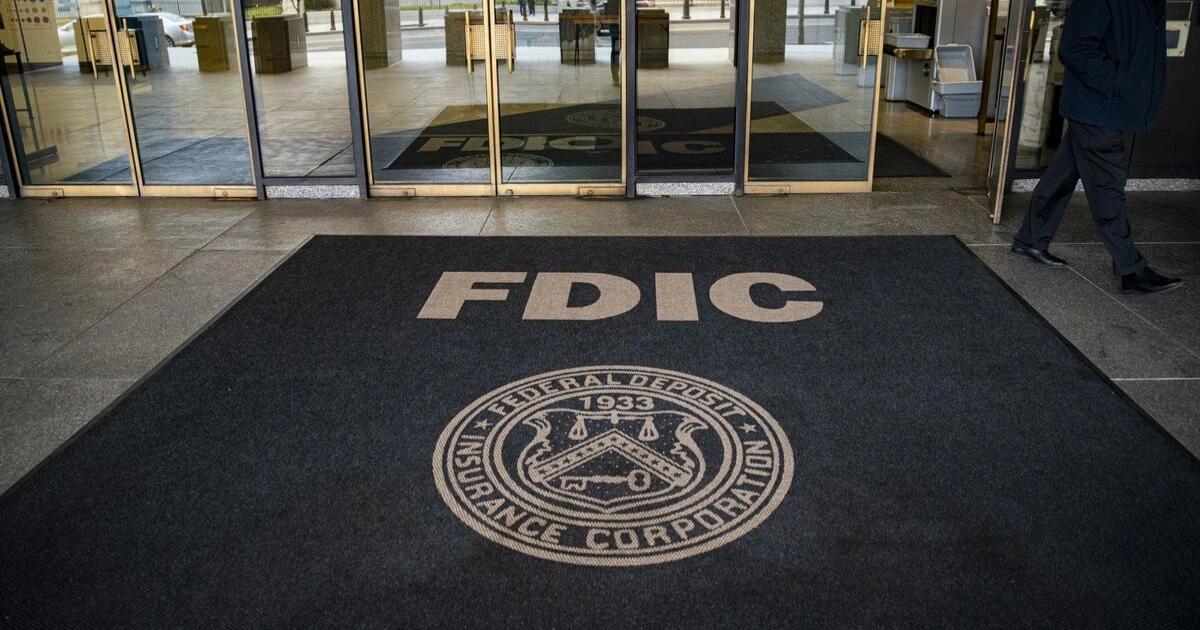
On April 7 (the other day, 4/7), the Federal Deposit Insurance Corporation (FDIC) approved a new rule proposal to regulate how banks under its supervision and their affiliates issue and manage stablecoins, establishing the first comprehensive prudential regulatory framework. The initiative is intended to carry out the GENIUS Act, which was signed into law last year by the Trump administration, marking a key step by the U.S. federal government in regulating dollar-pegged digital assets.
Under the proposal, the FDIC will define “permitted payment stablecoin issuers” (PPSIs). These entities are expected to operate as affiliates of FDIC-regulated institutions and must meet strict capital, reserve, and risk-management standards.
FDIC Vice Chairman Travis Hill said at a board meeting that, as stablecoins’ use in payment infrastructure continues to expand, the framework is designed to address potential operational risks and maintain stability in the financial system. This new rule is the second major round of regulatory action following the procedures the FDIC launched in December last year for banks to apply—through affiliates—for permission to issue stablecoins.
At the same time, the Office of the Comptroller of the Currency (OCC) also issued a corresponding regulatory framework for its covered institutions in February this year, showing that U.S. federal financial regulators are working to build a unified stablecoin regulatory system.
Stringent 1:1 reserve and liquidity requirements to ensure 2-day redemption
In terms of managing reserve assets, the FDIC’s proposal requires stablecoin issuers to maintain fully backed 1:1 reserves, and those reserves must be strictly separated from the issuer’s other business activities. Eligible reserve assets are limited to highly liquid, low-risk instruments, including: U.S. dollars, balances held at Federal Reserve Banks, insured bank deposits, short-term U.S. Treasury securities, and specific overnight repurchase agreements. The issuer must monitor reserve assets daily and undergo regular audits. In addition, the proposal also sets concentration limits for reserve holdings to reduce exposure to single counterparties and ensure sufficient redemption capacity during periods of market stress.
For redemption mechanics—what investors care about most—the rule sets clear service standards. The issuer must publish a clear redemption policy and process redemption requests within 2 business days. To guard against a run risk, the FDIC requires that if the redemption amount on a given day exceeds 10% of the total outstanding supply, the issuer must immediately notify regulators and may—depending on circumstances—apply to extend the redemption deadline. This mechanism is intended to provide market transparency while giving regulators early warning so that a liquidity problem in an individual stablecoin does not evolve into systemic financial risk.
Capital buffers and operating thresholds, with strict separation of interest-revenue boundaries
In addition to reserve-asset requirements, the FDIC also imposes strict capital and operational requirements on issuers. For the first 3 years of operation, a new payment stablecoin issuer must maintain at least $5 million in initial capital, and going forward the capital structure should be primarily composed of common equity Tier 1 capital. Beyond statutory capital requirements, the issuer must also hold a separate liquidity buffer equal to 12 months of operating expenses; these funds are explicitly defined as operating reserves distinct from stablecoin reserve funds. Furthermore, for large issuers with market capitalization exceeding $50 billion, the FDIC will require higher-frequency annual reviews and targeted compliance examinations.
With respect to product attributes, the FDIC draws a red line on the earnings nature of stablecoins. The proposal explicitly restricts issuers from advertising that stablecoin holders can receive interest or profits, and even rewards provided through arrangements with third parties will be subject to strict scrutiny. This rule reflects the regulator’s stance that stablecoins should be treated as payment instruments rather than savings products. For operational resilience, issuers must build robust cybersecurity systems covering private key management, blockchain monitoring, incident response, and an annual anti–money laundering (AML) compliance certification to ensure the security and compliance of digital assets at the technical level.
Clarifying the boundary of deposit insurance: stablecoins do not qualify for pass-through coverage
One of the most important clarifications in this regulatory framework concerns how deposit insurance applies. The FDIC clearly states that the stablecoin itself issued under this framework does not receive standard deposit insurance protection of $250,000 per person. This means that the reserves held by the issuer at a bank will be treated as the issuer’s corporate deposits, and token holders do not have individual insurance coverage. This ban on pass-through insurance is intended to prevent the market from misperceiving stablecoins as having the same federal backing as bank deposits, thereby maintaining the risk boundary between stablecoins and the traditional financial system.
However, the FDIC also provides different treatment for tokenized deposits. If conventional bank deposits are presented only in a tokenized technical format and still meet the legal definition of bank deposits, they can continue to receive standard deposit insurance treatment. The proposal is currently in a 60-day public comment period. The FDIC is seeking public feedback on 144 specific issues, including capital calibration, eligible assets, and the interest prohibition.
- Related news: The U.S. Treasury begins implementing details of the GENIUS Act, opening a 60-day public consultation for stablecoin regulation
As the mid-2026 implementation deadline set by the GENIUS Act approaches, federal regulators are accelerating efforts to finalize these rules. At the same time, the U.S. Senate is also in its final negotiations over disputes in the CLARITY Act regarding stablecoin yield and rewards. Comprehensive legislative codification of stablecoins has become a core issue in U.S. crypto-finance policy for 2026.
Disclaimer: The information on this page may come from third parties and does not represent the views or opinions of Gate. The content displayed on this page is for reference only and does not constitute any financial, investment, or legal advice. Gate does not guarantee the accuracy or completeness of the information and shall not be liable for any losses arising from the use of this information. Virtual asset investments carry high risks and are subject to significant price volatility. You may lose all of your invested principal. Please fully understand the relevant risks and make prudent decisions based on your own financial situation and risk tolerance. For details, please refer to
Disclaimer.
Related Articles
Bank of Korea Calls for Crypto Market Circuit Breaker After Bithumb Error
The Bank of Korea advocates for a circuit breaker in South Korea’s crypto market after Bithumb's February blunder, where 620,000 BTC was mistakenly distributed. The proposal aims to enhance market safeguards and contain operational errors through a halt mechanism similar to stock markets.
CryptoNewsFlash24m ago
In Q1 2026, Web3 projects suffered losses of over $460 million from hacks and scams, with phishing attacks leading the way.
Hacken’s report shows that in the first quarter of 2026, Web3 projects lost $464.5 million due to hacker attacks and scams, with phishing and social engineering attacks accounting for $306 million in losses. In addition, hardware wallet scams accounted for the bulk of the losses. Moreover, losses were also significant due to smart contract vulnerabilities and access control failures. In terms of regulation, the European legal framework has increased security monitoring requirements.
GateNews29m ago
The U.S. IRS steps up tax oversight of cryptocurrency; the tax filing deadline is April 15
The U.S. Internal Revenue Service increases its crackdown on tax evasion involving cryptocurrency, requiring investors to proactively report their transactions by April 15. Starting in 2025, brokers will be required to report digital-asset gains, and investors will need to verify their costs themselves. 61% of investors don’t know about the new rules, and 52% are worried about making mistakes when filing. Experts recommend collecting transaction records to avoid penalties and criminal prosecution.
GateNews1h ago
Encourage innovation! A U.S. judge bars Arizona’s regulation of prediction markets, and pauses the prosecution of Kalshi
A U.S. federal district court ruled to block Arizona from suing the prediction market platform Kalshi under its gambling laws, finding that the federal Commodity Futures Trading Commission has exclusive jurisdiction. The ruling affects the boundary between state and federal authority in regulating financial markets. Kalshi has insisted that its business is a financial product rather than traditional gambling. Rulings by different states on prediction markets have varied, and the Trump family has also expressed support for prediction markets.
CryptoCity1h ago
Could bypassing FSC regulations to buy crypto with a card be possible? OdinTean rolls out Wallet Pro, a service to buy crypto with U.S. debit cards
OwlPay and Wallet Pro services launched by OdinTing use stablecoin technology to enable B2B cross-border payments, and they partner with international payments giants to showcase their expansion ambitions in the financial technology sector. Through offshore operations, OdinTing bypasses Taiwan’s regulatory restrictions, providing fast virtual-asset trading. Meanwhile, as it faces the newly promulgated Virtual Asset Services Act, it is expected to become a reference template for other foreign-funded enterprises entering the Taiwan market.
CryptoCity2h ago
The U.S. Department of Justice launches the OneCoin victim compensation program, with more than $40 million in assets available for claims
The U.S. Department of Justice has initiated a restitution process for victims of the OneCoin crypto Ponzi scheme. Victims who were harmed between 2014 and 2019 may apply for restitution, and more than $40 million is currently available. The scheme was launched in 2014 and resulted in more than $4 billion in losses for 3.5 million victims worldwide.
GateNews3h ago


