
Pi Network’s official X account published a statement announcing that the Pi Network ecosystem currently has more than 18 million users who have completed identity verification (KYC), and it argues that its verified user base differs from unverified accounts on other networks in terms of real-world applicability. The Pi Network core team also stated that the ecosystem has built a “fully KYC-verified mainnet ecosystem” with the goal of improving the trustworthiness of transactions.
Statement from the Pi Network Core Team: Arguments for Verified Users
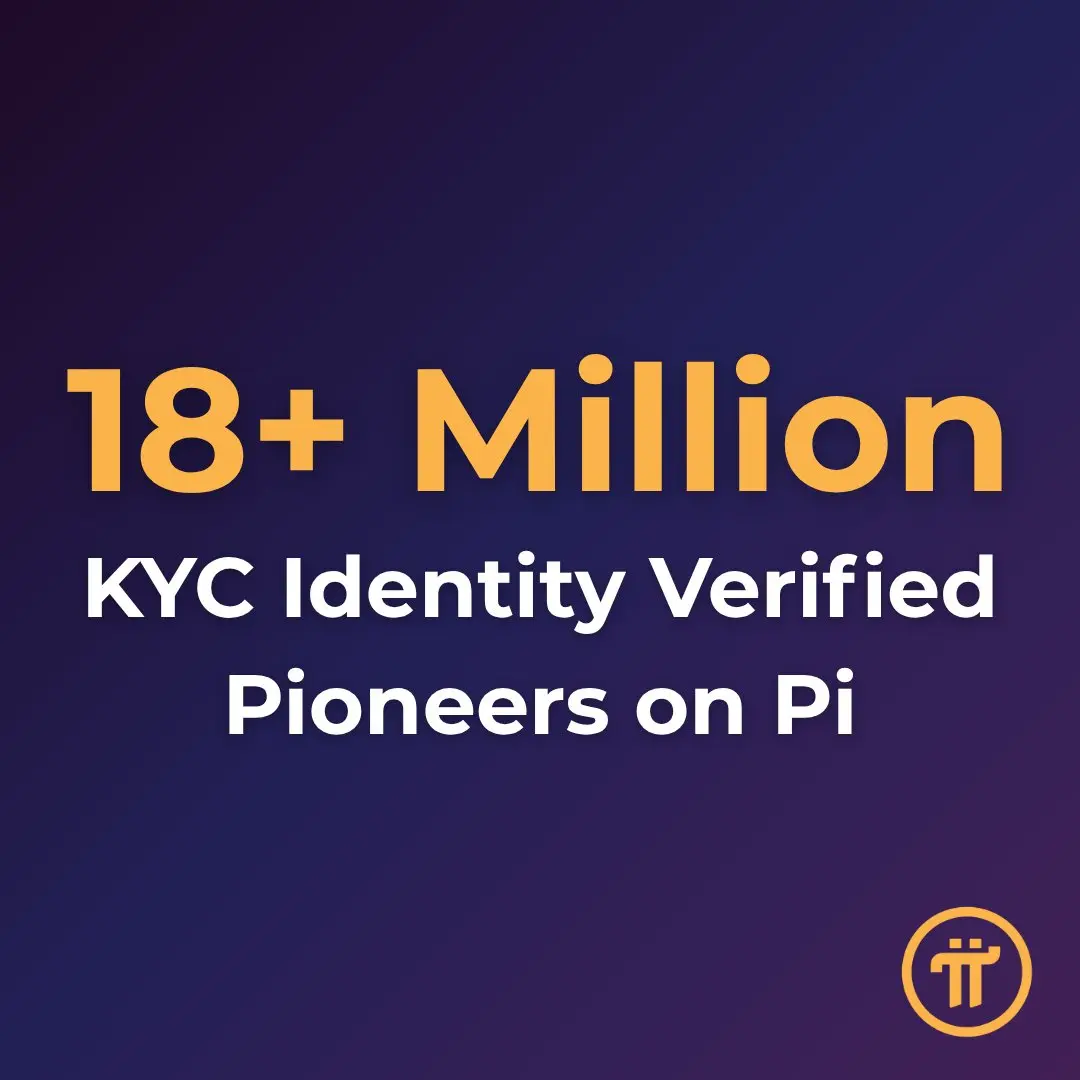 (Source: Pi Network core team)
According to the statement from Pi Network’s official X account, the Pi Network core team said that most blockchains measure growth by the total number of accounts and do not require users to complete identity verification; Pi Network “recognized very early on the importance of identity verification and believes that creating only unverified accounts is not enough.”
In the statement, the core team said: “1 million verified users on Pi ≠ 1 million users on other networks.” Its argument is that “any meaningful transaction requires identity verification, especially in economic activities in the real world”; each time an asset is transferred, it “raises a fundamental identity question: who is sending, who is receiving.” If identities are unknown, it is difficult to confirm the validity of the transfer and the correctness of the recipient.
Design Philosophy for a Fully KYC-Verified Mainnet Ecosystem
According to the Pi Network core team’s statement, the above considerations are the core reasons it built a “fully KYC-verified mainnet ecosystem,” to ensure that all parties’ identities can be verified and to reduce spam while improving the overall ecosystem’s credibility. Pi Network’s official mainnet has been launched for more than one year; user participation has been encouraged for more than five years. The user community name is Pioneers.
Frequently Asked Questions
How large is the KYC-verified user base Pi Network has announced at present?
According to Pi Network’s latest statement from its official X account, the Pi Network ecosystem currently has more than 18 million users who have completed identity verification (KYC).
How does the Pi Network core team explain the significance of verified users?
According to Pi Network’s official X statement, the core team said that most blockchains measure growth by the number of accounts without requiring identity verification; Pi Network believes that asset transfers involve “a fundamental identity issue,” and therefore it has established a fully KYC-verified mainnet ecosystem to ensure that all parties’ identities are known.
Why did Pi Network build a fully KYC-verified ecosystem?
According to the Pi Network core team’s statement, fully KYC-verified is intended to ensure that both the sender and recipient identities for every meaningful transaction are verifiable, thereby reducing the risk of spam and improving the credibility of economic activities in the real world.
Disclaimer: The information on this page may come from third parties and does not represent the views or opinions of Gate. The content displayed on this page is for reference only and does not constitute any financial, investment, or legal advice. Gate does not guarantee the accuracy or completeness of the information and shall not be liable for any losses arising from the use of this information. Virtual asset investments carry high risks and are subject to significant price volatility. You may lose all of your invested principal. Please fully understand the relevant risks and make prudent decisions based on your own financial situation and risk tolerance. For details, please refer to
Disclaimer.
Related Articles
Gensyn Launches Delphi, AI-Settled Decentralized Information Market Platform
Summary: Gensyn launches Delphi, a decentralized AI market on Ethereum Layer 2. Traders can use it now; invited creators can host markets. It uses verifiable oracles, charges 1.5% on settlements, and targets mainnet soon after strong testnet volumes.
Abstract: Gensyn unveils Delphi, a decentralized AI information market on Ethereum Layer 2. It enables trading now, with market creation limited to invited creators, settlements via verifiable oracles, and a 1.5% fee on settlements. Mainnet launch is expected in the coming weeks after strong testnet volumes since December 2025.
GateNews5m ago
Vitalik: Post-Quantum Cryptography Solutions Are Mature; Ethereum Aims to Resist Both Quantum and AI Threats
Gate News message, April 22 — Vitalik Buterin stated in a dialogue with Xiao Feng that mature post-quantum cryptography solutions already exist, expressing a preference for the GeoHash algorithm. He noted that Ethereum's vision extends beyond merely becoming a post-quantum chain—the network also
GateNews1h ago
PicWe Launches AI Agent Wallet with On-Device Key Management
PicWe announces public beta of PicWe Wallet, an AI-agent-enabled, on-device key wallet with no recovery phrases. It supports multi-chain assets, swaps, AI-accessible automation, and aims to unify RWA infrastructure.
PicWe has launched the public beta of PicWe Wallet, an AI Agent-enabled wallet that stores keys on-device, eliminates recovery phrases, and keeps critical operations local. The beta supports multi-chain asset management, swaps, and stablecoin-based fees while enabling programmable AI interactions. Broader PicWe initiatives position the platform as unified infrastructure for real-world assets, enabling issuance, circulation, settlement, cross-border payments, tokenization, and supply-chain coordination for enterprise use cases.
GateNews1h ago
Vitalik: System Simplification Crucial for Ethereum Adoption Among Users and Developers
During a Foresight News event, Vitalik Buterin outlined two levels of simplification—interface-level tweaks and broader system-level changes—and argued that Ethereum’s growth depends on reducing system complexity to boost participation by users and developers.
Buterin distinguishes interface vs. system-level simplification; for Ethereum, reducing system complexity is crucial to boost user and developer participation and overall adoption.
GateNews1h ago
Ripple Sets 2028 Target for XRPL Quantum Shift Plan
Ripple outlines a four-phase plan to prepare XRPL for quantum threats, targeting full migration and network upgrade by 2028.
Early phases focus on testing quantum-resistant algorithms and hybrid cryptography with partners like Project Eleven.
XRPL’s key rotation and seed-based design
CryptoFrontNews2h ago
Chainlink Achieves SOC 2 Type 2 Certification from Deloitte, Strengthening Security Standards
Deloitte completed Chainlink CCIP SOC 2 Type 2 audit; Chainlink becomes the sole data and interoperability oracle meeting this security standard, and holds SOC 2 Type 1 plus ISO/IEC 27001:2022 certifications.
This article reports that Deloitte & Touche LLP completed a SOC 2 Type 2 audit of Chainlink's Cross-Chain Interoperability Protocol (CCIP) and data feeds, making Chainlink the only data and interoperability oracle platform to meet this standard. It also notes that Chainlink holds SOC 2 Type 1 and ISO/IEC 27001:2022 certifications, underscoring enterprise-grade security and compliance.
GateNews2h ago


