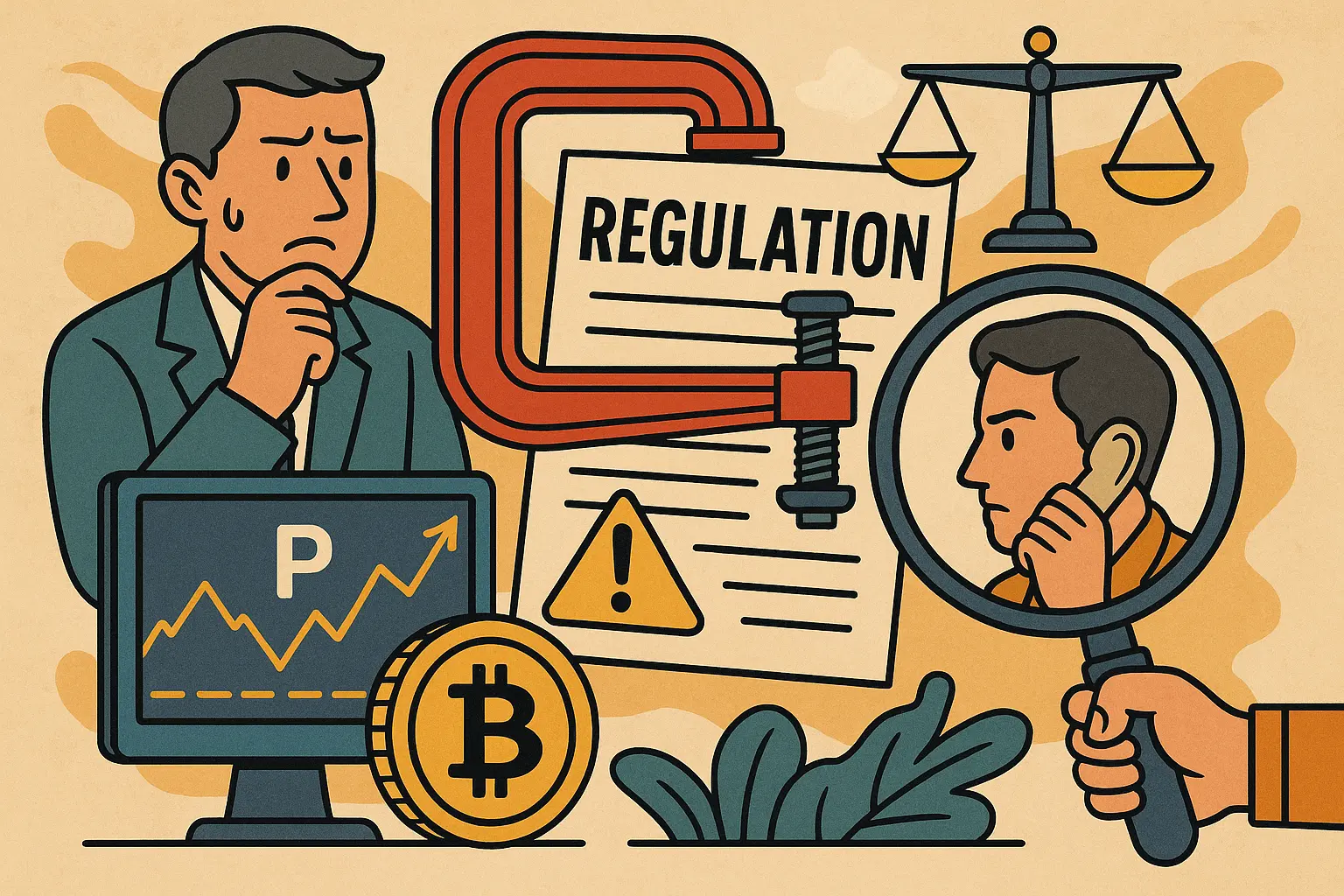
Predictive trading platform Polymarket announced an update to its market integrity rules on Monday, applying simultaneously to U.S. exchanges regulated by the Commodity Futures Trading Commission (CFTC). The update includes stricter market design standards, clearer settlement criteria, more explicit data sources, and enhanced monitoring mechanisms for suspicious trading activities. Recently created accounts on the platform profited approximately $1 million by accurately betting on the US-Iran war, raising concerns about insider trading.
Four Core Measures in Polymarket’s Rule Update
Polymarket’s recent rule update directly responds to criticisms from regulators and market participants regarding the platform’s fairness, with targeted adjustments covering market design and ethical compliance:
Strict Market Design Standards: Raising the approval threshold for creating new markets to ensure issues are clear and verifiable, reducing potential manipulation at the design stage.
Clear Settlement Standards and Data Sources: Standardizing the basis for determining market outcomes and information sources to minimize disputes caused by discretionary settlements.
Enhanced Suspicious Trading Monitoring: Upgrading detection systems to identify abnormal betting patterns and transactions potentially linked to non-public information.
Restrictions on High-Risk Market Types: Banning or limiting markets deemed easily manipulable, ethically sensitive, or conflicted in interests.
Last week, Polymarket took concrete action by banning and reporting a user who issued death threats to an Israeli journalist. The user had previously attempted to intimidate the journalist into altering reports to influence a $17 million prediction market outcome.
Million-Dollar Iran Bet: The Core of Insider Trading Allegations
According to Bloomberg, six accounts created in February 2026 on Polymarket exclusively placed bets on whether the U.S. would strike Iran. These accounts accurately predicted the attack, collectively earning about $1 million. The accounts shared notable characteristics: they were created around the same time, placed bets in the same direction, and achieved an unusually high accuracy rate, fueling widespread suspicion of potential insider trading.
Polymarket has not yet publicly responded to this incident nor confirmed whether a formal investigation into these accounts has been initiated. However, the event has directly influenced the timing of the current rule update and remains a central case of ongoing regulatory and media pressure.
Regulatory Landscape: CFTC Cooperation and State-Level Pressure
This rule update is part of Polymarket’s proactive efforts to align with regulatory legalization pathways. This week, Major League Baseball (MLB) signed a cooperation agreement with Polymarket, while the CFTC separately reached a standalone agreement to strengthen “integrity protections.” Both initiatives are advancing in tandem, demonstrating a coordinated effort to promote the institutionalization of prediction markets through compliance.
However, regulatory pressure persists. Several U.S. states have taken legal actions against prediction platforms, accusing them of operating as unlicensed gambling. Polymarket raised $200 million in July 2025 and reportedly seeks a valuation of $10 billion. Its rapid growth has made it increasingly scrutinized under regulatory review.
Frequently Asked Questions
Q: What exactly are the insider trading allegations against Polymarket?
A: Reports indicate that six accounts created in February 2026 exclusively bet on whether the U.S. would strike Iran, and they accurately predicted the attack, earning about $1 million. The concentration of account creation times, uniform betting directions, and high accuracy have raised suspicions of potential use of non-public information. No official investigation conclusions have been announced yet.
Q: What is the purpose of Polymarket’s recent rule update?
A: The update aims to achieve two goals: first, to strengthen market integrity by implementing stricter design standards, settlement rules, and trading surveillance to reduce manipulation and insider trading risks; second, to demonstrate compliance to regulators and facilitate the legalization of prediction markets in the U.S.
Q: What is Polymarket’s legal status in the U.S.?
A: Polymarket’s U.S. operations are under CFTC regulation, but multiple states have taken legal action against similar prediction platforms for operating as unlicensed gambling. Through cooperation agreements with the CFTC and MLB, Polymarket actively promotes its federal compliance status, though legal uncertainties at the state level remain.
Disclaimer: The information on this page may come from third parties and does not represent the views or opinions of Gate. The content displayed on this page is for reference only and does not constitute any financial, investment, or legal advice. Gate does not guarantee the accuracy or completeness of the information and shall not be liable for any losses arising from the use of this information. Virtual asset investments carry high risks and are subject to significant price volatility. You may lose all of your invested principal. Please fully understand the relevant risks and make prudent decisions based on your own financial situation and risk tolerance. For details, please refer to
Disclaimer.
Related Articles
Encouraging innovation! A U.S. judge bars Arizona from regulating a prediction market and suspends the prosecution of Kalshi
A U.S. federal district court ruled that Arizona is prohibited from relying on its gambling laws to prosecute prediction market platform Kalshi, finding that the federal Commodity Futures Trading Commission has exclusive jurisdiction. The ruling affects the boundary between state and federal authority in financial market regulation, while Kalshi insists that its business falls under financial products rather than traditional gambling. Rulings on prediction markets vary from state to state, and the Trump family has also expressed support for prediction markets.
CryptoCity45m ago
Encouraging innovation! A U.S. judge bans Arizona’s regulators from prediction markets and suspends the prosecution of Kalshi
A U.S. federal district court has ruled that Arizona is barred from using its gambling law to sue the prediction market platform Kalshi, finding that the Federal Commodity Futures Trading Commission has exclusive jurisdiction. The ruling affects the boundary between state and federal authority in financial market regulation, and Kalshi maintains that its business falls under financial products rather than traditional gambling. Courts in different states have issued differing rulings on prediction markets, and the Trump family has also expressed support for prediction markets.
CryptoCity3h ago
Polymarket Trader Turns $500 Into $252K After UFC Makes Yet Another Scoring Error
In brief
A Polymarket trader walked away with $252,000 in profit after the UFC incorrectly identified a fight’s winner for the second time in two weeks.
An X account linked to the Polymarket trader said that they had noticed the error by looking at the bout’s official scorecard.
The
Decrypt4h ago
Polymarket reviews and weeds out early-stage projects in its ecosystem, targeting insider trading and market manipulation behaviors
Polymarket announced an audit of some of the onboarded startup projects that have been accused of using allegedly insider trading account information to steer users into making trades. The move is intended to strengthen compliance management and address external concerns about the risks of insider trading.
GateNews4h ago
Encourage innovation! A U.S. judge bans Arizona-regulated prediction markets and suspends prosecution against Kalshi.
A U.S. federal district court has ruled that Arizona is barred from using the gambling law to prosecute the prediction market platform Kalshi, finding that the federal Commodity Futures Trading Commission has exclusive jurisdiction. The ruling affects the line between state and federal authority over financial market regulation, while Kalshi maintains that its business is a financial product rather than traditional gambling. Decisions on prediction markets vary from state to state, and the Trump family has also expressed support for prediction markets.
CryptoCity6h ago
Encourage innovation! A U.S. judge bars Arizona’s regulation of prediction markets, and pauses the prosecution of Kalshi
A U.S. federal district court ruled to block Arizona from suing the prediction market platform Kalshi under its gambling laws, finding that the federal Commodity Futures Trading Commission has exclusive jurisdiction. The ruling affects the boundary between state and federal authority in regulating financial markets. Kalshi has insisted that its business is a financial product rather than traditional gambling. Rulings by different states on prediction markets have varied, and the Trump family has also expressed support for prediction markets.
CryptoCity10h ago


