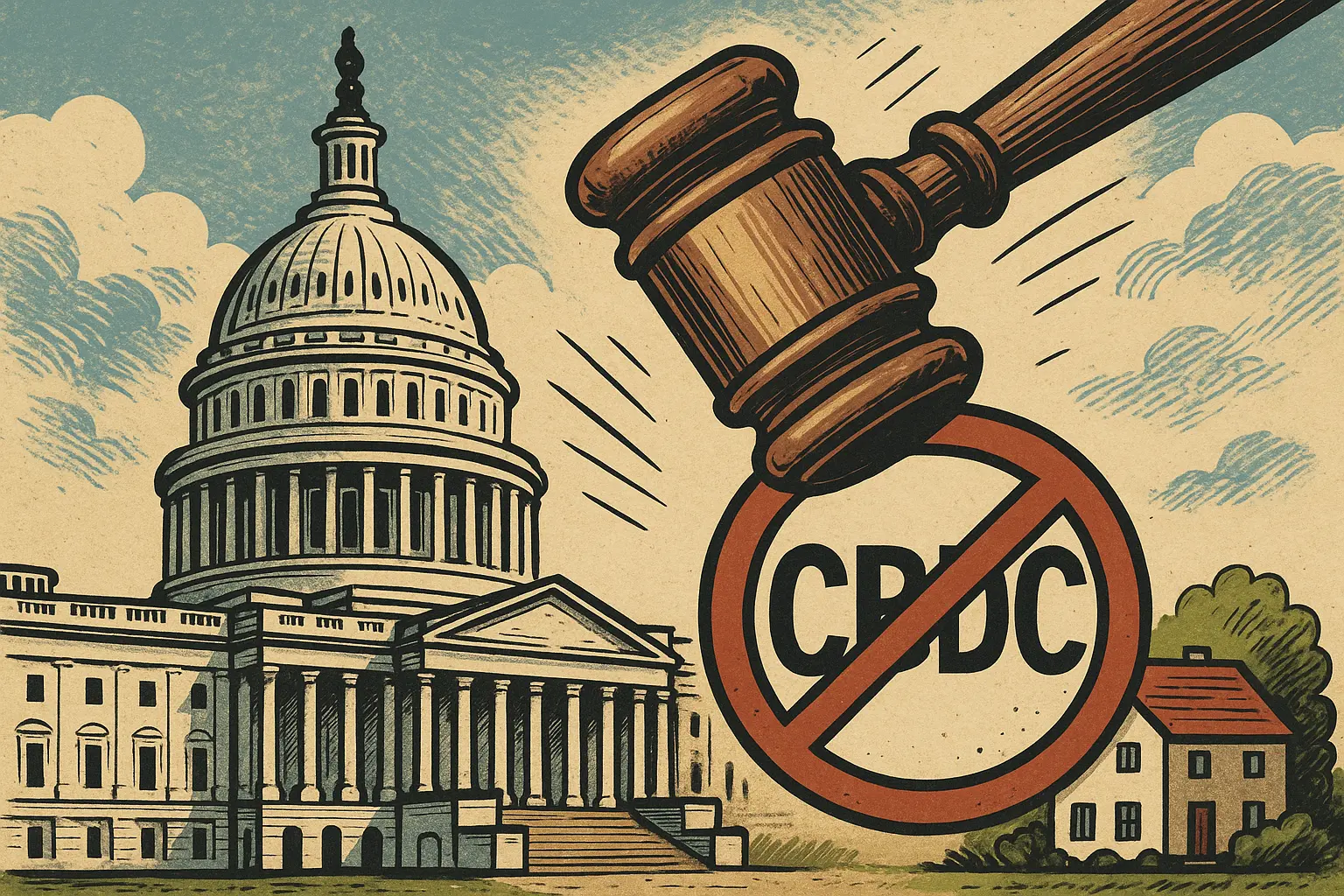
According to investment bank TD Cowen’s analysis, Congress may be accelerating toward a permanent ban on the Federal Reserve issuing Central Bank Digital Currencies (CBDCs). Senator Ted Cruz last week introduced an amendment to the “21st Century Housing Act,” which, if passed, would turn the current temporary CBDC ban through 2030 into permanent law.
Cruz Amendment: From Temporary to Permanent Legislative Progress
This amendment is part of recent parallel legislative actions. The House of Representatives passed the “Anti-Central Bank Digital Currency Monitoring Nation Act” last year, which prohibits the Federal Reserve from directly issuing CBDCs to individuals; Cruz previously proposed a similar bill in the Senate. The housing bill amendment is the latest step in making the existing temporary ban permanent.
A group of lawmakers jointly sent a letter to leaders of both chambers, calling for a permanent ban on CBDCs. One signatory, Representative Ralph Norman, pointed out that unlike cash, CBDCs could enable the government to track transactions and monitor citizens’ consumption behaviors. He described it as “an inherent overreach of power,” emphasizing that “a permanent ban is the only way to protect Americans’ privacy and freedoms.”
Seberg stated that Cruz’s amendment largely reinforces the status quo rather than policy change— the Federal Reserve has repeatedly stated it has no plans to issue digital dollars and will not take any action without explicit congressional authorization. However, he noted that making the ban permanent has forward-looking significance: “As who takes over the White House in 2028 and who becomes the Federal Reserve Chair in 2030, this situation could change, which is why the ban is helpful.”
Dual Effects of the CBDC Ban: Stablecoins Benefit, CLARITY Bill Faces Obstacles
Seberg’s analysis reveals the dual impact of the permanent CBDC ban on the cryptocurrency industry:
Benefiting Stablecoin Issuers: The permanent ban removes concerns that the Federal Reserve might disrupt private stablecoin businesses by issuing digital dollars, confirming that the Fed will not compete in this space. This helps solidify the market position of issuers like Circle’s USDC and boosts institutional investor confidence.
Potentially Increasing Resistance to the CLARITY Bill: Seberg warns that the CBDC ban could serve as an excuse not to advance the “CLARITY Act” this year—“Legislators might say they have already passed the ‘GENIUS Act’ and the CBDC ban, so there’s no need to push for broader cryptocurrency market legislation.” He added, “This doesn’t mean the CLARITY plan is completely rejected; it just adds another obstacle, and each new hurdle reduces the likelihood of the plan’s implementation.”
Federal Reserve’s Existing Stance and Strategic Significance of the Ban
Seberg emphasized that this amendment mainly consolidates the existing status: the Federal Reserve has repeatedly stated it has no plans to issue digital dollars and requires explicit congressional authorization. From this perspective, the permanent ban is more about policy certainty than emergency response. However, from a longer political timeline, this move has strategic significance—locking in the current policy direction makes it difficult for future governments or Federal Reserve leadership to push forward with CBDC plans without legislative obstacles.
Frequently Asked Questions
What is a CBDC, and why are U.S. lawmakers seeking to ban it permanently?
CBDC (Central Bank Digital Currency) is a digital form of fiat currency issued by a central bank. Some U.S. lawmakers worry that if the Federal Reserve directly issues digital dollars to individuals, it could give the government the technical ability to track transactions and monitor citizens’ consumption behaviors, posing potential threats to personal privacy and financial freedom.
What positive implications does the permanent CBDC ban have for the stablecoin market?
The permanent ban confirms that the Federal Reserve will not compete in the private stablecoin market, alleviating concerns that the Fed might issue digital dollars to disrupt businesses like USDC. This helps reinforce the market position of stablecoin issuers and boosts institutional investor confidence.
Why might the CBDC ban hinder the progress of the CLARITY Act?
According to TD Cowen analyst Seberg, legislators might deprioritize the broader CLARITY Act in this session by citing the passage of the “GENIUS Act” and the CBDC ban, which already demonstrate legislative progress on cryptocurrency regulation. The CLARITY Act is more difficult to pass, so passing the other two provides a legislative achievement to show voters, reducing the urgency to push for comprehensive crypto legislation.
Disclaimer: The information on this page may come from third parties and does not represent the views or opinions of Gate. The content displayed on this page is for reference only and does not constitute any financial, investment, or legal advice. Gate does not guarantee the accuracy or completeness of the information and shall not be liable for any losses arising from the use of this information. Virtual asset investments carry high risks and are subject to significant price volatility. You may lose all of your invested principal. Please fully understand the relevant risks and make prudent decisions based on your own financial situation and risk tolerance. For details, please refer to
Disclaimer.
Related Articles
Circle quietly wires USDC into crypto’s new settlement spine
Circle's new USDC Bridge aims to turn cross‑chain transfers into a near‑invisible backend plumbing layer for on‑chain dollars, replacing fragmented bridges with a single bank‑style ledger experience operated end‑to‑end by Circle itself.
Summary
Circle has launched a native USDC Bridge, a burn‑a
Cryptonews11h ago
Newly Created Wallet Deposits $1.99M USDC to Hyperliquid, Opens 5x Leveraged ASTER Long
Gate News message, April 18 — According to Onchain Lens, a newly created wallet deposited $1.99 million USDC to Hyperliquid and opened a 5x leveraged long position in ASTER.
GateNews14h ago
Circle faces a class action lawsuit from Drift; USDC freeze obligations spark legal debate
Representing more than 100 members, Joshua McCollum, a Drift Protocol investor, filed a lawsuit against Circle on Wednesday in the U.S. District Court for the District of Massachusetts. The lawsuit alleges that in the April 1 theft incident involving approximately $280 million worth of Drift Protocol, Circle allowed the attacker to transfer roughly $230 million USDC to Ethereum via a cross-chain transfer protocol.
MarketWhisper04-17 02:45
Circle Faces Class Action Lawsuit Over $230M Unblocked USDC in Drift Protocol Attack
Circle faces a class action lawsuit for failing to freeze $230 million in stolen USDC after the Drift Protocol attack. Plaintiffs argue that Circle's protocols allowed attackers to move and convert the stolen funds without intervention, raising concerns about the company's responsibilities in monitoring cross-chain transfers.
GateNews04-17 01:46
New Wallet Deposits $7.45M USDC to HyperLiquid and Purchases 169,838 HYPE
Gate News message, a newly created wallet deposited $7.45M USDC into HyperLiquid and bought 169,838 HYPE at $43.86. Of that, 10,000 HYPE has been sent for staking.
GateNews04-17 00:34
Drift Protocol Switches From USDC to USDT, Secures $127.5M Recovery Support From Tether
Drift Protocol announced a recovery plan backed by $150 million after a $280 million exploit, transitioning from USDC to USDT, impacting 128,000 users. The plan links user balance restoration to ongoing trading, following criticism of Circle's response to the hack.
GateNews04-16 20:31


