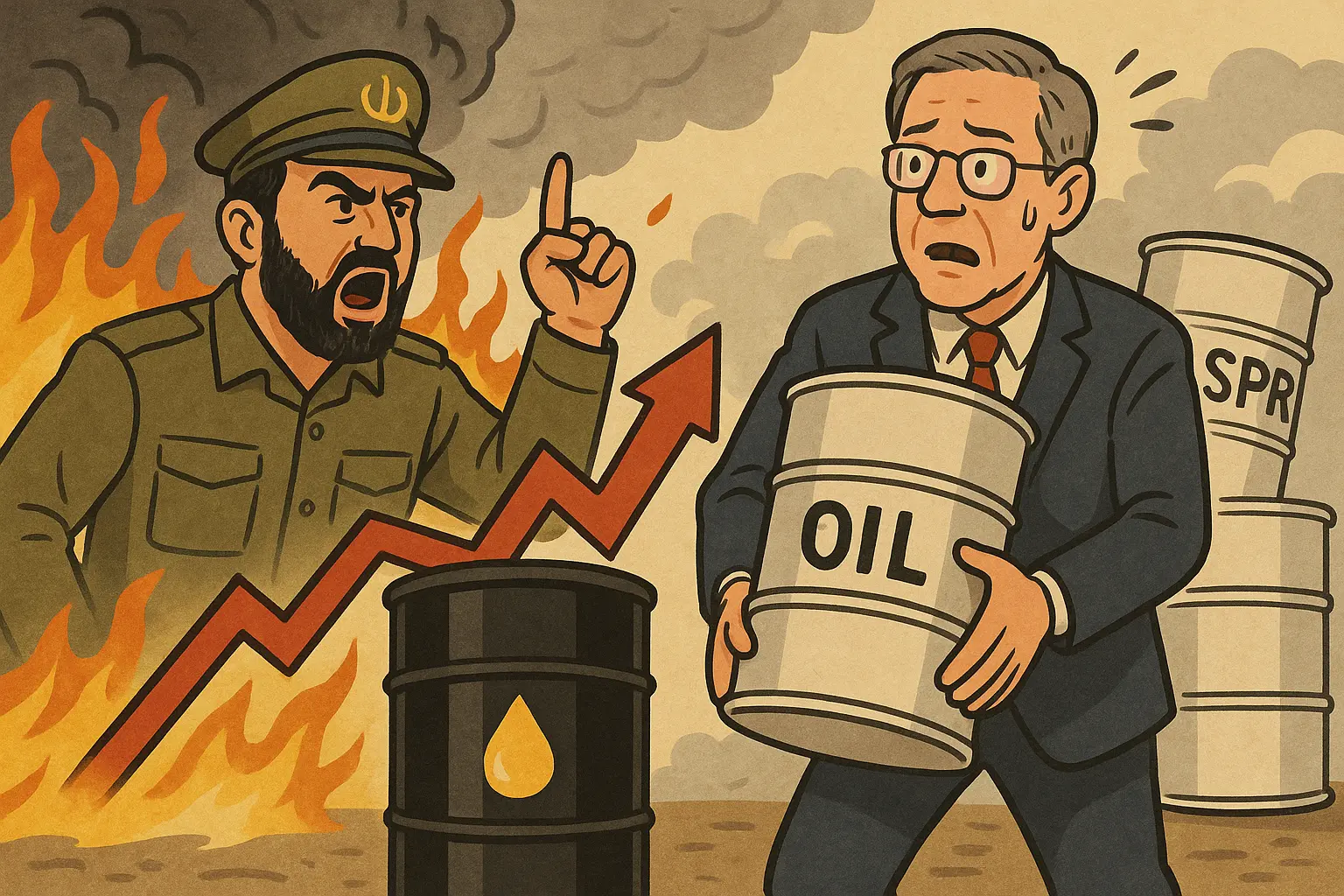
U.S. Secretary of Energy Chris Wright announced on Wednesday that member countries of the International Energy Agency (IEA) unanimously agreed to coordinate the release of a total of 400 million barrels of oil and refined products from their reserves at the request of President Trump. President Trump authorized the Department of Energy to release 172 million barrels of oil from the Strategic Petroleum Reserve (SPR) starting next week, with an expected completion time of approximately 120 days at the planned release rate. Iran previously warned that global oil prices could rise to $200.
Complete Release Plan of the Strategic Petroleum Reserve

(Source: U.S. Department of Energy X)
According to Secretary Wright’s statement, several key details about this reserve release are noteworthy:
Unprecedented Scale: The 172 million barrels is one of the largest single authorizations for SPR release in U.S. history. When combined with coordinated actions by other IEA member countries, the total release will reach 400 million barrels.
Replenishment Plan in Place: The U.S. has planned to replenish approximately 200 million barrels of strategic oil reserves within the next year, which is 20% more than the current consumption, and “at no cost to taxpayers.”
Clear Geopolitical Motivation: Wright explicitly stated that this action aims to respond to Iran’s threats to U.S. and allied energy security over the past 47 years. “Under President Trump’s leadership, this situation is about to end.”
However, market reactions to this move remain cautious. Previously, when the IEA announced an emergency oil reserve release, crude prices still surged significantly—because the market’s real concern was not short-term inventory levels but the long-term security of shipping through the Strait of Hormuz.
Oil Shock and Bitcoin Transmission Mechanism
The relationship between oil and Bitcoin appears more interconnected than it seems on the surface. Sebastián Serrano, CEO of Ripio, an Argentine cryptocurrency exchange, explained the logical chain: “When energy prices rise, inflation accelerates, central banks delay interest rate cuts, ultimately restricting the liquidity needed for Bitcoin’s growth.”
Since the outbreak of conflict in Iran on February 28, 2025, Bitcoin’s volatility has increased markedly—initially experiencing rapid sell-offs, followed by partial recovery. As of this writing, Bitcoin is trading around $70,434, slightly higher than before the conflict.
Although some view Bitcoin as a safe-haven asset similar to gold, data firm Kaiko’s research analyst Laurens Fraussen clearly states: “Bitcoin is a risk asset, not a commodity.” He added that over the past year, Bitcoin has been “very sensitive to geopolitical shocks,” meaning its price movements are more akin to tech stocks than traditional hard commodities.
It is noteworthy that, despite the U.S. Commodity Futures Trading Commission (CFTC) classifying Bitcoin as a commodity similar to gold and oil in regulation, actual market behavior shows that Bitcoin more often fluctuates with overall risk appetite rather than serving as an independent store of value.
Frequently Asked Questions
Can the release of 172 million barrels of strategic oil reserves effectively lower oil prices?
In the short term, it can help stabilize prices to some extent, but the lasting effect depends on the actual security of navigation through the Strait of Hormuz. Historical data shows that after the IEA announced reserve releases before, oil prices still rose due to escalating conflicts, indicating that market pricing is more driven by supply chain disruption expectations than short-term inventory figures. If the conflict persists, the 172 million barrels released are more likely a psychological signal rather than a fundamental market intervention.
How would Bitcoin react if oil prices double?
According to Kaiko and Ripio analyses, sustained high oil prices would increase inflation expectations, delay Federal Reserve rate cuts, and tighten market liquidity, putting pressure on high-volatility risk assets like Bitcoin. The historical example is Bitcoin’s sharp decline after Israel’s “Rise of the Lion” operation in June 2025—only rebounding after Trump announced a pause in attacks—showing that geopolitical decisions are key drivers of short-term Bitcoin movements.
Will this SPR release affect the U.S.’s long-term energy security?
According to Secretary Wright, the U.S. has arranged to replenish about 200 million barrels within the next year—20% more than the current consumption. The replenishment will be market-driven and will not require taxpayer funding. From this perspective, the design of this action includes an internal replenishment mechanism, which theoretically will not weaken the U.S.’s strategic energy buffer in the long run.
Disclaimer: The information on this page may come from third parties and does not represent the views or opinions of Gate. The content displayed on this page is for reference only and does not constitute any financial, investment, or legal advice. Gate does not guarantee the accuracy or completeness of the information and shall not be liable for any losses arising from the use of this information. Virtual asset investments carry high risks and are subject to significant price volatility. You may lose all of your invested principal. Please fully understand the relevant risks and make prudent decisions based on your own financial situation and risk tolerance. For details, please refer to
Disclaimer.
Related Articles
Solana Price Stalls Near $80 as ETF Outflows Weigh
Solana trades around $80, facing bearish sentiment due to ETF outflows and declining retail participation. Technical indicators show mixed signals, with resistance at $87 and $98, while support at $77 remains critical for stability.
CryptoFrontNews4h ago
Dogecoin Holds $0.094 as X Cashtags Drive Market Attention
Key Insights
Dogecoin holds above $0.094 despite market weakness as Bitcoin and Ethereum stabilize, reflecting resilience and sustained demand across major cryptocurrencies during the consolidation phase.
X launches smart cashtags enabling real-time crypto and stock tracking, improving marke
CryptoNewsLand7h ago
Chainlink Price Compresses Below $10 as Breakout Pressure Builds
Key Insights
Chainlink maintains higher lows within a tightening range, reflecting steady accumulation as buyers absorb selling pressure and prepare for a potential breakout move
Repeated resistance tests near $10 weaken supply levels while rising support strengthens demand, increasing the p
CryptoNewsLand8h ago
XRP Price Clears $1.40 While Broader Downtrend Persists
XRP's recent rise above $1.40 indicates a shift in market behavior after a consolidation phase. While momentum indicators show improvement, the broader bearish trend persists, limiting upside potential. Sustained support is crucial for extending its recovery.
CryptoNewsLand8h ago
XRP Consolidation Signals Reset as Bullish Setup Emerges
XRP has recently rebounded to $1.39 after trading between $1.20 and $1.40 due to improved market sentiment. A significant drop in futures open interest reflects reduced speculation, while technical indicators suggest a potential bullish breakout, targeting $1.50 and possibly $1.80.
CryptoNewsLand9h ago
PEPE Holds Key Range as $0.000005 Breakout Comes Into Focus
Key Insights:
PEPE trades in consolidation with neutral RSI and bearish MACD, signaling a potential buildup before a decisive directional move in coming sessions.
Analysts highlight a $0.000005 breakout level, representing nearly 50% upside if momentum shifts and buying volume strengthens
CryptoNewsLand9h ago


