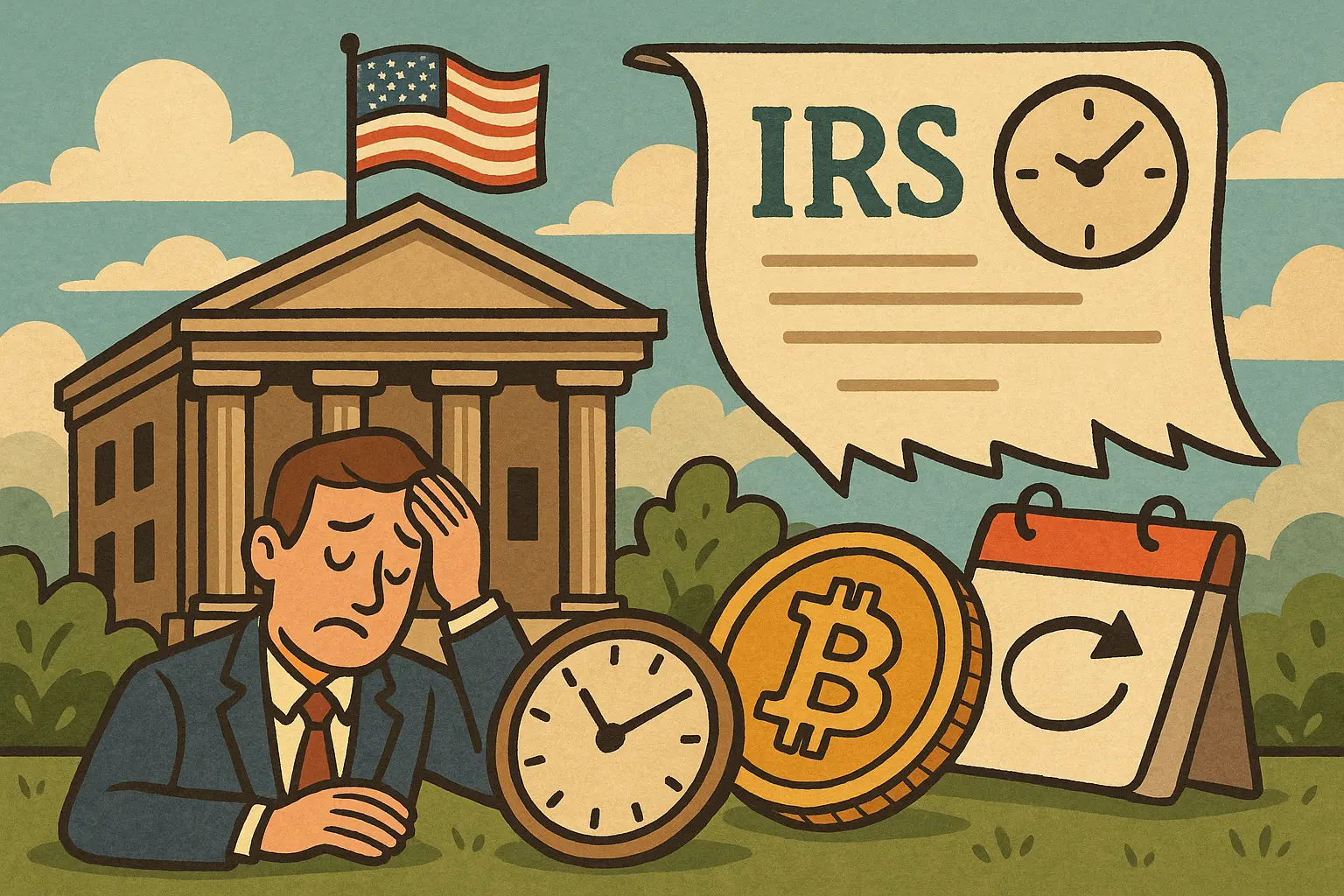
The Internal Revenue Service (IRS) announced on March 18, 2026-20, that the temporary tax relief measures for cryptocurrencies will be extended until December 31, 2026. The primary reason for this extension is that many custodial crypto brokers have not yet completed the necessary technical systems to accept customer-specific digital asset identification instructions. This situation objectively prevents some taxpayers from fully identifying their assets and exposes them to the risk of being compelled to apply the FIFO (First-In, First-Out) rule.
Reason for the Extension: Delays in Technical Readiness
According to the IRS, many custodial crypto brokers have informed the Treasury Department and the IRS that they have established systems to report total digital asset transaction gains for 2025 and will file these reports with the IRS and their clients in 2026. However, these brokers also indicate that while most work on accepting customer-specific identification information is nearly complete, they are currently unable to accept specific identification instructions other than long-term instructions. They expect to complete the relevant system development in 2026.
Without this extension, prior to the implementation of these systems, all sales, dispositions, or transfers of digital assets held by such brokers would automatically be confirmed under the FIFO rule—that is, assets purchased first are considered sold first—leaving taxpayers without any temporary relief. Notice 2026-20 is issued precisely to prevent this scenario.
Details of the Extension and Its Scope
Under the extended temporary relief provided by Notice 2026-20, the key arrangements are as follows:
Alternative Method for Submitting Identification Notices to Brokers: During the extension period, taxpayers may record specific digital asset identification information or long-term instructions in their own books and records instead of submitting notices to brokers. This will be considered sufficient identification, thereby avoiding the automatic application of the FIFO rule.
Does Not Apply to Non-Broker Custodied Assets: Digital assets held in self-custody are outside the scope of this relief, and different ordering rules apply to these assets.
Does Not Affect Reporting Requirements: The temporary relief does not apply to digital asset reporting obligations; in 2026 transactions, the cost basis reported by brokers may differ from the taxpayer’s own records, and taxpayers should verify and confirm these details independently.
Background: Origin of FIFO and Sufficient Identification Rules
In July 2024, the U.S. Treasury and IRS issued final regulations specifying how to determine which units of digital assets are considered sold, disposed of, or transferred when a taxpayer holds multiple units with different purchase dates or prices in the same wallet. For assets held by brokers, regulations allow taxpayers to explicitly designate specific units before sale; if no such designation is made, FIFO is automatically applied.
The IRS also issued Revenue Procedure 2024-28, providing a safe harbor to guide taxpayers on transitioning from a general tax basis allocation method to a per-wallet or per-account basis, especially for digital assets acquired before January 1, 2025, without an attached basis.
Frequently Asked Questions
Q: What does Notice 2026-20 allow taxpayers to do?
A: Taxpayers can record specific digital asset identification information or long-term instructions in their own books and records before December 31, 2026, instead of submitting identification notices to brokers. This will be considered sufficient identification, thereby avoiding the automatic application of FIFO.
Q: Why does the IRS need to extend the original relief again?
A: Many custodial crypto brokers have not yet completed the technical systems necessary to accept customer-specific identification instructions. Without this extension, all crypto transactions held by these brokers would be forced to apply FIFO before the systems are ready, regardless of taxpayer intent.
Q: Does this relief also apply to self-custodied crypto assets?
A: No. The temporary relief under Notice 2026-20 applies only to digital assets held by brokers. Self-custodied assets are governed by different ordering rules, and this relief does not cover them.
Disclaimer: The information on this page may come from third parties and does not represent the views or opinions of Gate. The content displayed on this page is for reference only and does not constitute any financial, investment, or legal advice. Gate does not guarantee the accuracy or completeness of the information and shall not be liable for any losses arising from the use of this information. Virtual asset investments carry high risks and are subject to significant price volatility. You may lose all of your invested principal. Please fully understand the relevant risks and make prudent decisions based on your own financial situation and risk tolerance. For details, please refer to
Disclaimer.
Related Articles
Kalshi appeals Nevada event contract ban; CFTC jurisdiction dispute may reach the Supreme Court
Prediction market platform Kalshi has appealed a ruling by the state of Nevada banning its event contracts, and the U.S. Ninth Circuit Court of Appeals held oral arguments on April 17, but did not issue an immediate decision after the hearing. The core dispute in the case is whether Kalshi’s event contracts are “swap agreements” that fall under the jurisdiction of the Commodity Futures Trading Commission (CFTC), or whether they must be regulated by state-level activity under gambling licensing regimes. Multiple legal experts predict that the case may ultimately be appealed to the U.S. Supreme Court.
MarketWhisper1h ago
CFTC Chairman Selig: Prediction-market fraudsters will face harsh legal penalties; will not pause rulemaking
In a House hearing, U.S. CFTC Chairman Selig emphasized a “zero-tolerance policy” toward market fraud and manipulation. He responded to questions regarding a $500 million oil futures transaction and said the CFTC is drafting rules to regulate prediction markets. Selig also mentioned a cooperation memorandum of understanding with the SEC to strengthen oversight of digital assets. Given that the CFTC currently has only one commissioner—himself—Selig emphasized operational efficiency and will hire new staff to enhance regulatory capacity.
MarketWhisper3h ago
MTN Nigeria Suspends Xtratime Airtime and Data Borrowing Service to Comply with Digital Lending Regulations
MTN Nigeria has suspended its Xtratime service due to new regulatory compliance from the FCCPC. While normal purchases continue, the suspension aims to align with upcoming digital lending rules. The company does not foresee significant financial impact and will monitor user response.
GateNews7h ago
Pakistan Opens Banking System to Licensed Crypto Firms, Reversing 2018 Ban
Pakistan's central bank has opened its banking system to licensed virtual asset service providers, reversing a previous ban. This change, following the Virtual Assets Act 2026, allows crypto businesses access to banking services under strict regulations.
GateNews11h ago
Musk’s X Money hasn’t launched yet—but it’s already making headlines! Mizuho says it will shake up the U.S. payments market and also downgrades PayPal’s rating
Elon Musk’s financial product X Money is expected to launch in April, potentially upending the U.S. payments market and putting pressure on PayPal, as Mizuho Securities has downgraded PayPal’s rating to “Neutral.” However, regulatory variables have become the main challenge, especially the legal uncertainty surrounding crypto-asset payments and yield-generating products. X has also rolled out a “Cashtags” feature that integrates real-time financial data.
ChainNewsAbmedia12h ago
Major South Korean CEX Places SPURS Token on Trading Alert List
A South Korean cryptocurrency exchange has added the SPURS token to its trading alert list due to poor market performance and investor risks. Deposits are temporarily suspended while the token is reviewed until July 16, 2026.
GateNews13h ago


